Landscape with a Shepherd — History & Facts
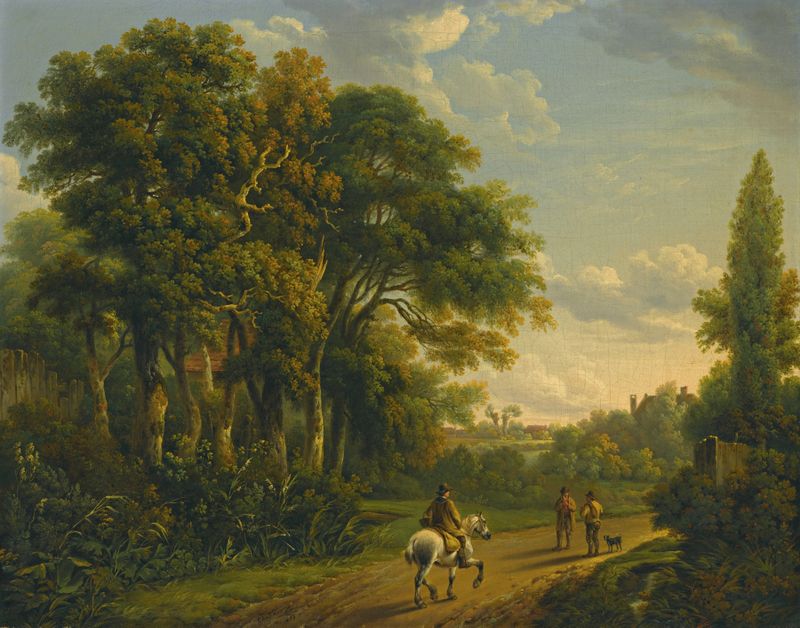
In a world where truths fade beneath the weight of memory, a serene landscape emerges, inviting us to pause and reflect on the essence of existence. Look closely at the horizon where a gentle sky meets rolling hills; the colors blend harmoniously from the soft pastels of dawn to the deeper greens of the earth. Notice how the shepherd stands, a solitary figure rendered with strokes that exude both stillness and purpose. The play of light across the canvas highlights not only the vibrancy of the scene but also a sense of timelessness, suggesting a moment suspended between the past and the present. A deeper examination reveals the shepherd’s quiet resilience, juxtaposed with the vastness of the landscape around him.
The sheep dotting the hillside symbolize the simplicity of rural life, yet they also evoke a collective memory of human history and connection to nature. The delicate brushwork captures the fleeting moments of daily life, encouraging viewers to contemplate the impermanence of time and the truth that lies within it. Charles Towne painted this scene during a period of exploration in the late 18th century, when artists sought to capture the beauty of nature and the human experience. Living in England, he was influenced by the romantic ideals of the time, which emphasized emotion and the sublime.
His work stands as a testament to the search for meaning amid a rapidly changing world, forever framing a moment that resonates through the ages.