A Horseman And Figures On A Country Lane — History & Facts
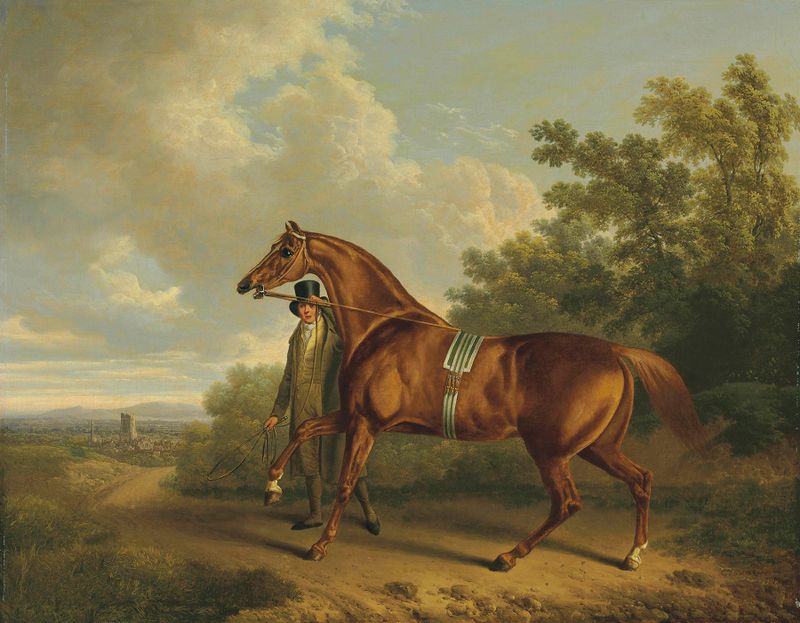
Could beauty survive in a century of chaos? In A Horseman And Figures On A Country Lane, the quietude of a pastoral scene suggests a fragile truth nestled in the heart of turmoil. Look to the left at the horseman, his posture relaxed yet purposeful, guiding his steed down the winding path. The dappled sunlight filters through the lush foliage, illuminating the vibrant greens and soft earth tones of the lane. Notice how the figures in the foreground converse, their animated gestures contrasting with the stillness of the surrounding nature, which appears untouched by time.
The composition draws the viewer's eye along the lane, inviting a slow exploration of the harmonious interplay between man and nature. In this tranquil tableau, there exists a dichotomy between the serene landscape and the underlying currents of change. The figures, seemingly engaged in an everyday moment, evoke a deeper connection to the human experience, highlighting the precarious balance of joy and unease. The soft brushstrokes convey a sense of intimacy, while the expansive sky looms above, a reminder of the larger world beyond, perhaps hinting at unrest and uncertainty. Charles Towne painted this work in 1805, during a period marked by significant social and political upheaval in Europe due to the Napoleonic Wars.
Living in England, he was part of a generation that sought solace in the beauty of rural landscapes, as cities swelled with the pressures of industrialization and conflict. This painting reflects not only Towne's artistic intent but also the collective yearning for peace amid the chaos of the age.