A Church Interior — History & Facts
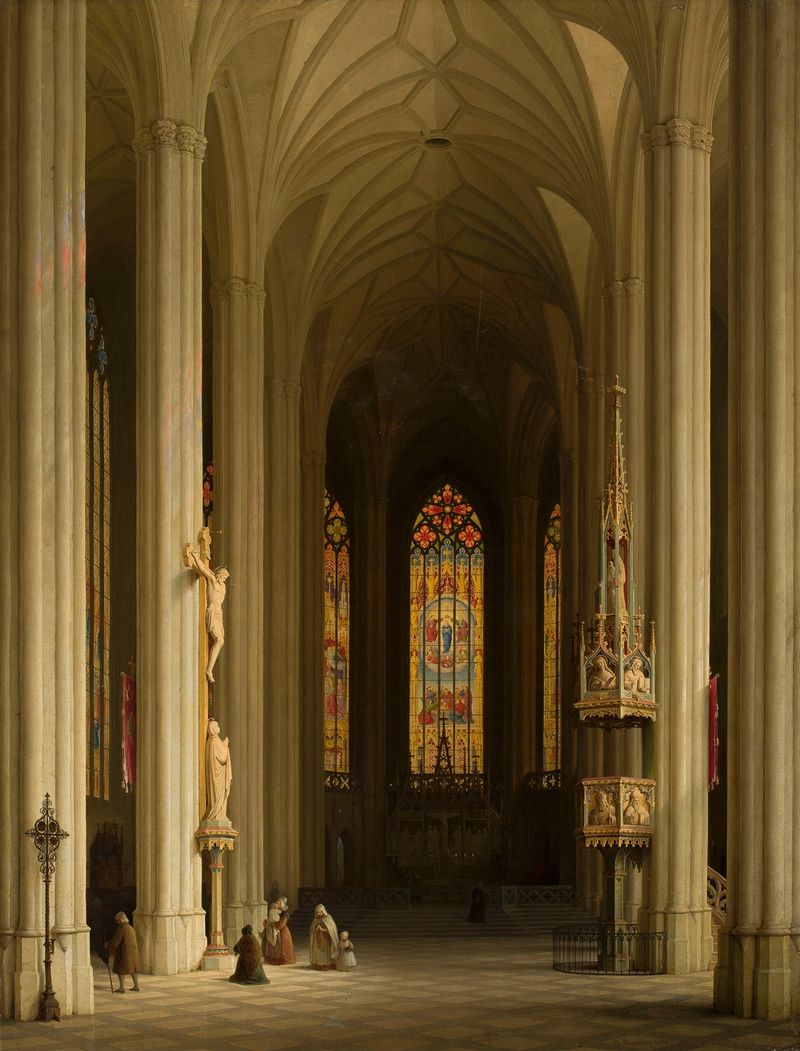
Within the stillness of a church interior, the awe of sacred space resonates through the very molecules of air, inviting contemplation and reverence. Look directly at the soft interplay of light streaming through the stained glass, illuminating the cold stone floor with patches of vibrant color. The eye is drawn to the dignified altar, its ornate carvings contrasting with the simple wooden pews that stretch towards it. The artist’s delicate brushwork captures not just the architectural beauty but also the ethereal glow that permeates the air, creating a palpable sense of spirituality and wonder that envelops the viewer. Within this tranquil sanctuary, the juxtaposition of light and shadow unravels deeper meanings.
The vibrant hues of the glass suggest hope and divine presence, while the muted tones of the surrounding architecture evoke the weight of solemnity and introspection. Each pew, empty yet filled with the echoes of prayers, speaks of the collective human experience—of desire, regret, and the unyielding quest for redemption. In 1845, the painter found inspiration within a world increasingly aware of industrialization and change. Working in Germany, Ainmiller explored themes of spirituality against the backdrop of a rapidly evolving society.
This period saw a yearning for connection with the past, and his depiction of a church interior reflects both a personal and collective confrontation with faith in an age of transformation.