Gothic church interior — History & Facts
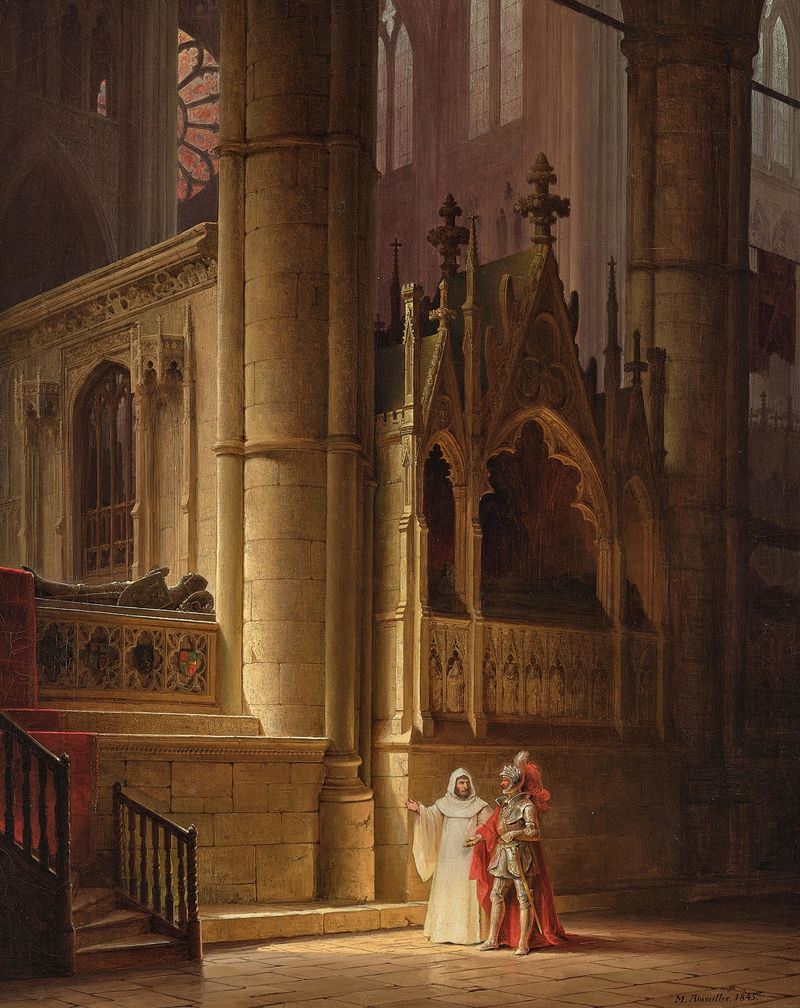
Can paint confess what words never could? In the stillness of a Gothic church interior, the very essence of faith and reverence pulses through the air, whispering secrets of devotion and solitude. Look to the towering arches that rise like the aspirations of the faithful, their intricate designs drawing your gaze upward, toward a soft glow filtering through stained glass. Notice how the rich, deep hues of crimson and emerald dance across the stone floor, illuminating the weathered pews that cradle whispered prayers. The contrast between the cool stone and the warm light creates a palpable tension, inviting contemplation. As you immerse yourself in this sacred space, consider the silent stories etched into the walls—the quiet desperation of seeking solace and the overwhelming beauty found in moments of reflection.
The delicate details in the carvings evoke a sense of longing, their shadows revealing the duality of despair and hope. Together, they harmonize to depict a struggle for understanding, a search for the divine amid the mundane. Max Emanuel Ainmiller painted this remarkable work in 1844 during a time when the Gothic revival was in full swing, mirroring society's desire to reconnect with spiritual roots. Living in Munich, his artistic focus shifted towards architectural interiors, reflecting the cultural currents of his era.
This piece stands not only as a testament to his skill but also as a cultural commentary on the intersection of faith, art, and human experience.