A City Park in Paris, France — History & Facts
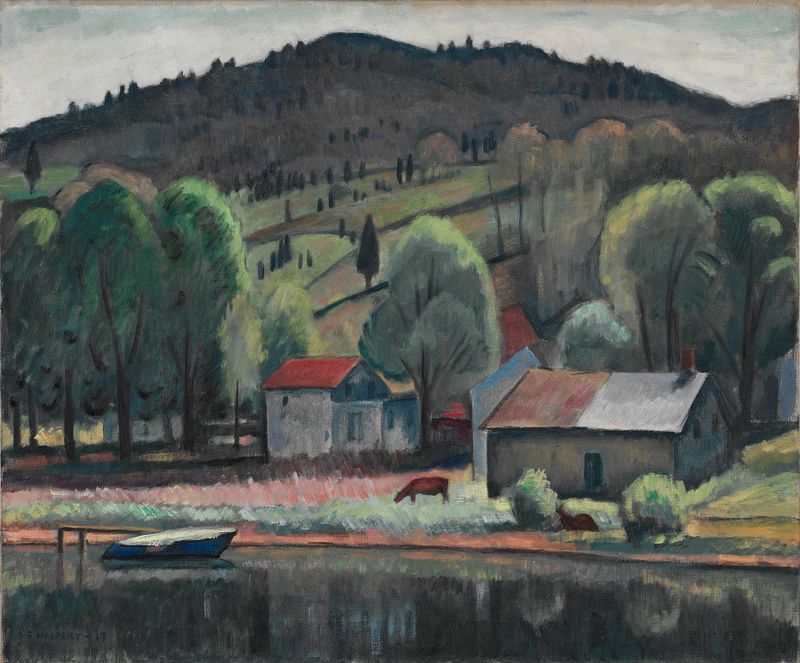
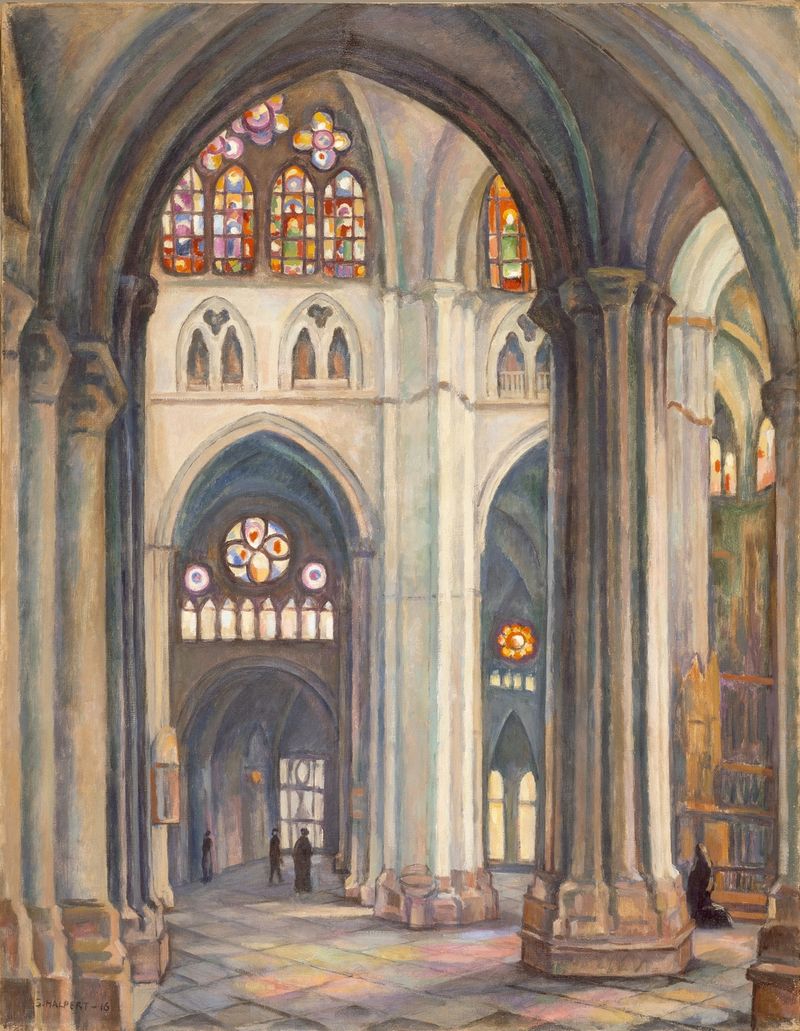
What secret hides in the quiet of the canvas? In Samuel Halpert's A City Park in Paris, France, the stillness speaks volumes, inviting viewers to uncover the narratives concealed within the serene landscape. Look to the foreground, where gentle brushstrokes depict a winding path meandering beneath dappled shadows created by overhead foliage. The soft greens and muted browns coalesce, highlighting the harmony of nature’s palette. Notice how the light filters through the trees, casting a delicate glow that imbues the scene with an ethereal warmth, while figures in the distance seem to blend into the surroundings, their outlines softly blurred, suggesting a fleeting moment in time. This juxtaposition of tranquility and transience evokes a sense of longing.
The void between the vibrant life of the park and the indistinct silhouettes speaks to the solitude often found in public spaces. Each tree stands like a sentinel of whispered secrets, while the absence of vibrant colors in the figures hints at the isolation lurking beneath the surface of communal life. Halpert captures not just a scene, but the emotional landscape of human existence, where moments of joy can easily slip into oblivion. Created between 1907 and 1911, this piece reflects Halpert’s immersion in the evolving artistic movements of early 20th-century Paris.
It was a time when the Impressionists had shifted the focus in art toward capturing the essence of everyday life, and Halpert, influenced by both Impressionism and Post-Impressionism, developed a unique style that emphasized both the beauty and the quiet introspection found in urban settings.