
The Flatiron Building — History & Facts
Where does light end, and longing begin? In the interplay of architecture and emotion, we find a reflection of our deepest faith in the enduring spirit of creation. Focus on the striking silhouette rising against a backdrop of soft blues and grays, the Flatiron Building cutting through space like a beacon. Notice how the sunlight dances upon its triangular facade, highlighting the sharp angles and intricate details that draw the eye upward, invoking a sense of aspiration. The vibrant brushwork captures a moment suspended in time, celebrating both the mundane and the extraordinary in the urban landscape. Delve into the contrasts at play: the solidity of the building stands resolute amidst the fluidity of the surrounding sky, a metaphor for stability in the chaos of life.
Wisps of clouds hint at the ephemeral nature of human existence, while the rich palette conveys a quiet optimism, suggesting that faith can be found within the interplay of light and shadow. Each stroke of the brush seems to whisper stories of those who inhabit this city, their dreams intertwining with the architecture. Created in 1919, this work emerged during a transformative period in American art. Samuel Halpert painted this piece in New York City, where he was at the forefront of the Ashcan School, seeking to capture the vibrancy of urban life.
The post-war landscape profoundly influenced his perspective, as artists began to explore new forms and ideas, finding beauty in the complexity of modernity. This painting reflects not only a specific architectural marvel but also the hopes of a society reimagining itself.
More Artworks by Samuel Halpert
Browse all →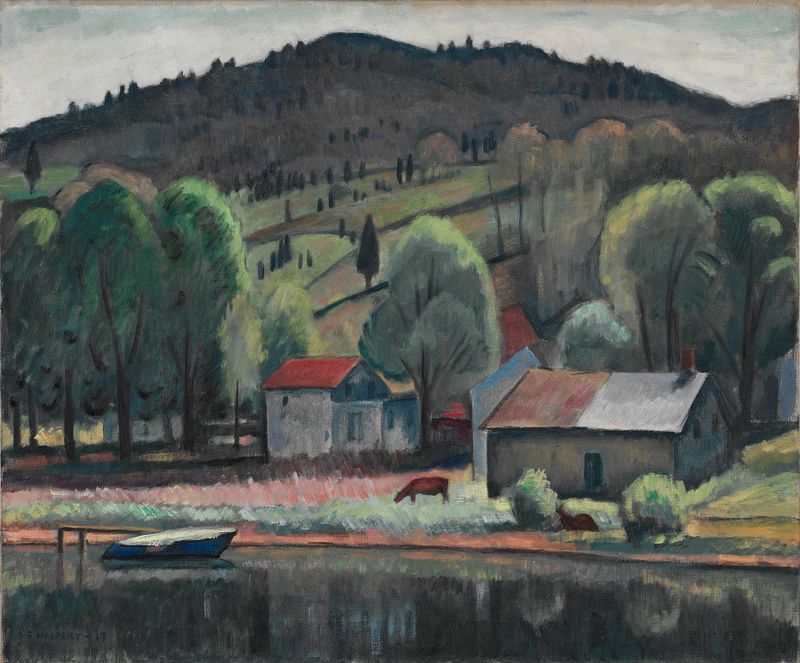
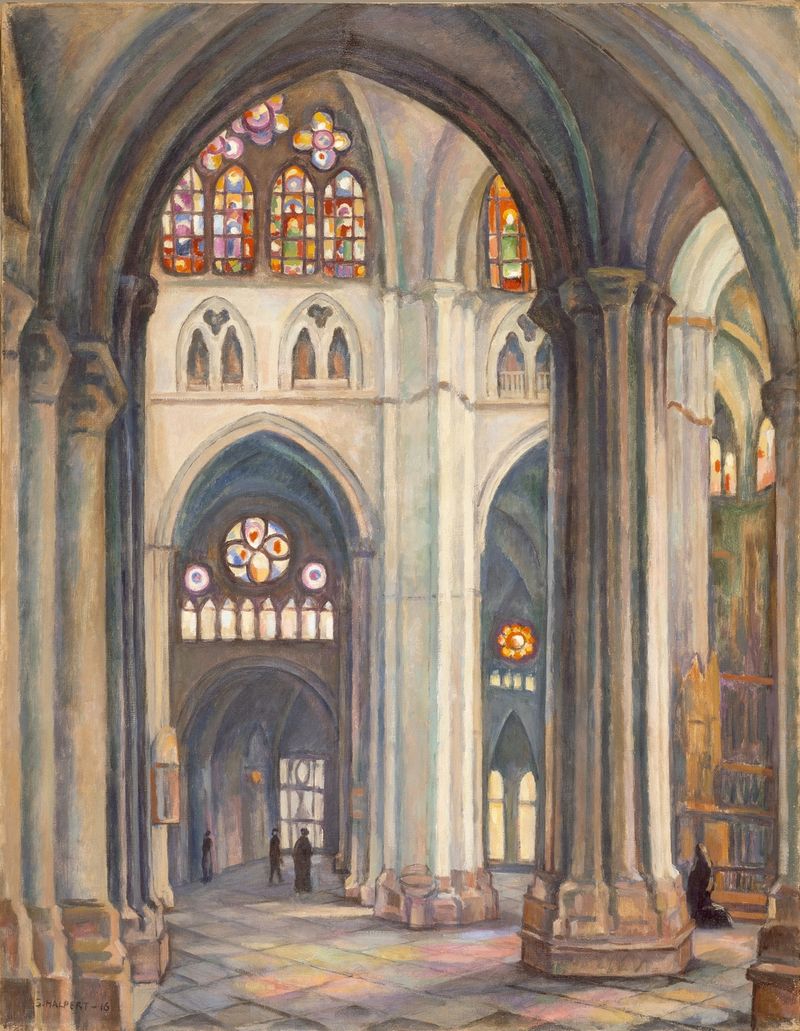

More Architecture Art
Browse all →
The statue of Liberty
Frédéric Auguste Bartholdi

View of Houses in Delft, Known as ‘The Little Street’
Johannes Vermeer

View of Houses in Delft, Known as ‘The Little Street’
Johannes Vermeer

The Cathedral in Rouen. The portal, Grey Weather
Claude Monet

The yellow house
Vincent van Gogh

The Church in Auvers-sur-Oise, View from the Chevet
Vincent van Gogh