
Toledo Cathedral — History & Facts
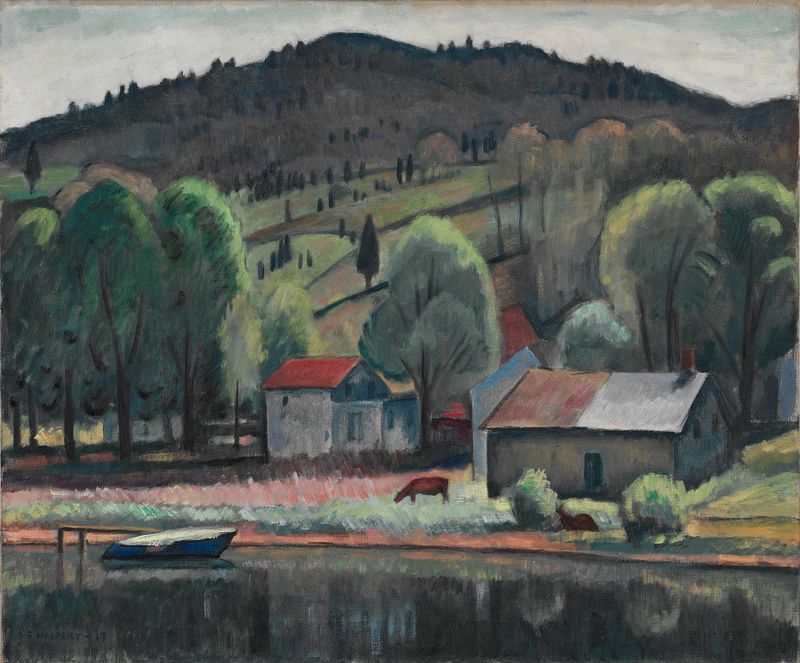
What secret hides in the quiet of the canvas? Beneath the still facade of Toledo Cathedral, an unseen pulse of movement reverberates, capturing the essence of a city's spirit woven into its stone. Look to the left at the soaring arches—each meticulously painted with a golden hue that captures the light filtering through stained glass. Notice how the intricate details of the façade draw your gaze upward, while the uneven play of shadows hints at time's relentless passage. The brushwork exhibits a subtle dynamism; it feels as if the cathedral itself is breathing, its ancient stones alive with whispers of devotion and history. Within this sacred space, contrasts emerge vividly.
The stability of the cathedral, a monument of faith, is juxtaposed against the fluidity of the surrounding landscape, suggesting a dialogue between the permanence of the divine and the transient nature of life. The soft blues and warm ochres evoke both tranquility and yearning, hinting at stories untold, while the sculptural forms call upon the viewer to reflect on their own place in time’s continuum. Created in 1916, Samuel Halpert painted Toledo Cathedral during a period marked by upheaval in both his personal life and the broader art world. He was navigating the tensions of World War I, which deeply influenced the artistic landscape, pushing painters to explore themes of conflict and refuge.
Halpert, residing in America but rooted in his European heritage, sought a connection to his past, and through this work, he distilled the vibrant life of Toledo’s celebrated landmark into a meditative exploration of both movement and stillness.
More Artworks by Samuel Halpert
Browse all →

More Architecture Art
Browse all →
The statue of Liberty
Frédéric Auguste Bartholdi

View of Houses in Delft, Known as ‘The Little Street’
Johannes Vermeer

View of Houses in Delft, Known as ‘The Little Street’
Johannes Vermeer

The Cathedral in Rouen. The portal, Grey Weather
Claude Monet

The yellow house
Vincent van Gogh

The Church in Auvers-sur-Oise, View from the Chevet
Vincent van Gogh