
A Coast Scene with Classical Ruins — History & Facts
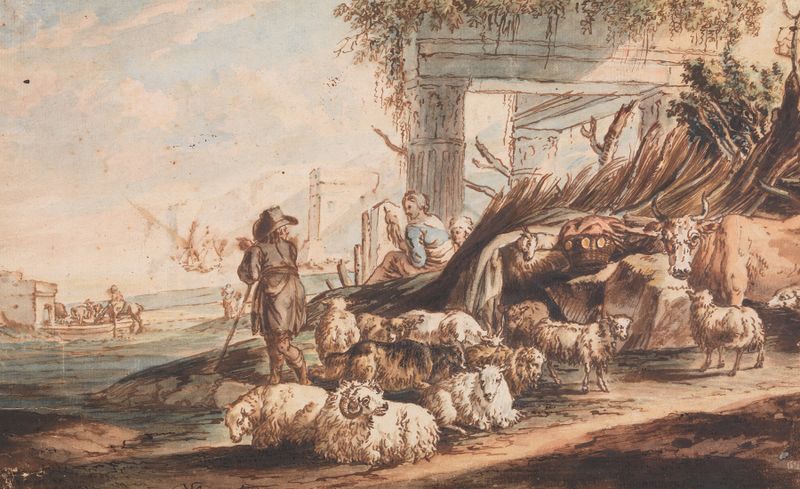
In an age where revolutions stir and reshape, the canvas becomes a sanctuary for fleeting memories and forgotten glories. Look to the left at the crumbling ruins, their ancient stones silent witnesses to the passage of time. The muted earth tones of the landscape contrast with the delicate blues of the sea, pulling the viewer's gaze towards the horizon where the sky meets the water. Notice how the soft light bathes the scene, illuminating patches of greenery that sprout defiantly amidst the decay, symbolizing nature’s resilience against human endeavors. The juxtaposition of the serene coastal vista with the remnants of classical architecture speaks volumes.
The ruins, fragments of a once-majestic civilization, echo the fragility of human accomplishments amid the relentless march of time. Each brushstroke captures an emotional tension—a silent plea for remembrance against the backdrop of inevitable change, a reminder that beauty is often found in impermanence. In 1649, Jan Baptist Weenix painted this scene during a period of profound societal shifts in Europe. The aftermath of the Thirty Years' War had left nations in turmoil, while the art world was experiencing a transformation, moving towards more personal and evocative expressions.
Weenix, immersed in the Baroque tradition, sought to blend the grandeur of classical themes with the realities of his time, creating a poignant dialogue between then and now.
More Artworks by Jan Baptist Weenix
Browse all →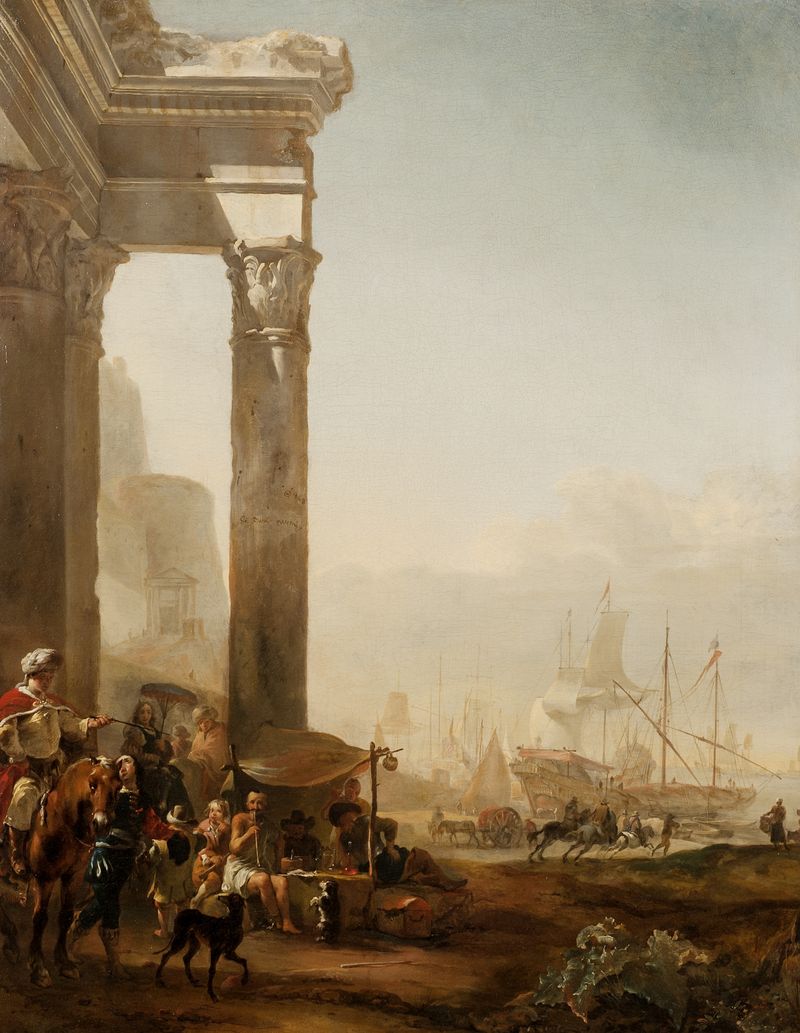
Harbour with Antique Ruins
Jan Baptist Weenix
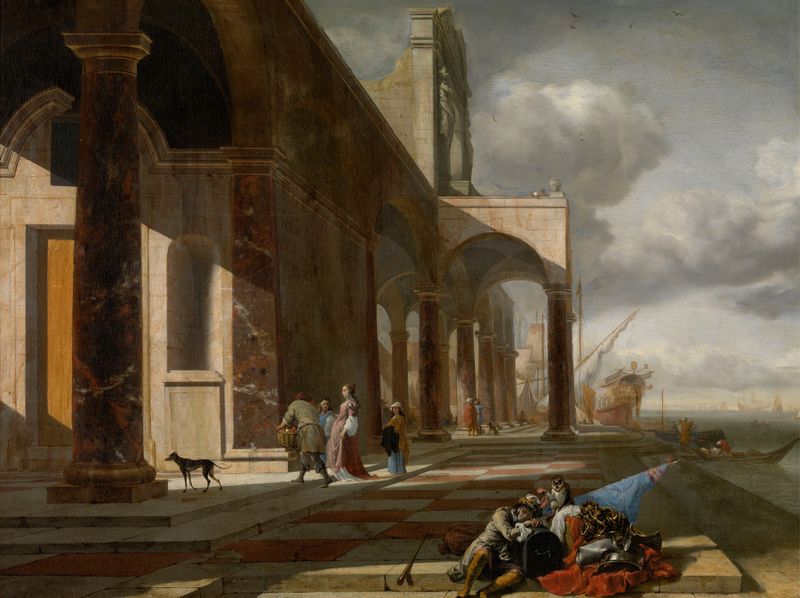
An Italian Seaport
Jan Baptist Weenix

Roman Landscape with Shepherds
Jan Baptist Weenix
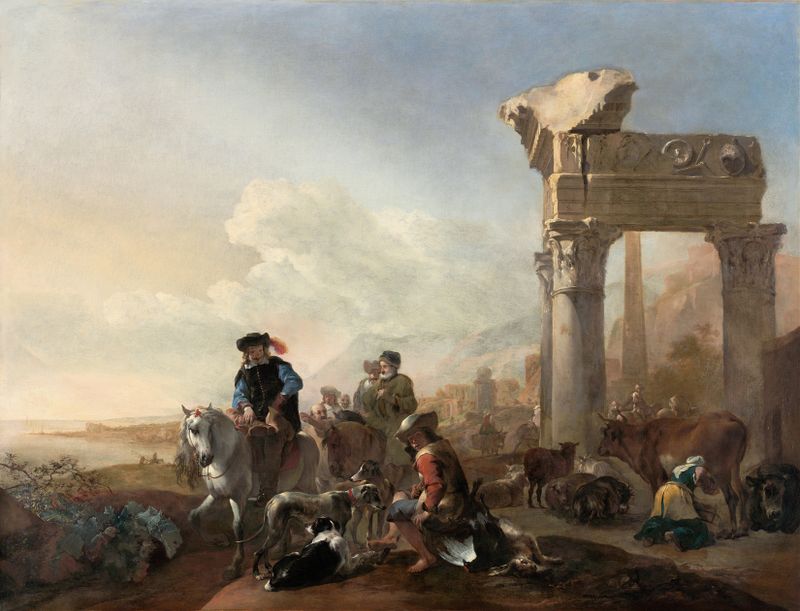
Hunters Near Ruins
Jan Baptist Weenix
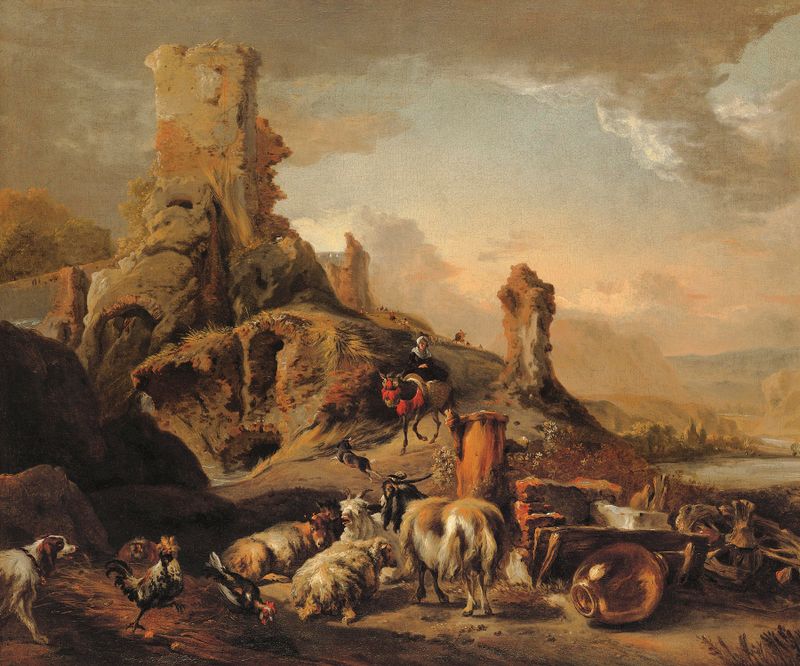
Shepherdess And Her Flock On A Path
Jan Baptist Weenix

In den Ruinen römischer Architektur die drei Parzen, rechts ein Löwe aus Marmor
Jan Baptist Weenix

A Roman Temple With Cattle Herders
Jan Baptist Weenix

Architectural interior with foreign shippers, ruins and a shipyard beyond
Jan Baptist Weenix
Shepherd with a flock of sheep and a cow among ruins
Jan Baptist Weenix

Portrait of a Man
Jan Baptist Weenix





