
A Roman Temple With Cattle Herders — History & Facts
In A Roman Temple With Cattle Herders, the canvas pulses with the juxtaposition of serene beauty and underlying violence, capturing a moment where nature and humanity intertwine in a delicate balance. Look to the left of the scene, where the elegant structure of the Roman temple stands proud, its weathered stones bathed in the soft golden light of a fading sun. The herders, depicted with a meticulous attention to detail, gently guide their cattle, which graze in the lush foreground. Notice how the artist employs a rich palette of earthy browns and muted greens, contrasting sharply with the backdrop of the temple's grandeur, creating an almost palpable tension between civilization and the pastoral world. Beneath the idyllic portrayal lies an unsettling undertone.
The temple, a symbol of stability and cultural achievement, stands as a silent witness to the fragility of life, while the cattle represent the labor and sacrifice often inherent in human progress. The herders’ expressions, though peaceful, hint at the anticipation and potential violence of the hunt that might disrupt this harmony. Weenix captures not just a scene of pastoral life, but the vulnerability that exists within it, crafting a narrative that speaks to the duality of existence. During this period, the artist was immersed in the vibrant Dutch Golden Age, likely creating this work in the late 17th century.
Known for his detailed landscapes and still-life paintings, Weenix was influenced by the interplay of light and shadow, as well as the thematic exploration of nature and civilization. His work reflects the era's fascination with classical antiquity and the complex relationship between humanity and the natural world, offering a glimpse into the evolving discourse of art and philosophy at that time.
More Artworks by Jan Baptist Weenix
Browse all →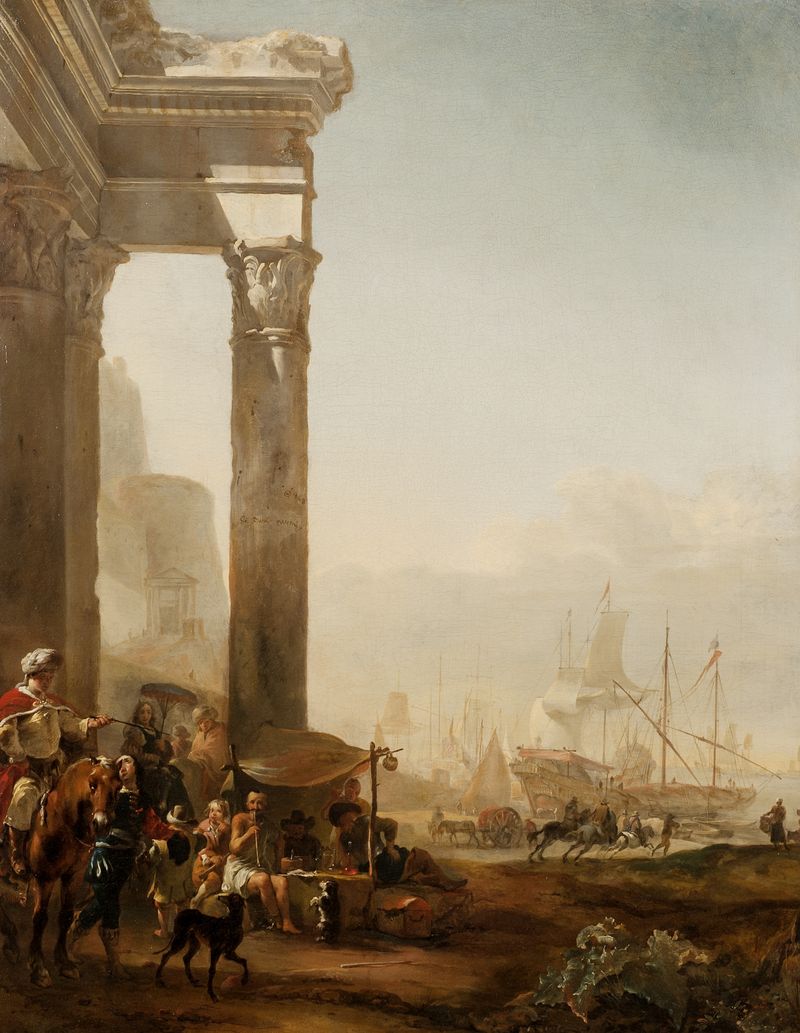
Harbour with Antique Ruins
Jan Baptist Weenix
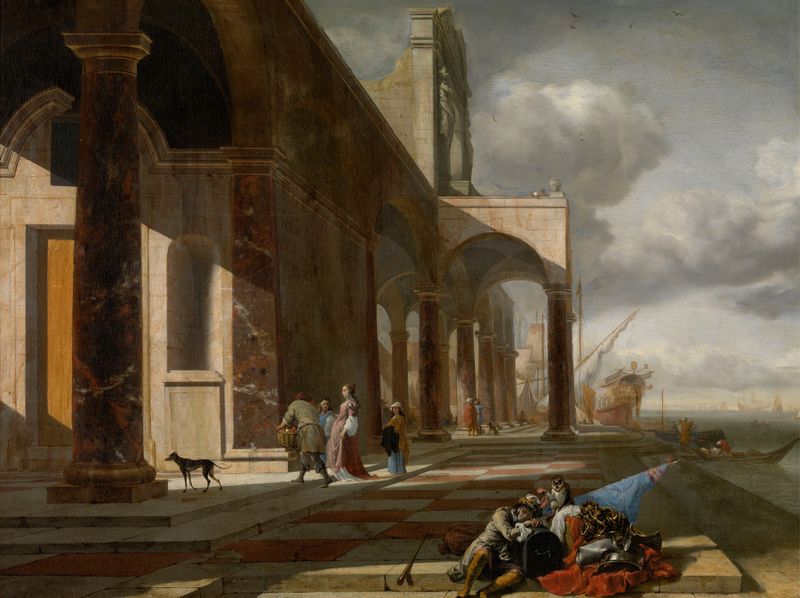
An Italian Seaport
Jan Baptist Weenix

Roman Landscape with Shepherds
Jan Baptist Weenix
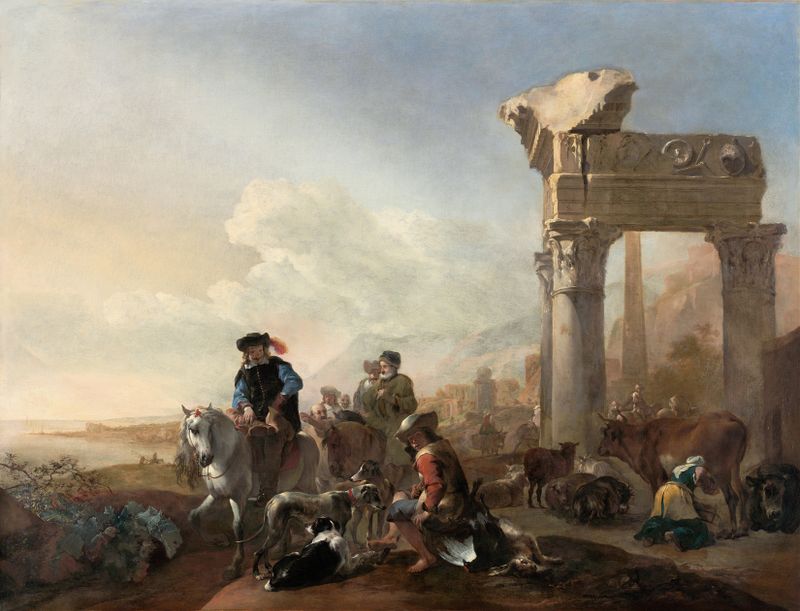
Hunters Near Ruins
Jan Baptist Weenix
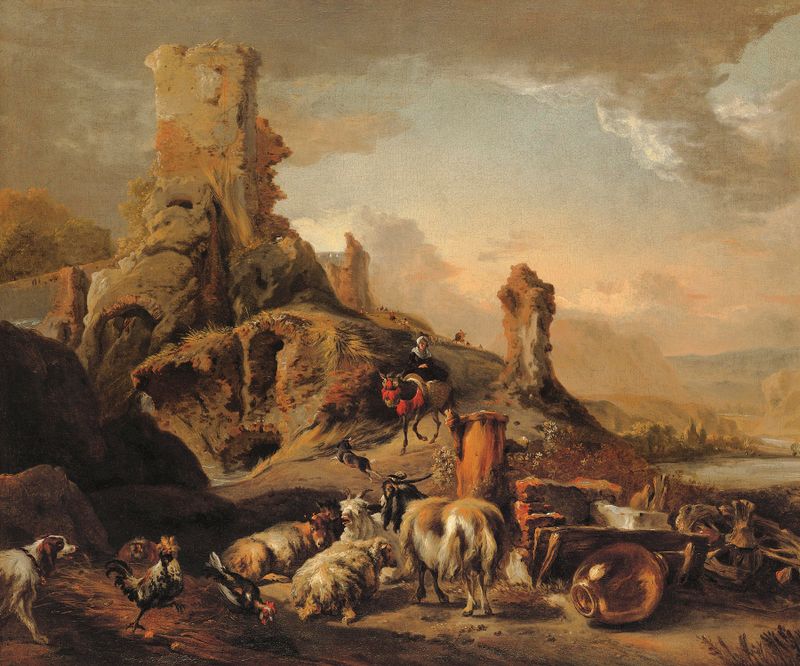
Shepherdess And Her Flock On A Path
Jan Baptist Weenix
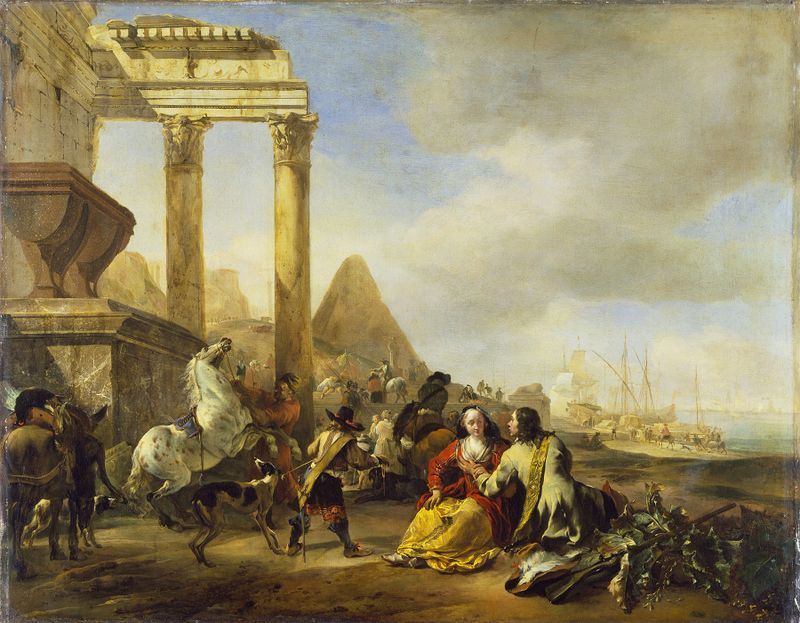
A Coast Scene with Classical Ruins
Jan Baptist Weenix

In den Ruinen römischer Architektur die drei Parzen, rechts ein Löwe aus Marmor
Jan Baptist Weenix

Architectural interior with foreign shippers, ruins and a shipyard beyond
Jan Baptist Weenix
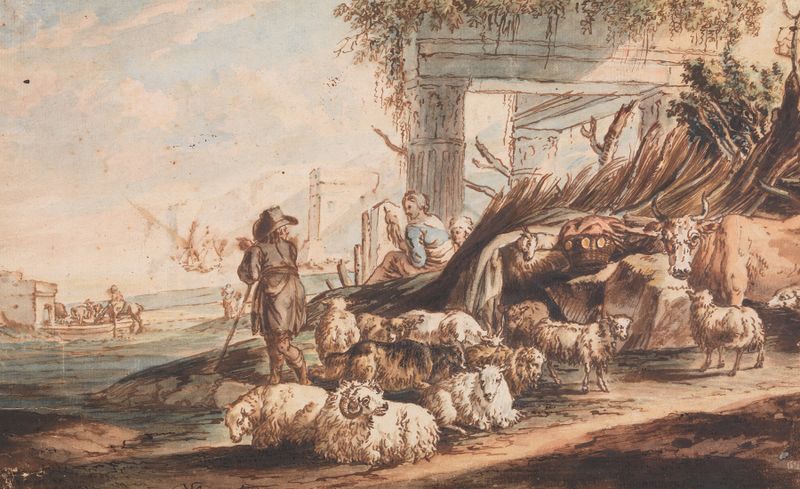
Shepherd with a flock of sheep and a cow among ruins
Jan Baptist Weenix

Portrait of a Man
Jan Baptist Weenix





