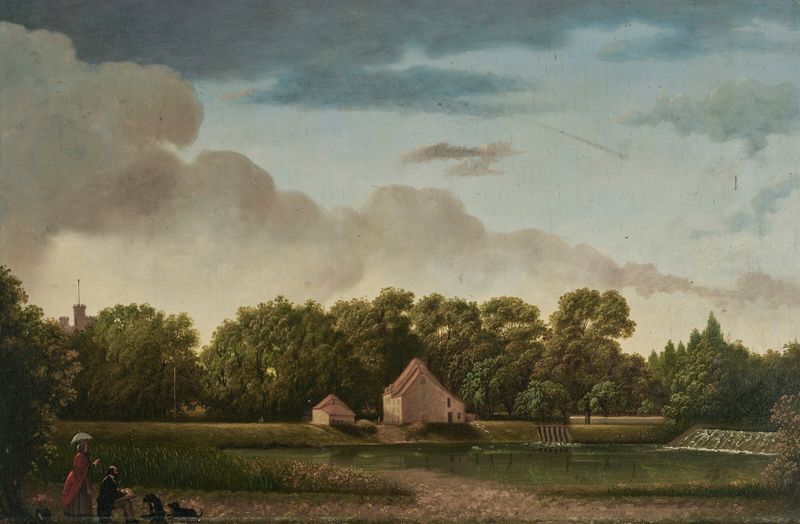
A Cricket Match, with Canford Manor beyond — History & Facts
Who listens when art speaks of silence? In the gentle embrace of nostalgia, the past unfurls like an old letter, coaxing us to remember. Focus on the lush greens in the foreground, where players are captured mid-action, their bodies poised in a moment of unspoken tension. The cricket match unfolds like a delicate dance, with the meticulous brushwork accentuating the texture of the grass and the playful interplay of light and shadow. The distant silhouette of Canford Manor looms beyond, rendered in soft, muted tones that invite contemplation, while the vibrant colors of the players draw our attention to the immediacy of the game. Beneath the surface, the painting explores a poignant contrast between the exuberance of youth and the looming permanence of time.
The players embody a fleeting joy, each swing of the bat and cheer of the crowd echoing with the laughter of days gone by. Meanwhile, the manor, stoic and enduring, serves as a reminder of the past's relentless march, framing the scene with an air of wistfulness that lingers long after the game has ended. In 1855, the artist was navigating the complexities of a burgeoning career, juxtaposed against the backdrop of an evolving art world in Britain. As the Pre-Raphaelites began to gain prominence, Bremond found himself immersed in a style that celebrated both realism and the rich emotional landscapes of everyday life, crafting a work that invites viewers to reflect on moments both cherished and ephemeral.