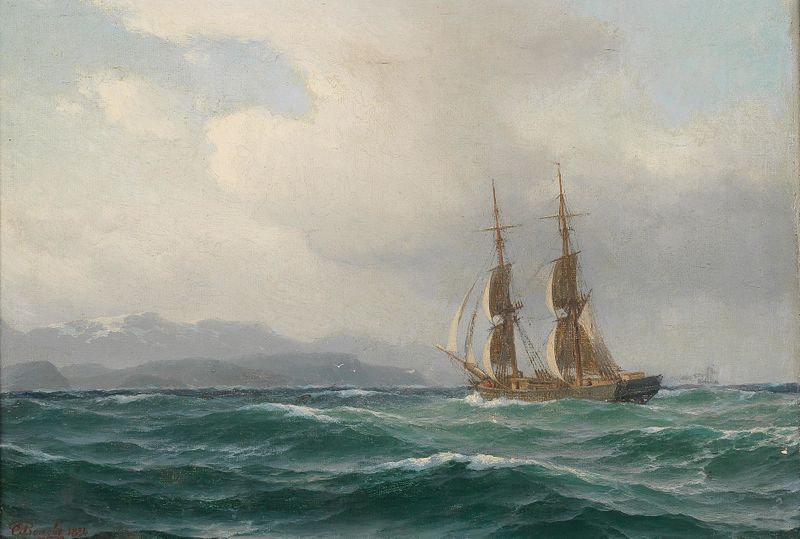
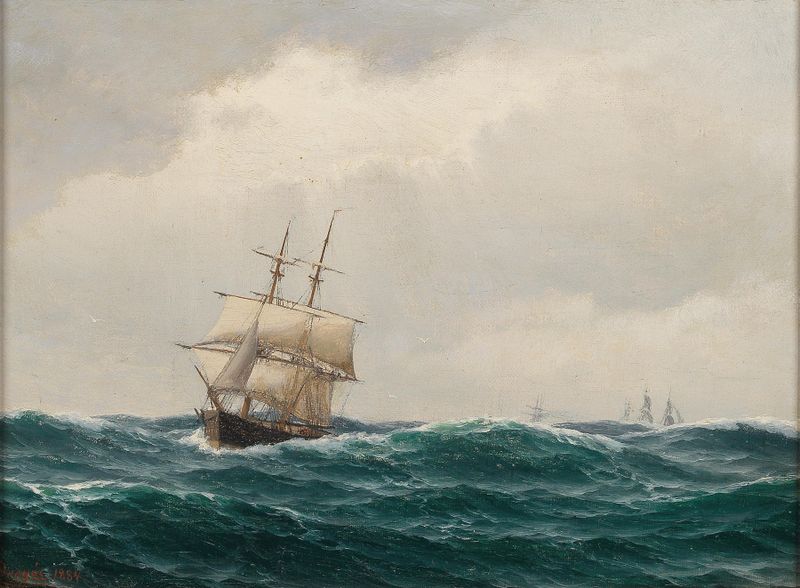
A cutter and two sailing ships. — History & Facts
Could beauty survive in a century of chaos? As the waves lap gently against the hull, the scene captures a fragile interplay between life and the inevitable passage of time. Each vessel, proud against the horizon, stands as a testament to human ingenuity, yet their sails billow with the weight of ephemeral existence. Look to the left at the cutter slicing through the vibrant waters, its sails catching the light in a dance of whites and creams. The artist masterfully employs a palette of blues and greens that mirror the depths of the sea, while the soft brushstrokes evoke a sense of movement and rhythm.
Notice how the sunlight glimmers on the water’s surface, creating a shimmering pathway that draws the eye deeper into the composition, inviting contemplation of both the beauty and the transience of the moment. Within this tranquil scene lies an underlying tension between harmony and mortality. The cutter, steadfast yet vulnerable, embodies the human struggle against nature’s vastness, while the distant sailing ships hint at journeys both begun and unfinished. This juxtaposition evokes a bittersweet reflection on the impermanence of life — the ships, representing dreams and aspirations, are inevitably bound for destinations unknown. In 1867, as Carl Emil Baagøe painted this work, he found himself amidst a period of remarkable artistic evolution in Denmark.
The Romantic movement was influencing artists to explore deeper emotional landscapes, while the burgeoning industrial age began to reshape society. Baagøe’s focus on maritime subjects was not merely a nod to tradition; it was a response to a world teetering between the allure of progress and the haunting specter of change.