A forest floor with a weasel, mouse, opium poppy and thistle, a view of Rome in the background — History & Facts
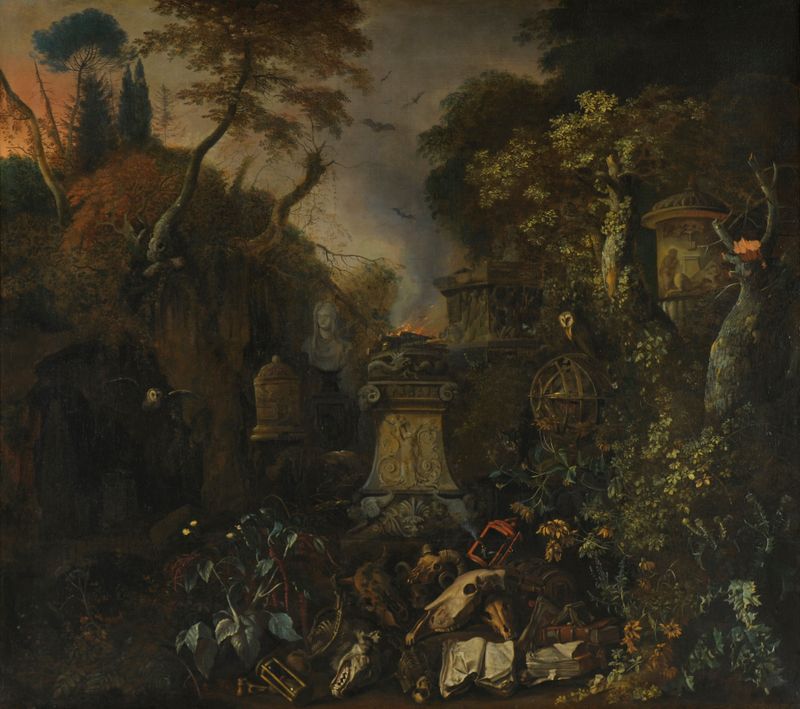
Is this a mirror — or a memory? In the quiet embrace of nature, the boundary between the mundane and the divine blurs, inviting contemplation of the world we inhabit and the unseen threads connecting us to it. Look closely at the vivid arrangement on the forest floor, where the weasel's slender body contrasts tenderly with the round form of the mouse. The artist’s deliberate choice of earthy tones breathes life into the opium poppy and the coarse thistle, their vibrant colors punctuating the scene. Notice how the light seems to filter through the leaves above, casting a soft glow that highlights the intricacies of each creature and plant, creating a serene tableau that hums with vitality. Beneath the surface, the interplay of the weasel and the mouse speaks to the cycles of life and death, survival and vulnerability.
The presence of the opium poppy, often associated with both beauty and peril, suggests a deeper narrative—perhaps a reflection on the nature of desire and the human condition. The distant view of Rome looms like a forgotten echo, reminding viewers of civilization's grandeur while nature thrives in its quiet dominion. Matthias Withoos created this enchanting work during a period when naturalism was gaining traction in art, often focusing on the intricate details of flora and fauna. Little is known about the specific circumstances of its creation, but Withoos was active in the 17th century, a time of rich artistic exploration and increasing interest in the relationship between man and the natural world.
This piece exemplifies his talent for merging realistic observation with a contemplative spirit, inviting viewers to reflect on the divine in the everyday.