
A Forest Glade — History & Facts
What if beauty was never meant to be finished? In the delicate interplay of light and shadow, we are invited to ponder the ephemeral quality of nature and art alike. Look to the lush greenery that embraces the center of the canvas, where dappled sunlight filters through the interwoven branches above. The artist employs a rich palette of vivacious greens and soft browns, capturing the vibrancy of the forest glade. The textures are palpable—notice how the brushwork conveys movement in the leaves, as if a gentle breeze is momentarily frozen within the frame.
This dynamic quality contrasts beautifully with the stillness of the woodland atmosphere, creating an inviting sense of peace. Within this serene glade lies a tension between the wildness of nature and the tranquility it inspires. The way light breaks through the canopy hints at the divine amidst the earthly, suggesting a space that is both ordinary and sacred. Hidden details, such as the small wildflowers peeking from the undergrowth, signify resilience—beauty that flourishes even in the shadows.
These nuanced elements provoke reflections on the balance between chaos and calm, life and decay. Heinrich Böhmer painted this work during a period of exploration in the late 19th century, a time when artists sought to capture the raw beauty of the world around them. Working amidst Germany's dense forests, Böhmer was part of a movement that embraced nature's splendor as a source of inspiration. The peace he found in these glades resonated with contemporary themes, revealing art's potential to embody moments of stillness amidst the fast-paced changes of modern life.
More Artworks by Heinrich Böhmer
Browse all →
A Sun-Lit Forest with a Roe Deer
Heinrich Böhmer
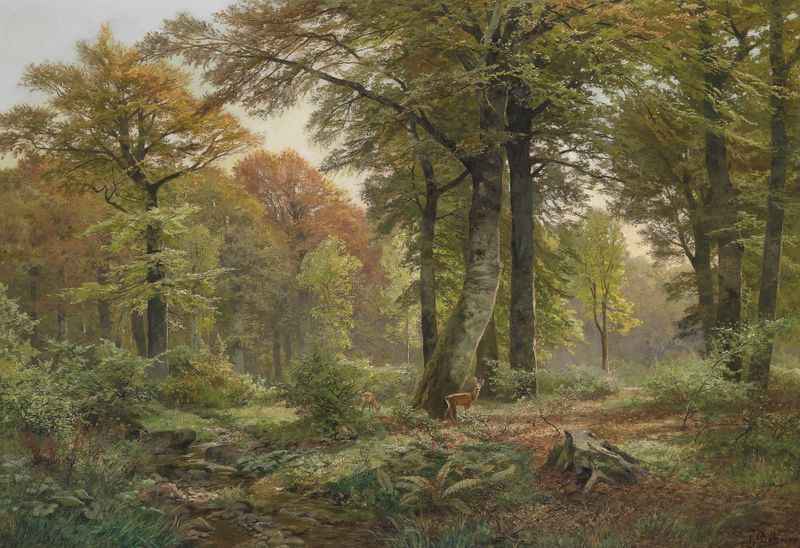
Waldlichtung mit Rehwild
Heinrich Böhmer

Waldsee
Heinrich Böhmer

Rehwild im Buchenwald
Heinrich Böhmer
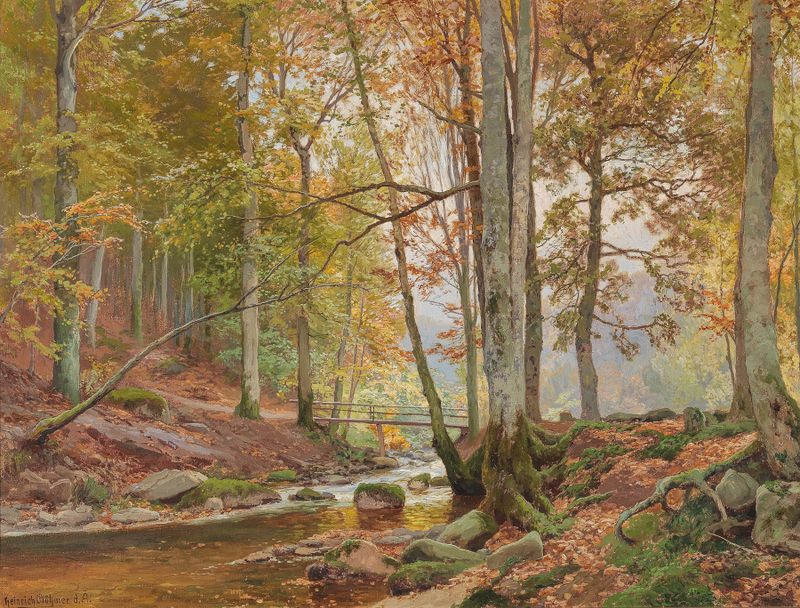
Autumn Woodland with Bridge over a Stream
Heinrich Böhmer

Waldlandschaft
Heinrich Böhmer
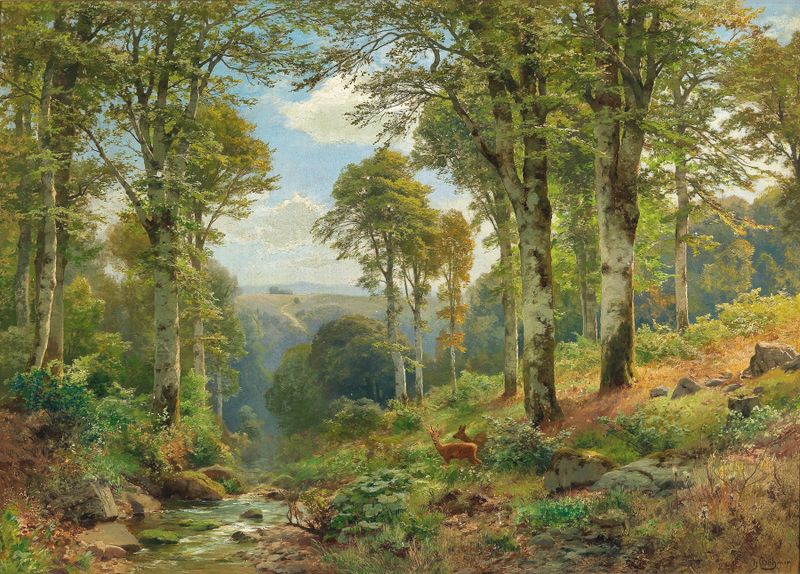
Roe Deer by a Stream
Heinrich Böhmer

Open River Landscape
Heinrich Böhmer

Autumn forest
Heinrich Böhmer





