
Waldlandschaft — History & Facts
What if beauty was never meant to be finished? In Waldlandschaft, the essence of truth unfolds amidst an eternal dance of light and shadow. Look towards the center, where a canopy of lush greens intertwines with the soft browns of the earth below. The delicate brushwork evokes a sense of vibrant life, while the interplay of light filtering through the leaves creates a shimmering mosaic on the forest floor. Notice how Böhmer captures the serenity of the scene, leading the viewer's gaze into an inviting depth filled with layers of texture and color.
The gentle gradation of greens calls forth a sense of peace, inviting contemplation. As you explore the edges of the painting, you'll uncover subtle contrasts that add emotional weight. The bright splashes of sunlight against the dark, secluded corners of the forest symbolize the duality of existence — the known and the unknown. Each stroke carries an air of solitude, inviting a reflection on the unspoken truths hidden within nature's embrace.
The composition suggests a journey through the forest, mirroring the quest for understanding the complexities of life itself. Heinrich Böhmer created this work during a time of artistic exploration, likely in the late 19th century, amidst a burgeoning interest in naturalism and the emotive qualities of landscape painting. While little is known about the specific circumstances of this piece, it reflects the era's desire to capture not just the appearance of nature, but its profound emotional resonance. As artists ventured deeper into the exploration of landscapes, Böhmer's work stands as a testament to the beauty of truth in its raw, unfinished state.
More Artworks by Heinrich Böhmer
Browse all →
A Sun-Lit Forest with a Roe Deer
Heinrich Böhmer

A Forest Glade
Heinrich Böhmer
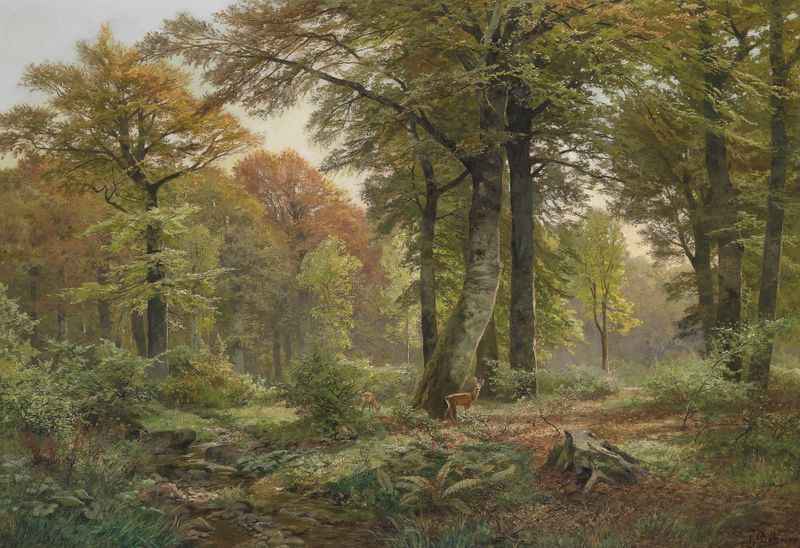
Waldlichtung mit Rehwild
Heinrich Böhmer

Waldsee
Heinrich Böhmer

Rehwild im Buchenwald
Heinrich Böhmer
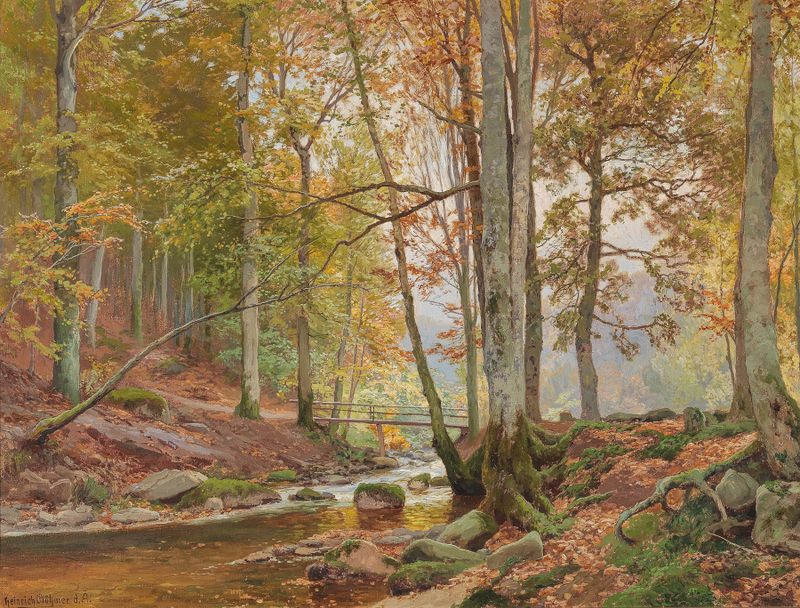
Autumn Woodland with Bridge over a Stream
Heinrich Böhmer
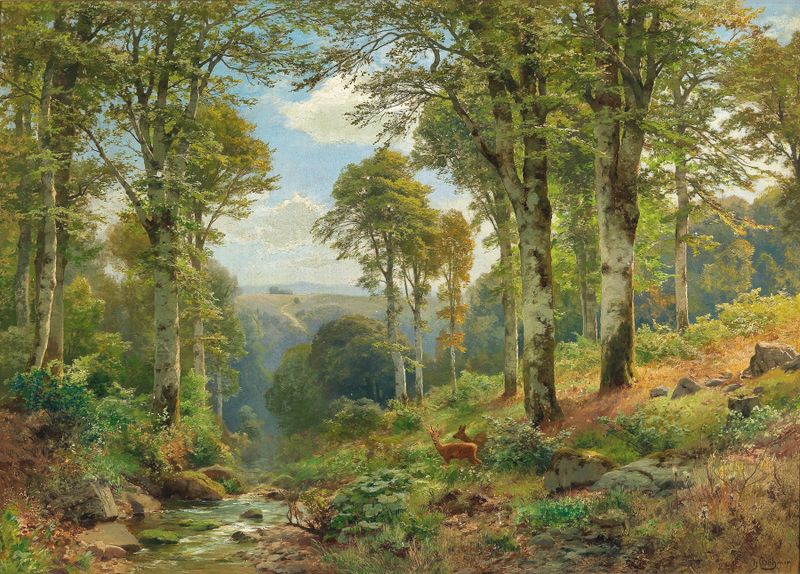
Roe Deer by a Stream
Heinrich Böhmer

Open River Landscape
Heinrich Böhmer

Autumn forest
Heinrich Böhmer





