
Open River Landscape — History & Facts
In the realm of art, grief finds its voice through color and form, whispering stories that linger beyond the canvas. Look closely at the subtle interplay of blues and greens in the water, where gentle ripples mirror the sky’s soft hues. At the painting’s center, the vibrant reflections shimmer, a poignant reminder of what lies beneath the surface. The horizon stretches wide, inviting the viewer’s gaze to wander, while the muted tones of distant trees frame the scene, creating a sense of both tranquility and longing. Each element carries emotional weight; the flowing river symbolizes the passage of time, evoking a bittersweet nostalgia.
Notice how the delicate brushwork conjures an atmosphere of serenity, yet it hints at an underlying melancholy—perhaps a memory of what has been lost. The vastness of the landscape contrasts with the intimacy of personal reflection, bridging nature's beauty with human experience. Heinrich Böhmer painted this work during a time when artists were grappling with the shift from Romanticism to a more expressive interpretation of nature. Active in the late 19th century, Böhmer sought to capture the essence of landscapes with a sense of realism that resonated with the emotional currents of his era.
Amidst the industrial changes around him, his brush responded to the quiet yet profound grief that nature holds, forever echoing in the hearts of those who pause to look.
More Artworks by Heinrich Böhmer
Browse all →
A Sun-Lit Forest with a Roe Deer
Heinrich Böhmer

A Forest Glade
Heinrich Böhmer
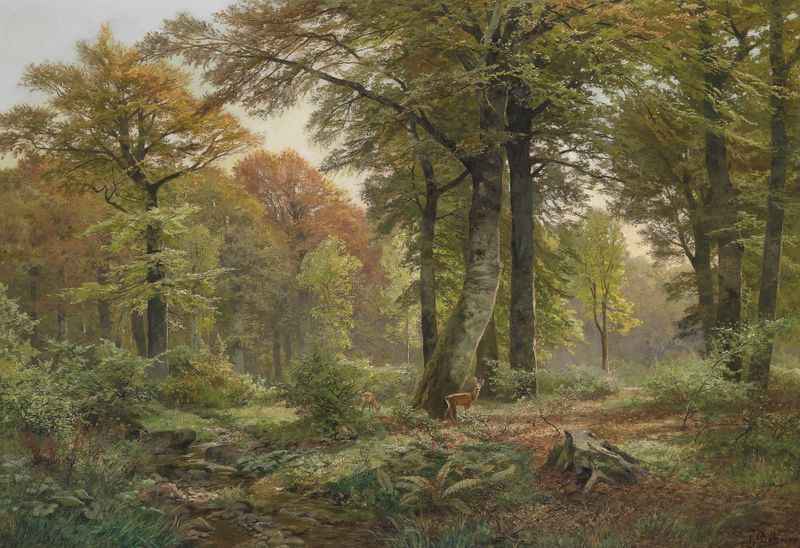
Waldlichtung mit Rehwild
Heinrich Böhmer

Waldsee
Heinrich Böhmer

Rehwild im Buchenwald
Heinrich Böhmer
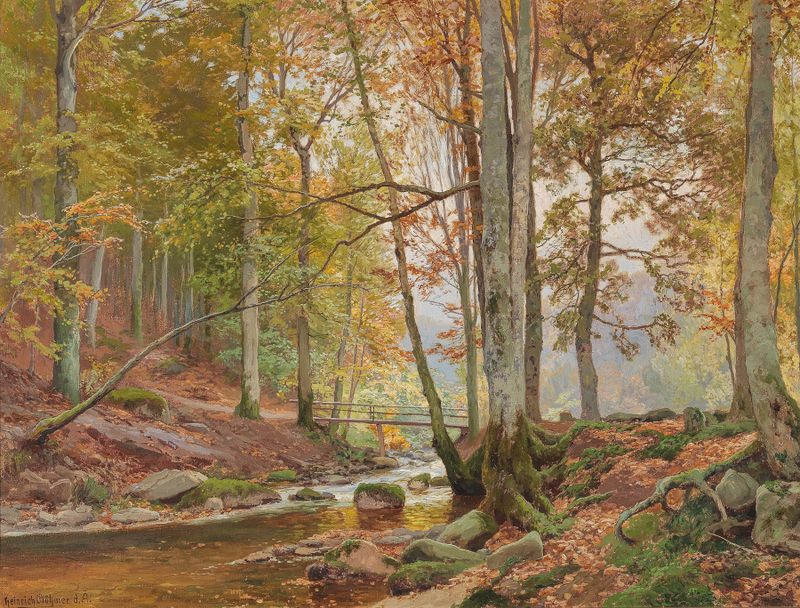
Autumn Woodland with Bridge over a Stream
Heinrich Böhmer

Waldlandschaft
Heinrich Böhmer
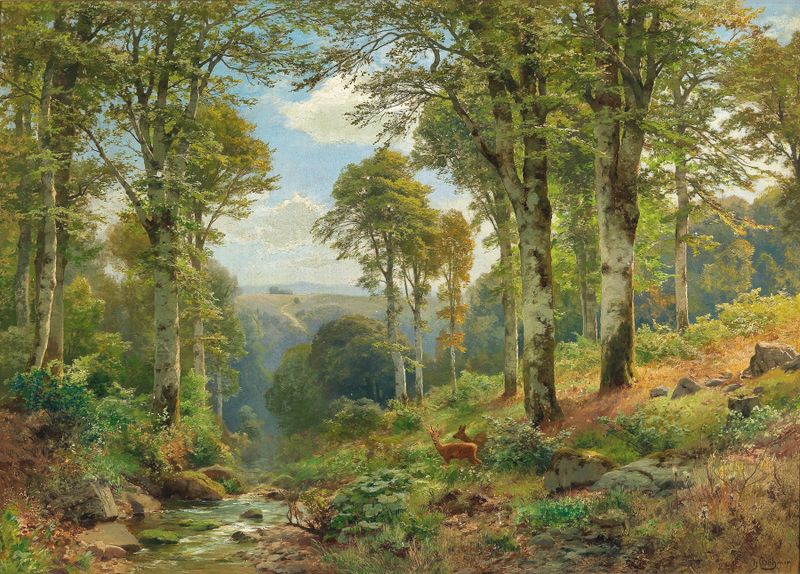
Roe Deer by a Stream
Heinrich Böhmer

Autumn forest
Heinrich Böhmer





