A forest in Fontainebleau — History & Facts
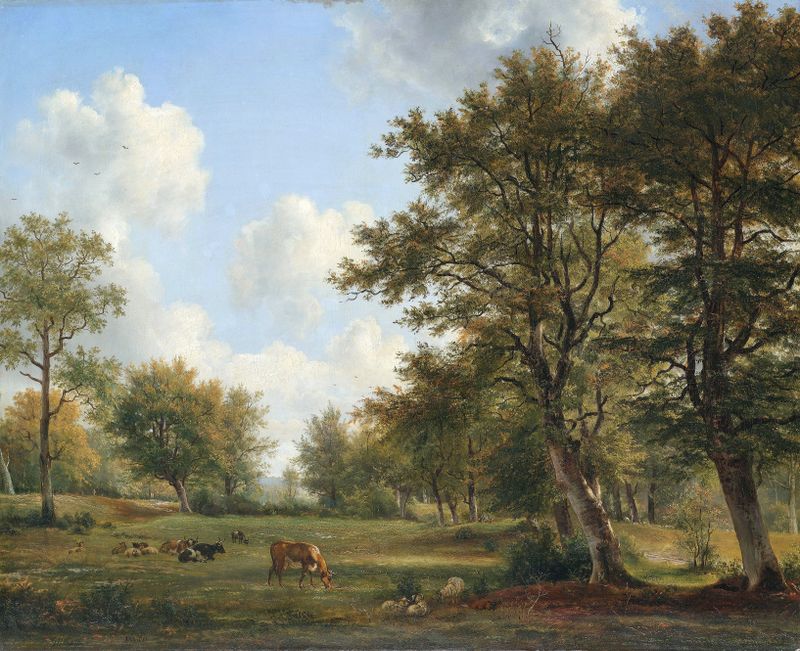
In the quiet refuge of nature, one can uncover layers of illusion woven into reality, inviting the viewer to pause and reflect. Look to the left at the dappled sunlight filtering through the lush canopy, casting intricate patterns on the forest floor. The delicate brushwork evokes leaves that flutter with a gentle breeze, while the soft greens and earthy browns create a harmonious palette that feels both vibrant and serene. The composition pulls you inward, as if beckoning you to wander down the imagined path that van Os masterfully conjures, inviting exploration and contemplation. Beneath the surface of this idyllic scene lies a deeper tension between reality and illusion.
The painter’s meticulous attention to detail emphasizes not just the beauty of the forest but also its transient nature; each leaf and shadow seems to breathe with life yet hints at the inevitable passage of time. The vibrant colors contrast with the stillness of the scene, raising questions about what remains unseen, urging the viewer to ponder the complexities of existence and the layers of perception that define our connection to nature. In 1839, during a time of significant change in the art world, van Os embraced the Romantic movement's ideals while also integrating the emerging techniques of realism. Living in the Netherlands, he was influenced by the lush landscapes of his surroundings and sought to capture their essence on canvas.
This work reflects not only his individual artistic journey but also a broader shift in how artists began to depict nature, merging emotional depth with technical mastery.