Landscape near Hilversum — History & Facts
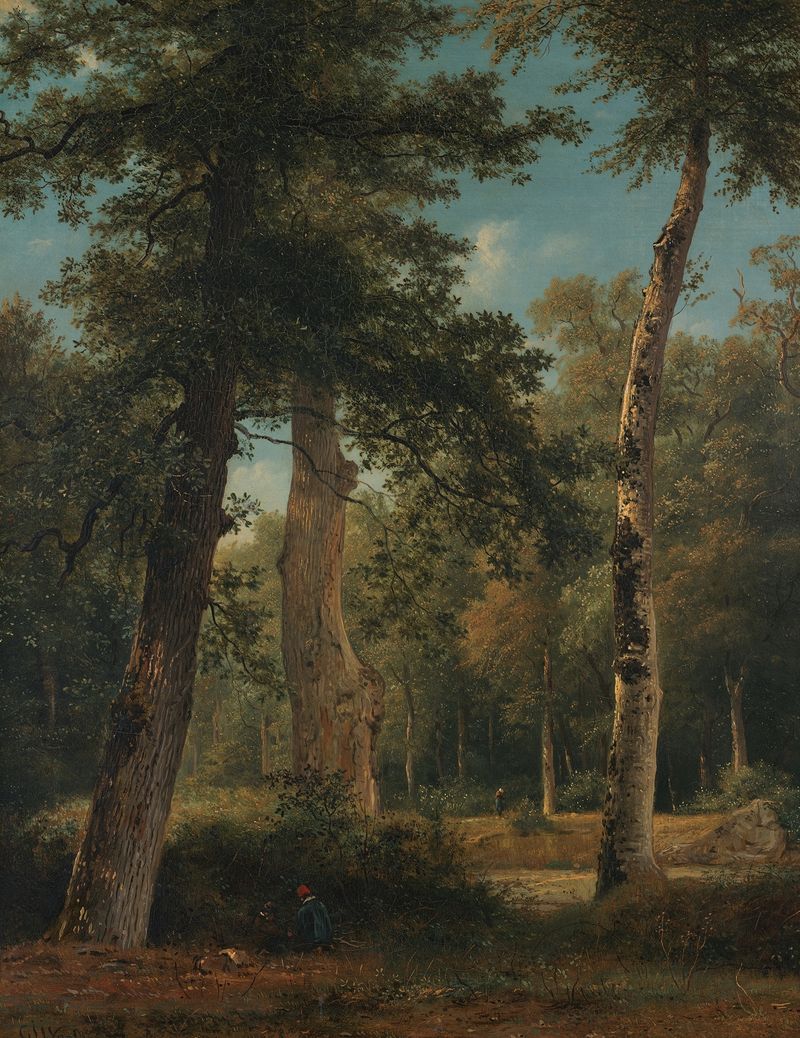
Yet, what lies behind the tranquil beauty of a landscape can often mask an undercurrent of unspoken violence. Look to the foreground of this serene vista, where verdant fields stretch beneath an expansive sky. Notice how the precise brushstrokes form undulating hills, creating a gentle rhythm that invites the eye to wander. The expertly blended greens and muted browns evoke a sense of calm, yet the dynamic clouds overhead — swirling in hues of gray and white — hint at a brewing storm, suggesting that tranquility can easily slip into turmoil. Delve deeper into the contrasts present in this piece.
The calmness of nature stands in stark juxtaposition to the darker undertones of human existence. The meticulous detail of the foliage suggests a world in perfect order, yet the looming shadows and ominous clouds remind us of nature’s unpredictable power and the violence that can erupt at any moment. It’s as if the landscape is holding its breath, caught between peace and chaos, mirroring the tumultuous emotions within us all. In the early 1820s, Georgius Jacobus Johannes van Os was immersed in a period of artistic exploration in the Netherlands.
As he painted Landscape near Hilversum, he was influenced by the Romantic movement, which sought to capture both the beauty and the sublime terror of nature. This era was marked by a growing sensitivity to the emotional depths of landscape, reflecting a world grappling with industrialization and change.