Landschap met brug — History & Facts
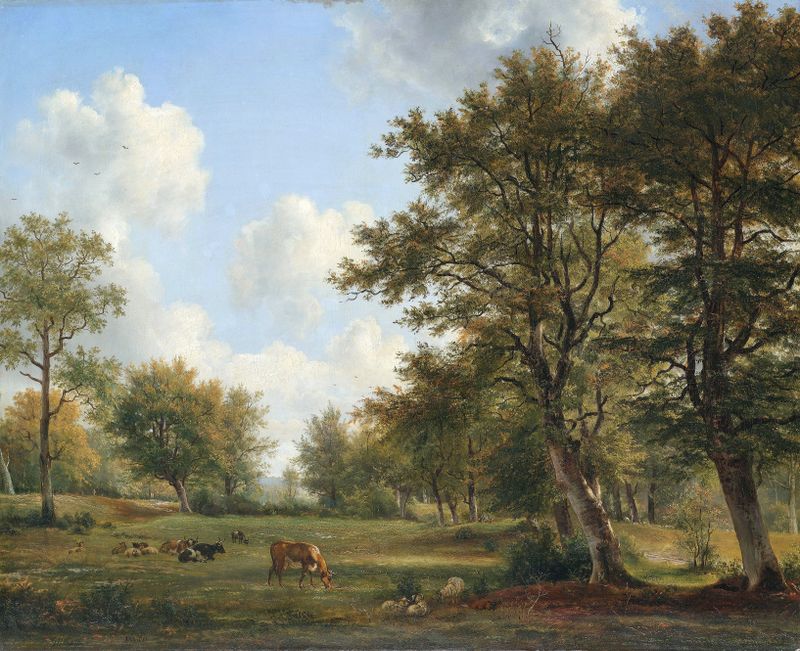
Transformation flows through Landschap met brug, capturing a serene moment where nature and human creation intertwine seamlessly. This artwork invites reflection on the passage of time and the subtle shifts that define existence. Look to the left, where the gentle curve of the river draws the eye toward the arching bridge, connecting the lush greenery on both banks. Notice how the play of light dances on the water's surface, its ripples a canvas for fleeting moments caught in time.
The varying greens of the trees exude life, while the soft blues of the sky suggest an infinite horizon, skillfully rendered through delicate brushwork that evokes tranquility. Delve deeper into the scene, and one can sense an underlying tension between nature’s permanence and humanity's transience. The bridge stands as a metaphor for connection, yet its structure is dwarfed by the vast landscape, prompting contemplation about the fragility of human endeavors amidst nature's eternal beauty. The layered shadows hint at forthcoming changes, as if the painter anticipates a transformation in the seasons, life, or perhaps within ourselves. Georgius Jacobus Johannes van Os created Landschap met brug between 1792 and 1861, a period marked by a shift in artistic focus toward romanticism and the sublime in landscape painting.
Working primarily in the Netherlands, he aligned himself with the tradition of depicting harmonious relationships between man and nature, reflecting broader societal sentiments as Europe transitioned through industrialization and romantic ideals in art.