A Leafy Oak by a Woodland Path — History & Facts
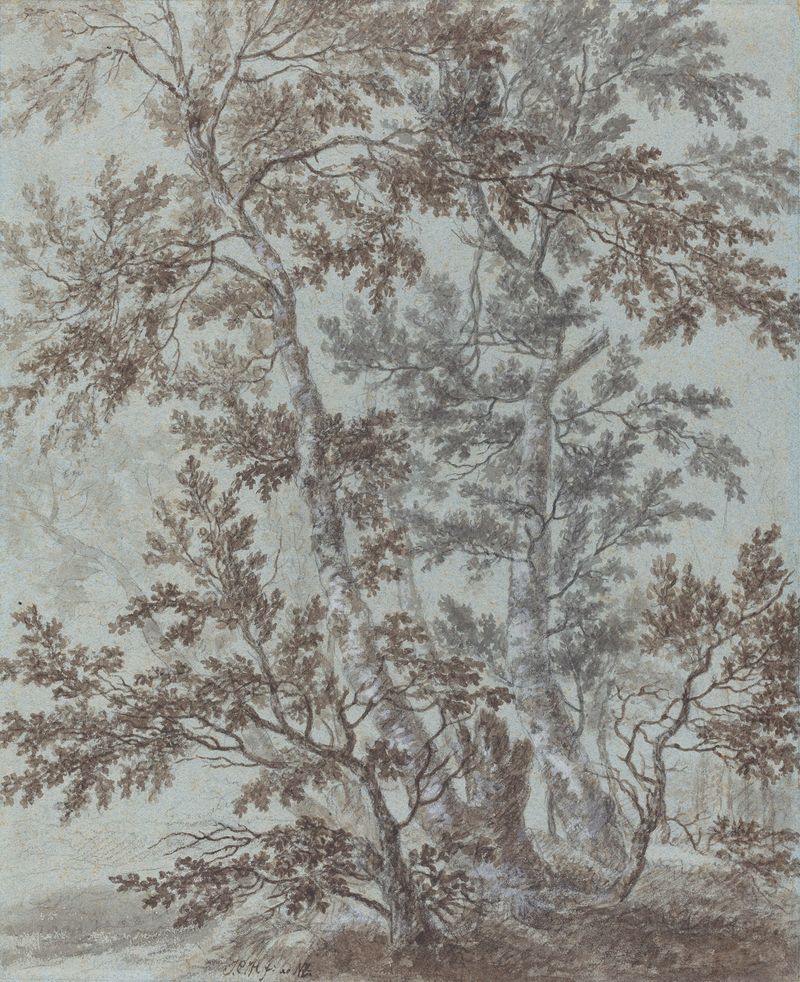
How often do we overlook the melancholy woven into the fabric of nature’s splendor? In A Leafy Oak by a Woodland Path, we are invited to reflect upon the intricate dance of light and shadow, where joy and sorrow entwine in an eternal embrace. Focus first on the majestic oak tree, its gnarled trunk standing proud against a backdrop of dappled green light. Notice how the vibrant leaves shimmer as they catch the sun's rays, while the ground beneath is cloaked in shadows, creating a stark contrast that emphasizes both the tree’s vitality and the encroaching darkness of the forest. The path, barely visible, beckons the viewer to walk deeper into this serene yet mysterious woodland, suggesting an invitation to explore not just the landscape but the emotions it evokes. Within this tranquil scene lies a profound tension between growth and decay.
The oak stands as a symbol of strength and endurance, yet its surroundings hint at the fragility of life, with fallen leaves scattered at its roots. This duality reflects the human experience, where beauty can mask underlying struggles. The composition draws the eye to these contrasts, evoking a sense of nostalgia and introspection, urging us to contemplate our connection with the natural world. In the 1780s, Johann Caspar Huber painted this work during a period of growing interest in nature and emotion within the arts.
Living in a time when Romanticism was beginning to flourish, he sought to capture the raw beauty of the landscape, reflecting the era's fascination with the sublime and the inherent complexities of human emotion. His dedication to portraying nature with such sensitivity resonated with the shifting tides of artistic expression in Europe.