Wooded Cliffs along a Riverbank — History & Facts
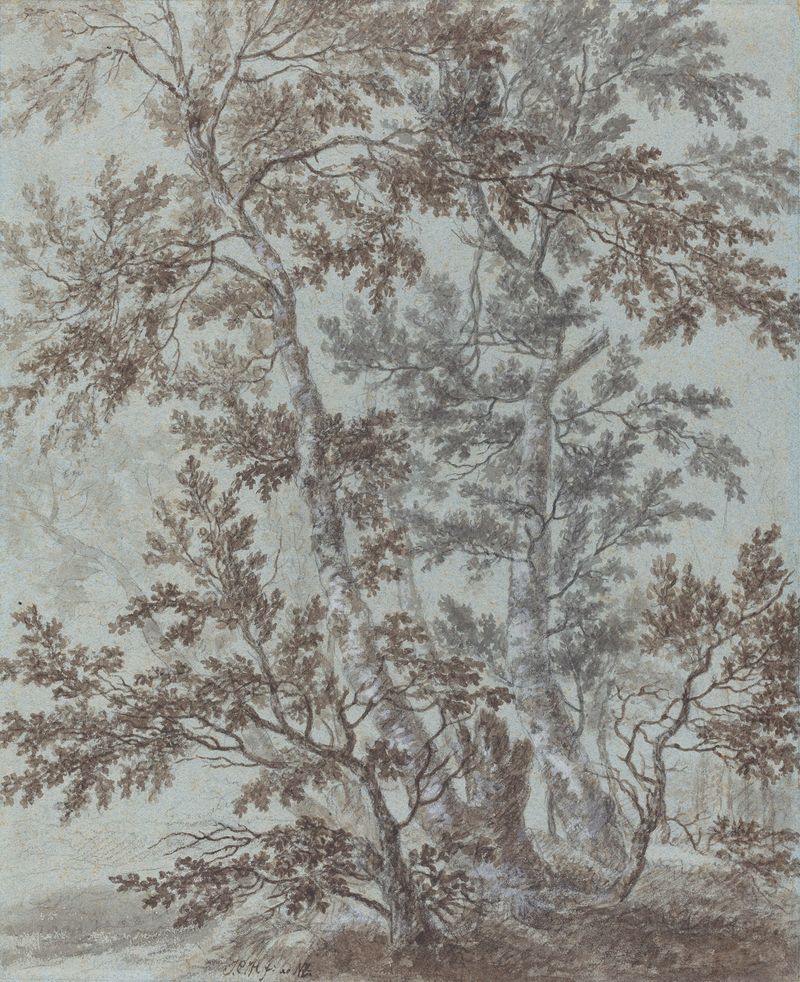
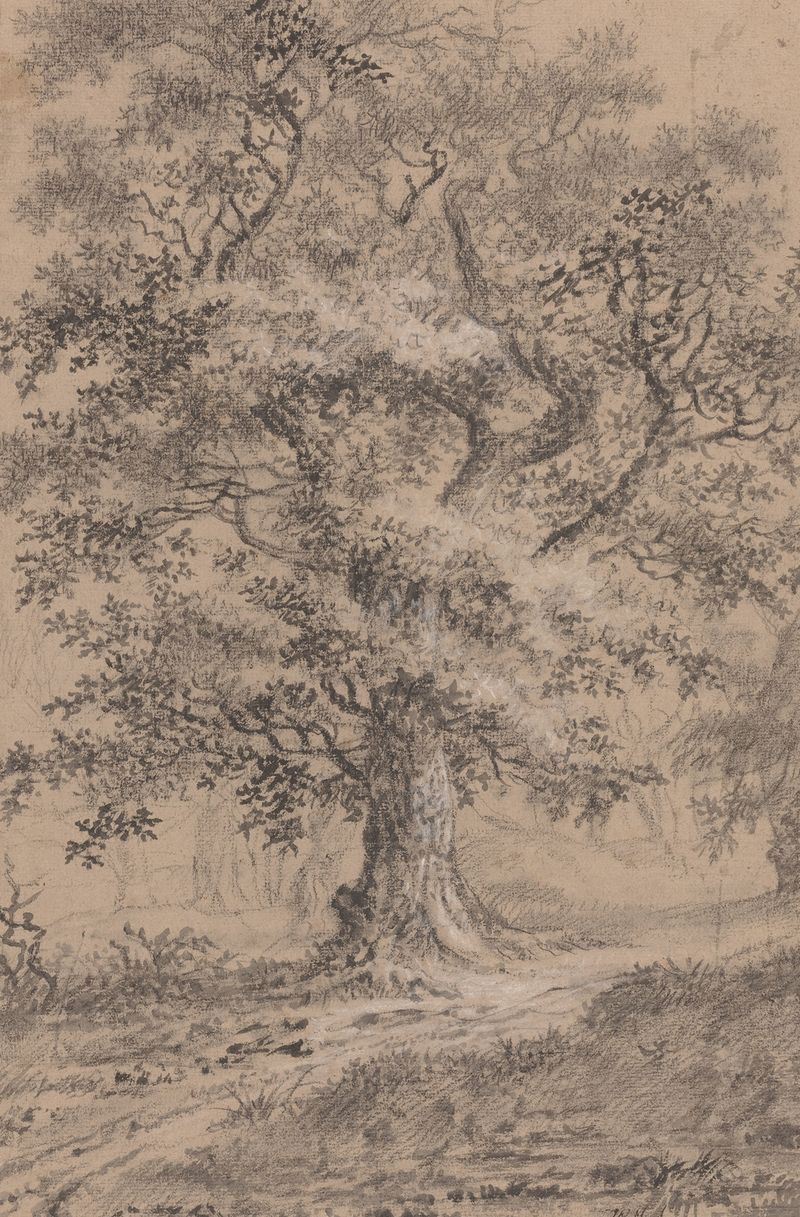
Who listens when art speaks of silence? In the depths of stillness, Wooded Cliffs along a Riverbank captures the delicate balance between nature's tranquility and the turbulence that lurks beneath its surface. Look to the left at the towering cliffs, their jagged edges softened by a lush coat of verdant foliage. The artist employs a palette of muted greens and browns, allowing the subtle interplay of light and shadow to breathe life into the scene. Notice how the river, meandering gracefully in the foreground, reflects the surrounding landscape with a shimmering glint, drawing your eye to the horizon where the cliffs meet the sky—a silent invitation to explore further. Yet, beneath this serene façade lies a tension between chaos and calm.
The intricate details of the foliage suggest a frenzy of life, while the stillness of the water hints at an unspoken madness that beckons contemplation. Each brushstroke reveals a realm of emotions, connecting the viewer to an inner turmoil that contrasts sharply with the outward beauty of the landscape. The silence of the scene echoes with the weight of thought, asking whether nature itself bears witness to the chaos of the human spirit. Johann Caspar Huber painted this piece in 1796, during a time when Romanticism began to shape the artistic landscape of Europe.
Amidst the upheaval of the French Revolution and the cultural shifts it spurred, he sought to capture the sublime beauty of nature while grappling with the complexities of human emotion. This work reflects not only his personal exploration but also the broader dialogue in art about the harmony and discord inherent in the natural world.