A Moonlit Night on a Lake — History & Facts
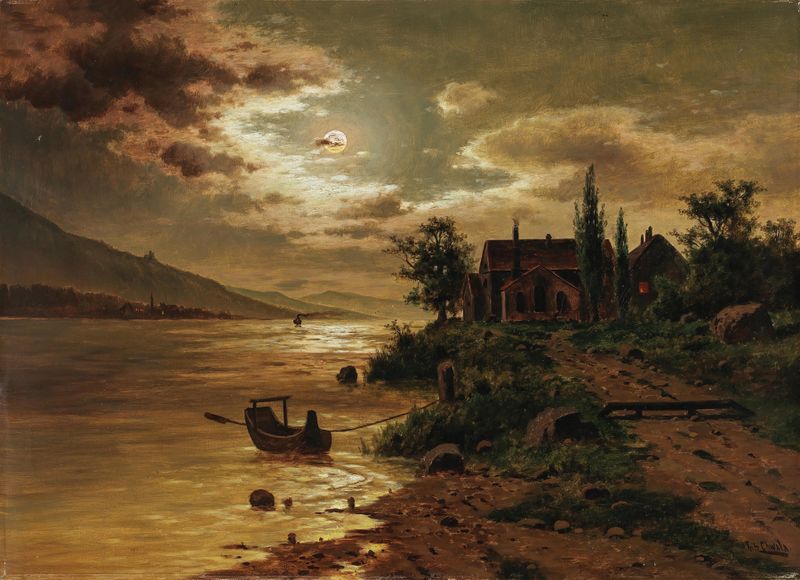
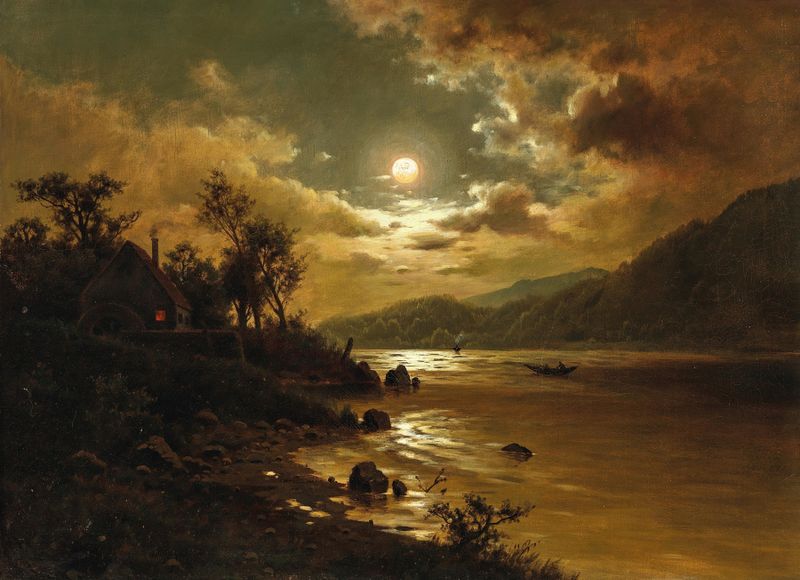
What secret hides in the quiet of the canvas? Beneath the ethereal glow of the moon, shadows dance softly across the surface of the water, hinting at stories untold and emotions unspoken. In the tranquil embrace of night, the viewer is invited to explore this stillness, to seek the whispers that linger in the twilight. Look to the gentle undulations of the lake, where the silvery light spills and shimmers, creating a pathway to the horizon. The artist employs a delicate palette, rich in deep blues and silvery grays, to evoke a serene yet haunting atmosphere.
Notice how the silhouettes of distant trees frame the scene, their dark forms contrasting against the luminous moon, suggesting a balance between light and shadow—an equilibrium reflecting the dualities of nature itself. This artwork captures the tension between serenity and mystery, as the moonlight reveals only fragments of the surrounding landscape. The reflection on the water creates an illusion of depth, drawing the eye into a tranquil abyss that conceals untold narratives. The interplay of light and shadow serves as a metaphor for the hidden aspects of life, reminding us that beauty often resides in obscurity. Fritz Chwala created this painting during a period when artists were increasingly exploring the effects of light and atmosphere in their work.
While little is known about the exact circumstances of its creation, it reflects the broader movements of late 19th-century art, where romanticism melded with emerging impressionist techniques, inviting viewers to engage with the emotional resonance of nature's beauty.