A Mother Feeding her Child (The Happy Mother) — History & Facts
When did color learn to lie? In the hands of a master, it becomes a vehicle for revelation, unearthing the sacred intimacy of a moment. Look to the left at the vibrant reds and warm earth tones that envelop the mother and child, creating a cocoon of tenderness. Notice how the light softly caresses the figures, highlighting the gentle curve of the mother’s hand as she offers nourishment, and the serene expression on the child’s face. The meticulous brushwork draws your eye across the canvas, from the rich texture of the mother's attire to the delicate features of her child, each detail harmonizing to evoke a sense of comfort. Yet beneath this surface beauty lies a deeper tension.
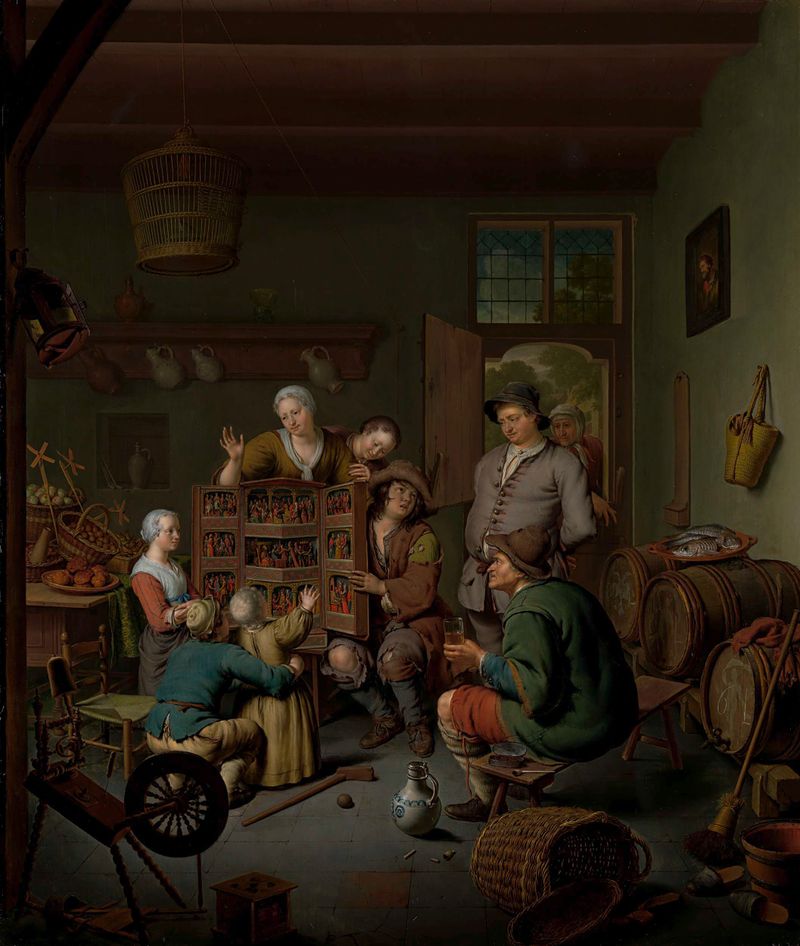
The mother’s focused gaze suggests a profound connection, a moment both mundane and extraordinary, capturing the essence of maternal love. The stillness of the scene contrasts with the vibrancy of the colors, hinting at the sacrifices and joys of motherhood—an eternal dance of nurturing and growth that transcends time. This canvas invites contemplation on the nature of care, gently reminding us of our own vulnerabilities and the bonds that define us. Willem van Mieris painted this work in 1707, a period marked by the flourishing of Dutch genre painting.
Living in a time when art was becoming increasingly personal and intimate, van Mieris sought to depict everyday life with a level of detail and emotional depth that resonated with viewers. His commitment to realism and sensitivity in portraying human relationships during this era became a hallmark of his legacy, influencing the perception of domestic life in art.