A Mountain Stream — History & Facts
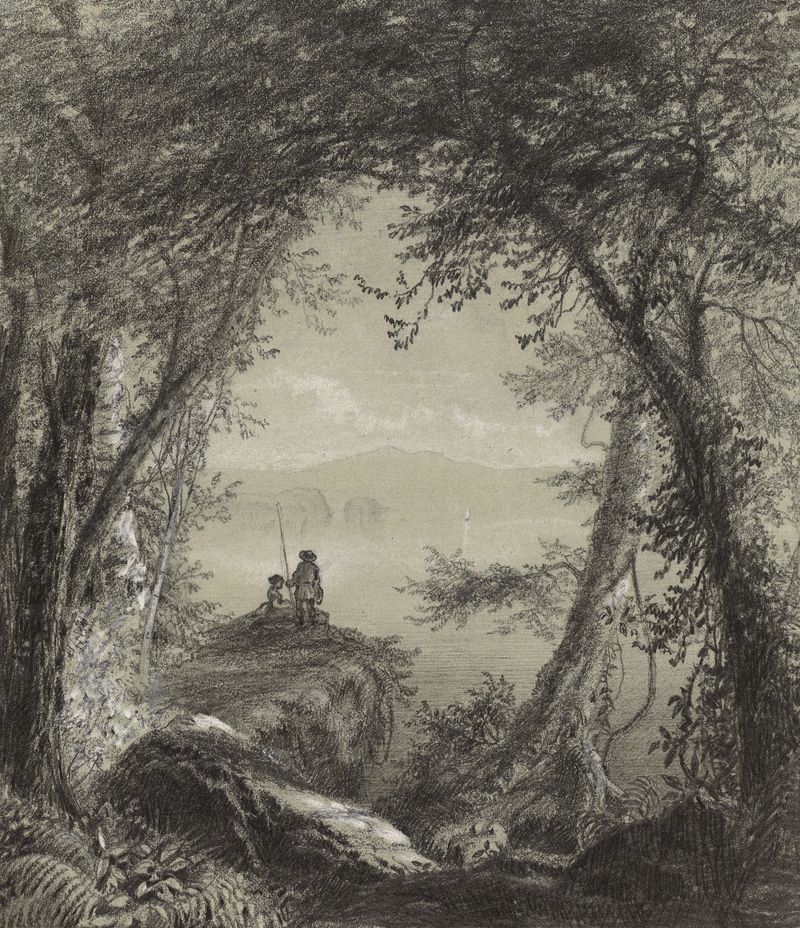
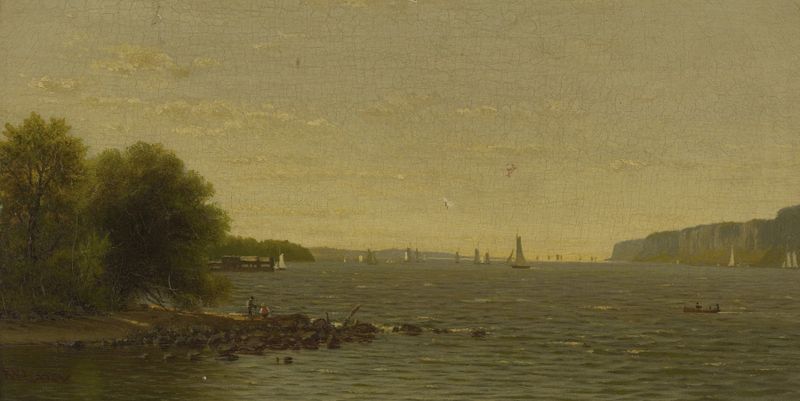
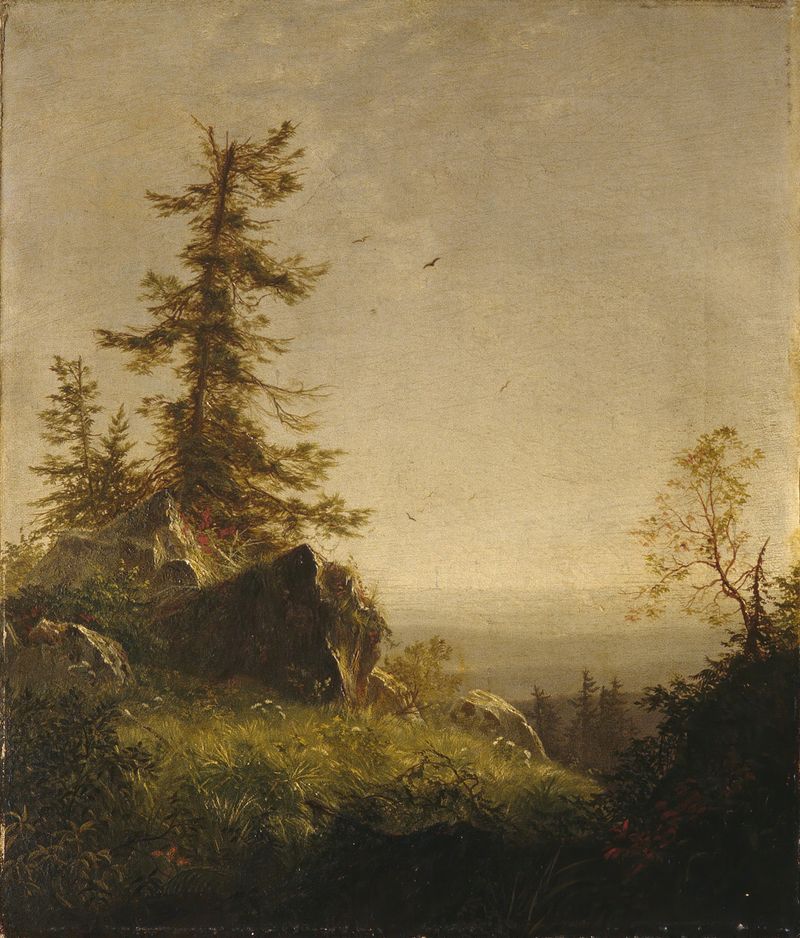
In its stillness, it invites us to gaze deeper into nature’s intricate ballet, evoking a sense of awe that resonates within our souls. Look to the foreground, where the bubbling mountain stream meanders with effortless grace over smooth stones. Notice how the artist has captured the crystalline water, each brushstroke reflecting light in a dance of shimmering blues and greens. The surrounding foliage, with its rich, vibrant greens, frames the scene beautifully, guiding the eye toward the ethereal horizon where the sky meets the mountains. Delve into the subtle contrasts within the painting; the serene flow of the stream juxtaposes the solid permanence of the surrounding trees and stones.
This harmony speaks to the eternal cycle of nature, a reminder of both tranquility and movement. The artist's delicate handling of light not only illuminates the water but also evokes feelings of purity and renewal, as if the very essence of life flows through the scene. Richard William Hubbard painted this piece in 1880 during a period marked by America’s exploration of the natural landscape in art. Having settled in New England, he was influenced by the burgeoning movement to capture the beauty of untamed wilderness.
This particular work reflects not only his personal exploration of nature but also the broader societal shift toward appreciating the environment, a sentiment that was gaining momentum among contemporary artists of his time.