Lake George — History & Facts
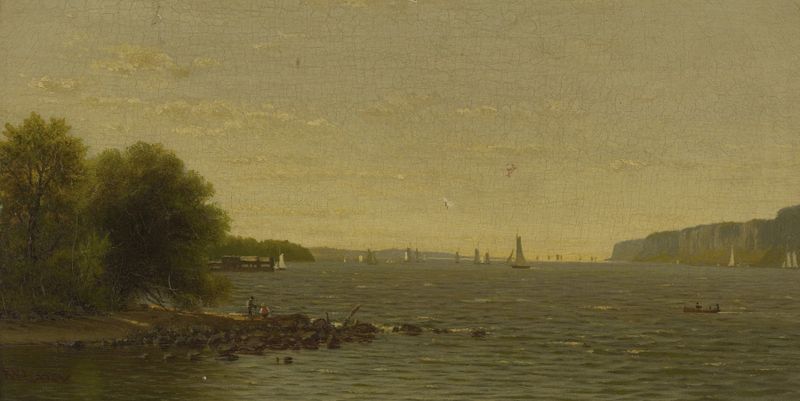
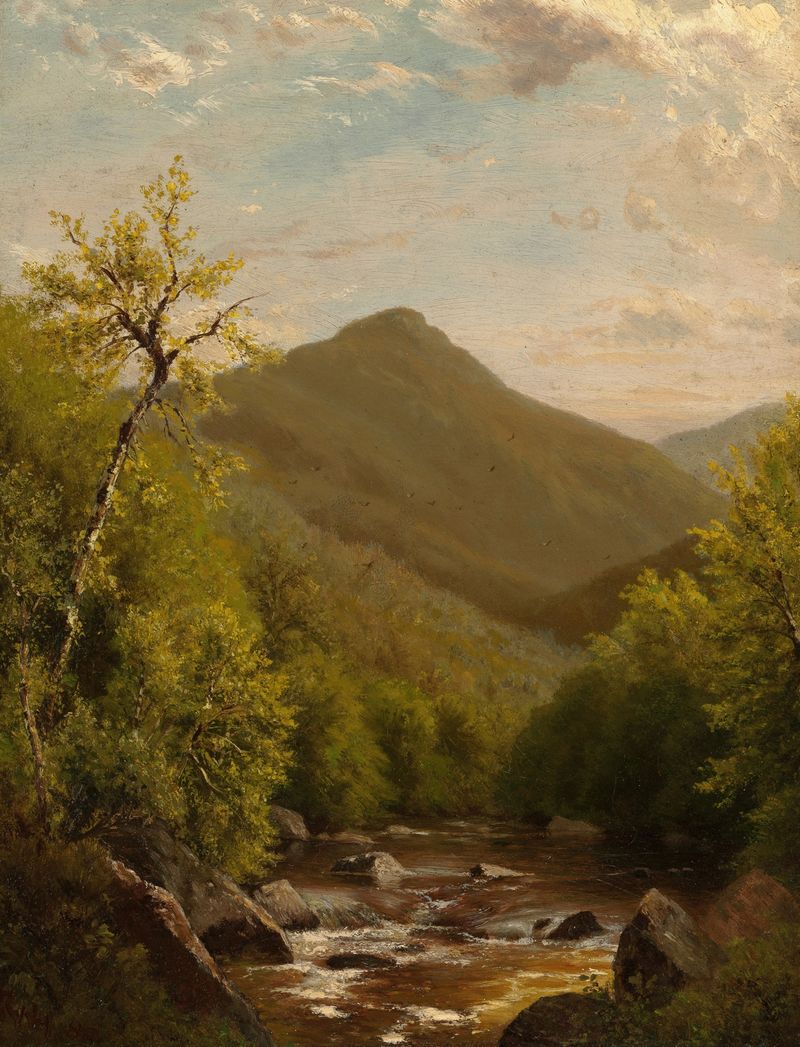
Can paint confess what words never could? In Lake George, tranquility and tension hold hands, revealing a delicate balance between nature's majesty and humanity's presence within it. Look to the serene waters, where the reflections of towering trees and rocky cliffs beckon your gaze. Notice how the gentle hues of green and blue blend seamlessly, creating an atmosphere that feels both inviting and introspective. The composition draws you in with its subtle gradations of light, highlighting the soft ripples of the lake's surface, while the dappled sunlight filters through the leaves, casting fleeting shadows that dance across the canvas. Yet, beneath this stillness lies an undercurrent of complexity.
The juxtaposition of the vibrant natural landscape with the sparse hints of human life presents a dialogue between solitude and connection. Each brushstroke tells a story, inviting the viewer to ponder what these serene waters have witnessed. The quietude evokes a sense of longing, hinting at the transient nature of peace amidst the inevitable passage of time. In the mid-19th century, Hubbard painted this work during a time of burgeoning exploration and appreciation of America’s landscapes.
He created it in a period when artists were increasingly turning to nature as a subject, reflecting a broader movement toward Romanticism in the arts. Amidst this changing landscape of art, he sought to capture not just the visual beauty of Lake George, but also its emotional resonance, a pursuit that connected him to the romantic ideals of his contemporaries.