Morning on the Mountain — History & Facts
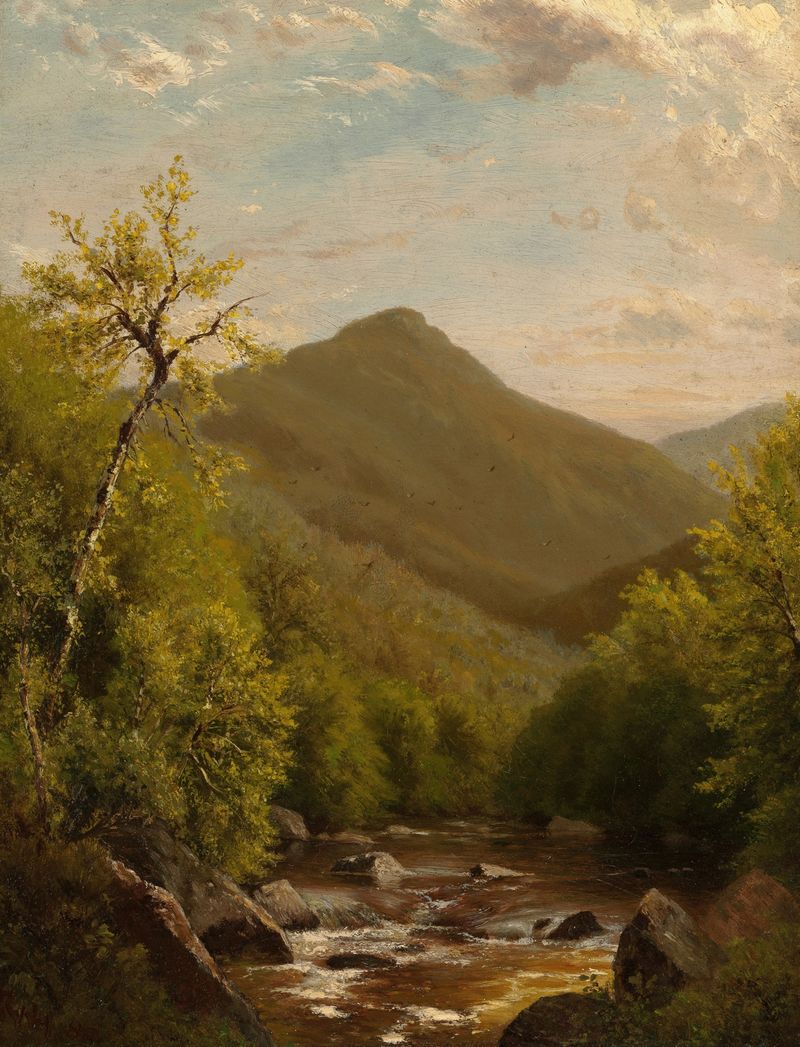
When did color learn to lie? In the embrace of dawn, hues dance as they tell a story of both serenity and longing, urging the viewer to question the authenticity of what they see. Focus on the gentle ascent of the mountain, where soft pastels blend harmoniously with the deep greens and rich browns of the foliage. Notice how the light pours over the peaks, casting a warm glow that seems almost ethereal, inviting you to lose yourself in its embrace. The composition draws your eye up, the sweeping lines of the landscape guiding you through the serene atmosphere, evoking a sense of peace. Dig deeper, and you’ll find layers of emotional tension in the contrasts of light and shadow.
The vibrant sunlight illuminates the mountaintops, symbolizing hope and renewal, while the cooler tones in the shaded areas suggest the weight of solitude and introspection. Each brushstroke speaks of the delicate balance between nature's beauty and the human experience, whispering secrets of joy and melancholy that coexist in this tranquil scene. In 1856, Richard William Hubbard painted this masterpiece during a time of great change in the art world, as Romanticism was giving way to Impressionism. Living in the United States amid growing tensions over social issues, including westward expansion, Hubbard found solace in nature.
This painting reflects not only his personal journey but also the broader movement towards capturing fleeting moments of beauty and emotion.