
A Quiet Day near Manchester — History & Facts
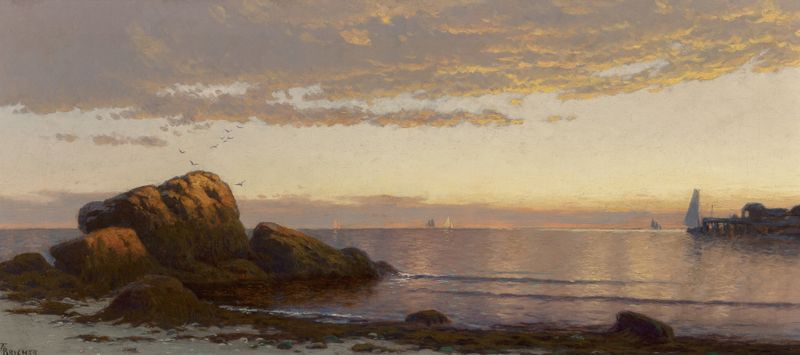
Could a single brushstroke hold eternity? In A Quiet Day near Manchester, the illusion of serene tranquility unfolds before our eyes, inviting contemplation of both nature and the passage of time. Look to the left at the gentle bend of the river, where the soft ripples mirror the sky’s muted palette. Notice how the light dances over the water's surface, reflecting a mastery of technique that evokes a sense of stillness. The artist’s brushwork creates an almost atmospheric depth, blending blues and greens that pull the viewer into the scene.
The horizon, with its delicate clouds, draws the gaze upward, suggesting boundless possibility against the grounded, earthy tones of the foreground. Amid this peaceful setting lies an inherent tension between stillness and motion, as the wind rustles through the trees while the water flows quietly. Each element seems to whisper stories of the past, capturing fleeting moments of nature's beauty that invite introspection. The juxtaposition of the calm river against the distant, unyielding hills serves as a reminder of life’s dualities—the quiet joys and the persistent march of time. In 1873, when this piece was painted, Alfred Thompson Bricher was navigating the evolving landscape of American art, influenced by the Hudson River School's emphasis on nature.
He created this work during a time when realism was gaining traction, and his focus on the serene and picturesque reflected both personal exploration and a growing appreciation for the beauty of the natural world.
More Artworks by Alfred Thompson Bricher
Browse all →
New England Coast
Alfred Thompson Bricher
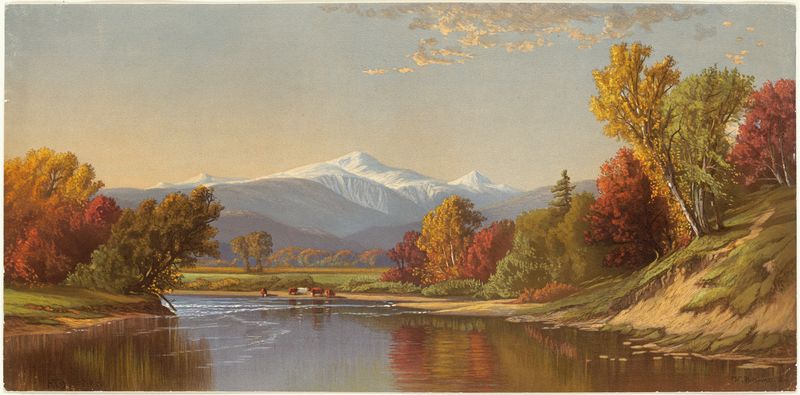
Late Autumn in the White Mountains
Alfred Thompson Bricher
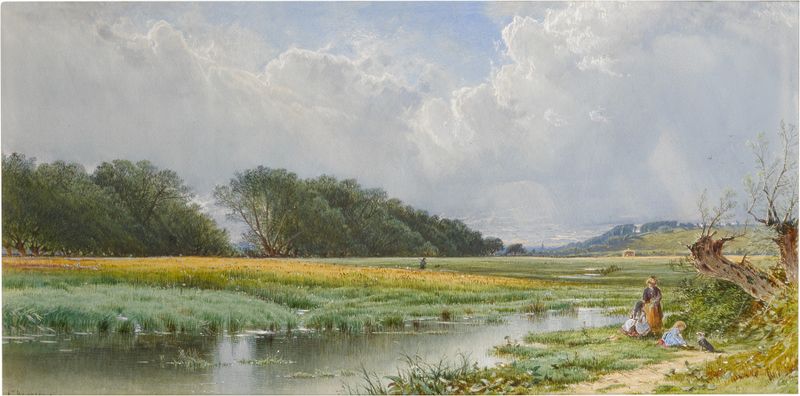
On the Meadows of Old Newburyport
Alfred Thompson Bricher

Along the Maine Coast
Alfred Thompson Bricher
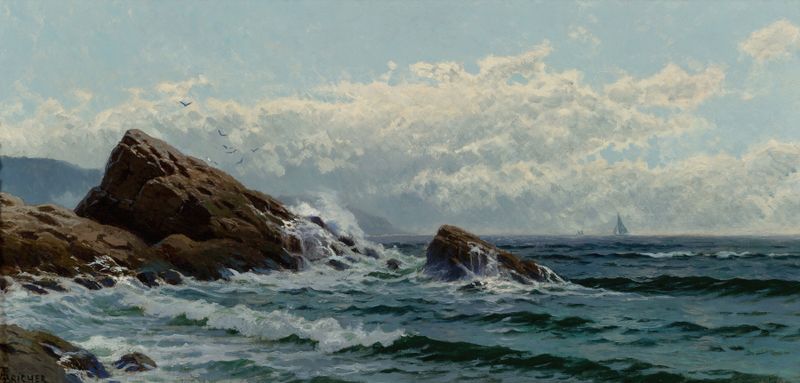
Crashing Waves
Alfred Thompson Bricher

At Water’s Edge
Alfred Thompson Bricher
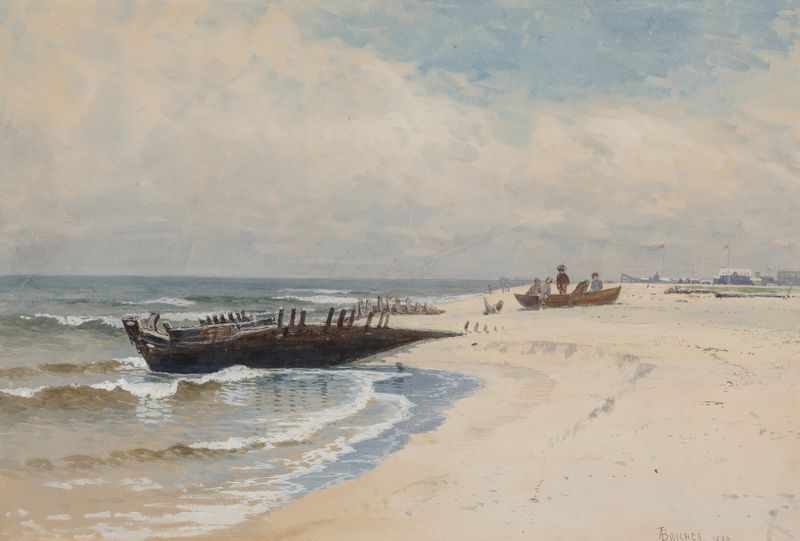
Low Tide
Alfred Thompson Bricher
Sunset on the Coast
Alfred Thompson Bricher

Castle Rock, Nahant, Massachusetts
Alfred Thompson Bricher

On the Meadows of Old Newburyport
Alfred Thompson Bricher





