
Crashing Waves — History & Facts
Did the painter know this moment would outlive them? A fleeting yet eternal dance of light and water, the crashing waves bear witness to time's relentless march, inviting us to pause and ponder. Look to the center of the canvas where tumultuous waves rise, their frothy edges caught in brilliant sunlight. Notice how the artist captures the interplay of blues and greens, blending hues that pulse with energy and motion. The waves curl and cascade, forming a dynamic diagonal that draws the eye across the surface, inviting a sense of movement as if the viewer is standing at the shoreline, feet sinking into wet sand. Engage with the contrasts found in the painting: the chaotic roar of the waves juxtaposed with the calmness of the distant horizon.
Observe the subtle gradations of light, illuminating the turbulent water, sparking reflections that shimmer under the sun's gaze. Each droplet frozen in time encapsulates a moment of chaos, yet collectively they convey an uncanny serenity, reminding us of nature's duality in both beauty and ferocity. This work was created during a period when the artist explored the themes of nature's grandeur and its transient beauty. Although the exact date remains uncertain, Bricher was active in the late 19th century, a time when American landscape painting was flourishing.
Embracing the Romanticism of his era, he sought to immerse viewers in the sublime experience of coastal vistas, capturing the raw power of the sea that resonates with the heartbeat of the world.
More Artworks by Alfred Thompson Bricher
Browse all →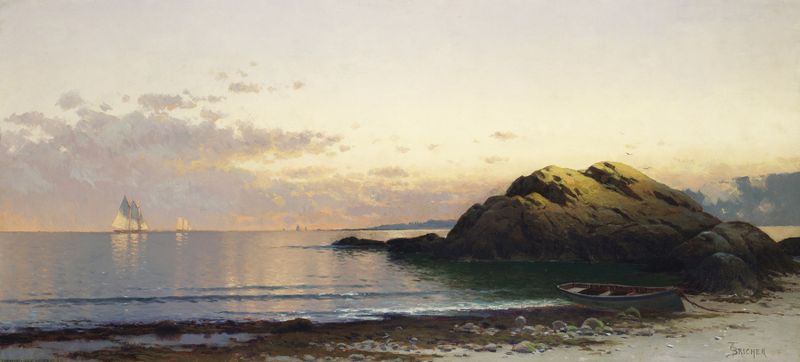
New England Coast
Alfred Thompson Bricher
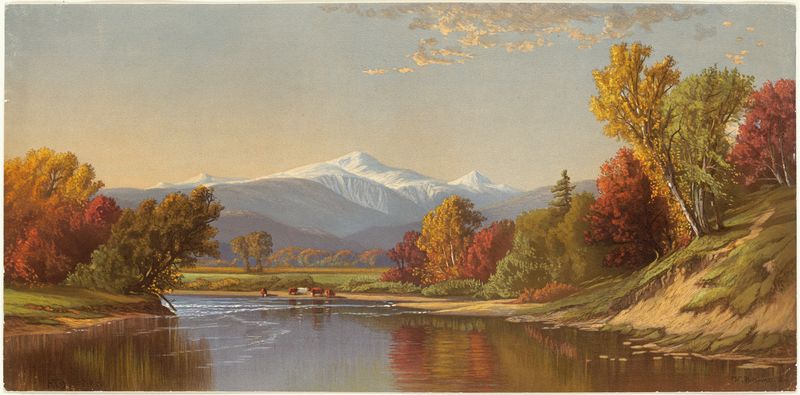
Late Autumn in the White Mountains
Alfred Thompson Bricher
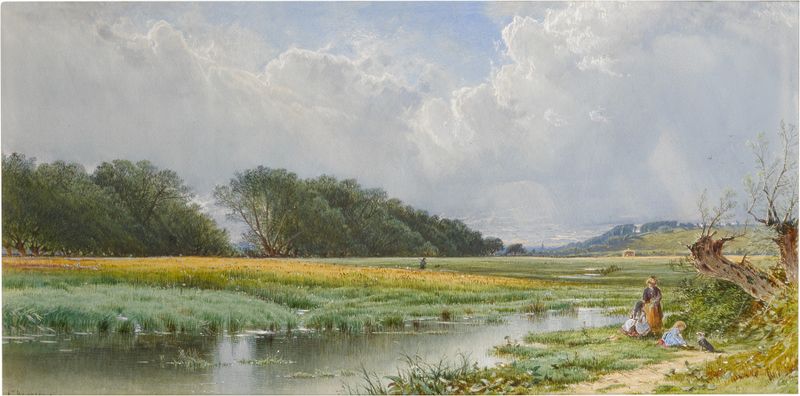
On the Meadows of Old Newburyport
Alfred Thompson Bricher

Along the Maine Coast
Alfred Thompson Bricher

At Water’s Edge
Alfred Thompson Bricher
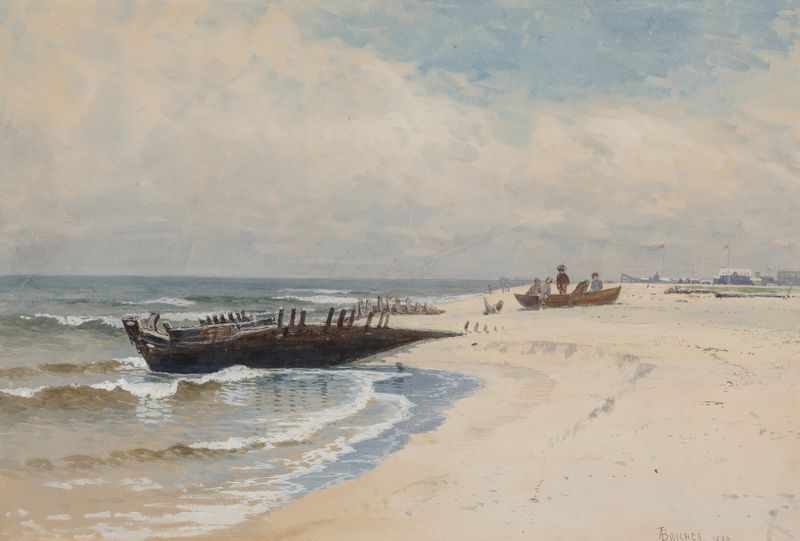
Low Tide
Alfred Thompson Bricher
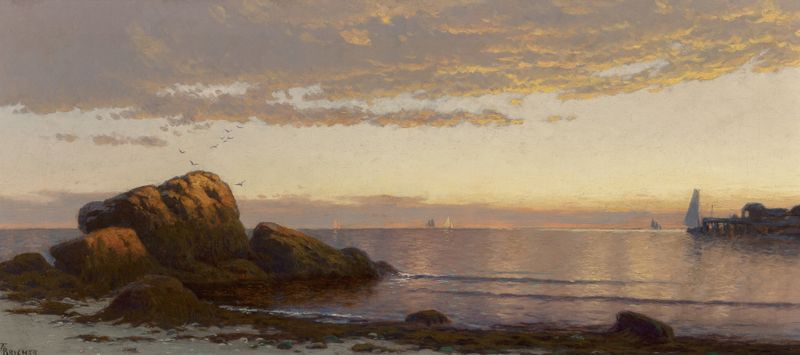
Sunset on the Coast
Alfred Thompson Bricher

Castle Rock, Nahant, Massachusetts
Alfred Thompson Bricher

On the Meadows of Old Newburyport
Alfred Thompson Bricher
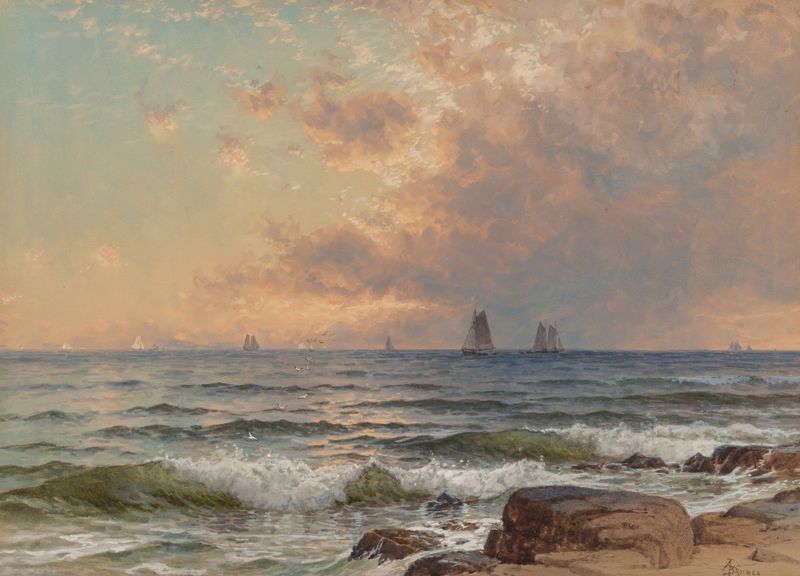
Sails at Sunset
Alfred Thompson Bricher





