
At Water’s Edge — History & Facts
Is this a mirror — or a memory? The delicate hues of blue and gold intermingle, inviting introspection and a sense of wonder about the world beneath the surface. Look to the foreground, where calm waters reflect the sky, creating a seamless connection between sea and heaven. The soft brushwork captures the gentle ripples of the water, while the luminous yellows and oranges of the setting sun dance across the canvas, illuminating the tranquil scene. Your eyes are drawn to the subtle details — the distant sailboat gliding silently, hinting at adventure, and the rocky shore framed by lush greenery, grounding the ethereal moment in reality. Yet, there’s an underlying tension in this idyllic scene.
The peacefulness of the water is juxtaposed with the rugged, unyielding rocks, symbolizing life’s contrasts between serenity and turmoil. The light plays tricks here, casting long shadows that stretch toward the horizon, suggesting the fleeting nature of time and memory. Each wave seems to hold a secret, urging the viewer to ponder what lies just out of sight, beneath the surface. At the time At Water’s Edge was created, Alfred Thompson Bricher was deeply involved in the American Art movement and the Hudson River School.
His works often reflected a reverence for nature and its grandeur. This particular piece, painted during the late 19th century, aligns with the period’s fascination with capturing the sublime beauty of landscapes, while also mirroring Bricher's personal journey of exploring the relationship between humanity and the natural world.
More Artworks by Alfred Thompson Bricher
Browse all →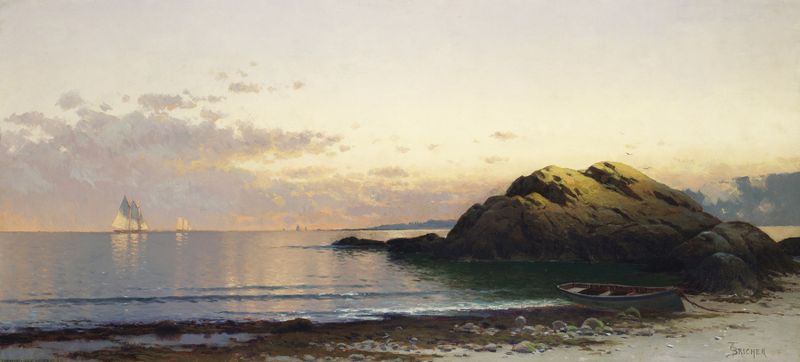
New England Coast
Alfred Thompson Bricher
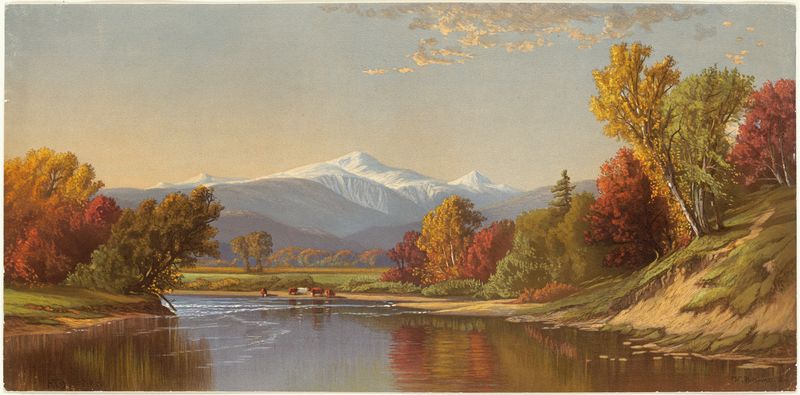
Late Autumn in the White Mountains
Alfred Thompson Bricher
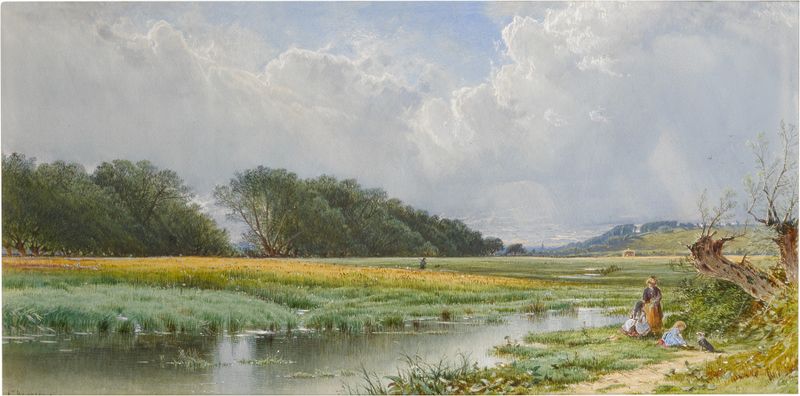
On the Meadows of Old Newburyport
Alfred Thompson Bricher

Along the Maine Coast
Alfred Thompson Bricher
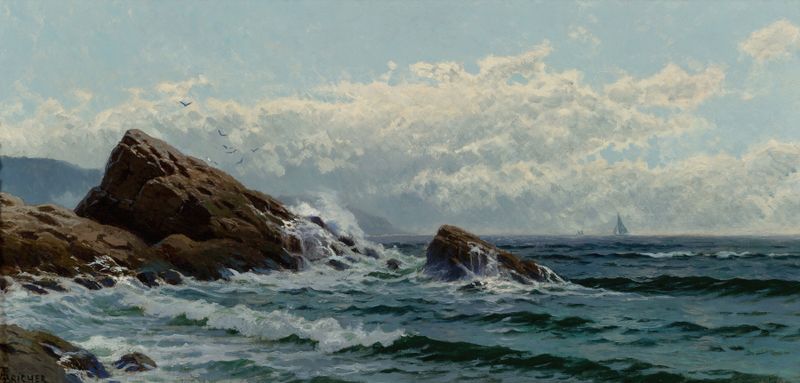
Crashing Waves
Alfred Thompson Bricher
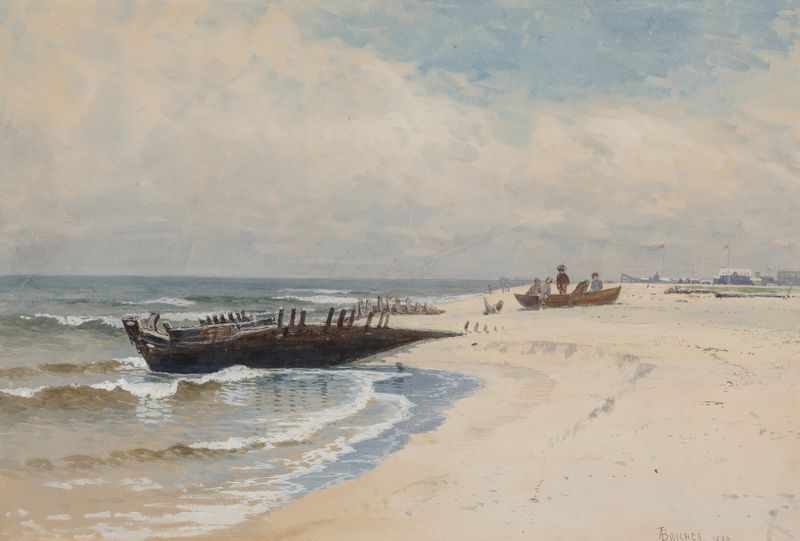
Low Tide
Alfred Thompson Bricher
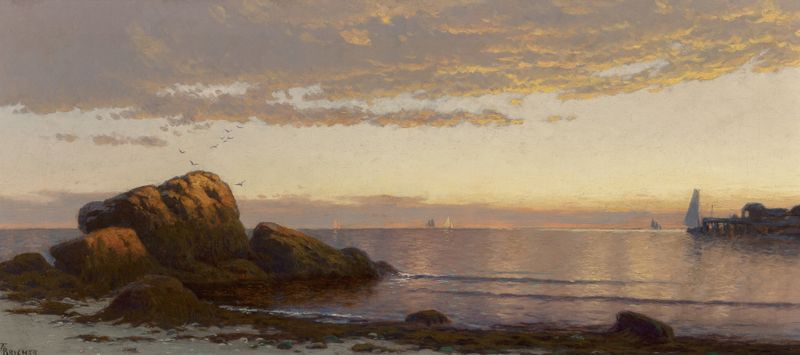
Sunset on the Coast
Alfred Thompson Bricher

Castle Rock, Nahant, Massachusetts
Alfred Thompson Bricher

On the Meadows of Old Newburyport
Alfred Thompson Bricher
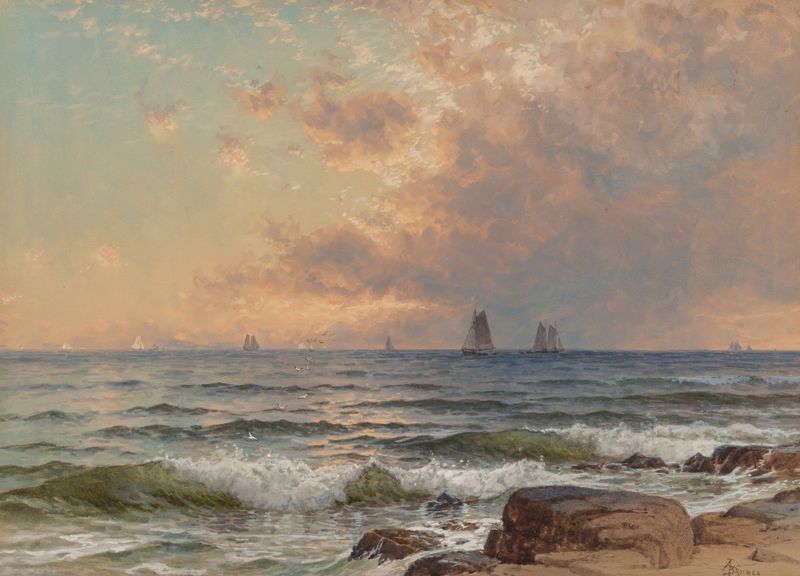
Sails at Sunset
Alfred Thompson Bricher





