A River in Summer — History & Facts
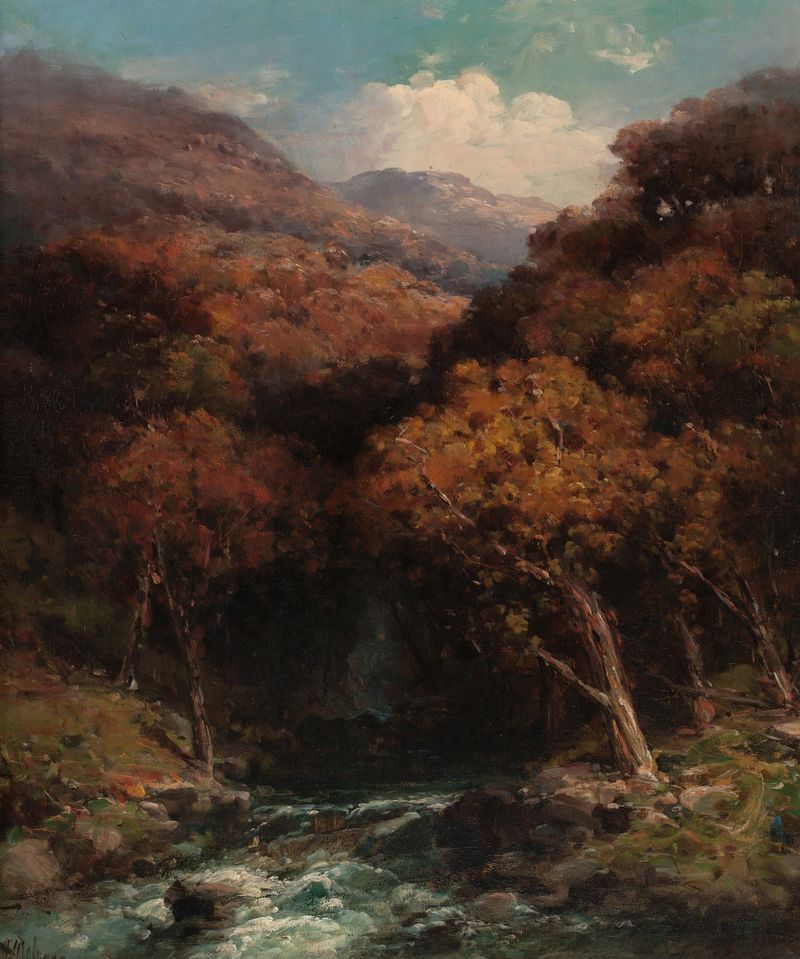
In the delicate interplay of shadow and light, a deeper narrative unfolds, inviting us to explore the essence of stillness. Look to the lower left where the river curves, its surface shimmering like a mystic mirror reflecting a world beneath. Notice the dappled sunlight filtering through the verdant canopy, casting intricate patterns that dance upon the water. The lush greens of the foliage create a vivid contrast against the tranquil blues and grays of the river, while the gentle strokes evoke a sense of serenity and a fleeting moment suspended in time. Hidden within the subtleties of the composition lies a tension between the vibrancy of nature and the whispers of solitude.
The shadows convey not just absence but the presence of memories, hinting at stories untold. The depth of color invites contemplation, suggesting that peace exists alongside the complexities of life, a duality that resonates with the observer's own experiences of quiet reflection against the backdrop of changing seasons. Andrew Melrose painted this piece during a period of personal introspection, likely in the late 19th century amidst the burgeoning art movements that embraced naturalism. Working in England, he sought to capture the essence of landscape with a freshness that mirrored the evolving perspectives of his contemporaries.
This work reflects his commitment to nature and the intimate moments it offers, a testament to his observations during a time of both personal and artistic exploration.