In the Berkshire Hills, Mass. — History & Facts
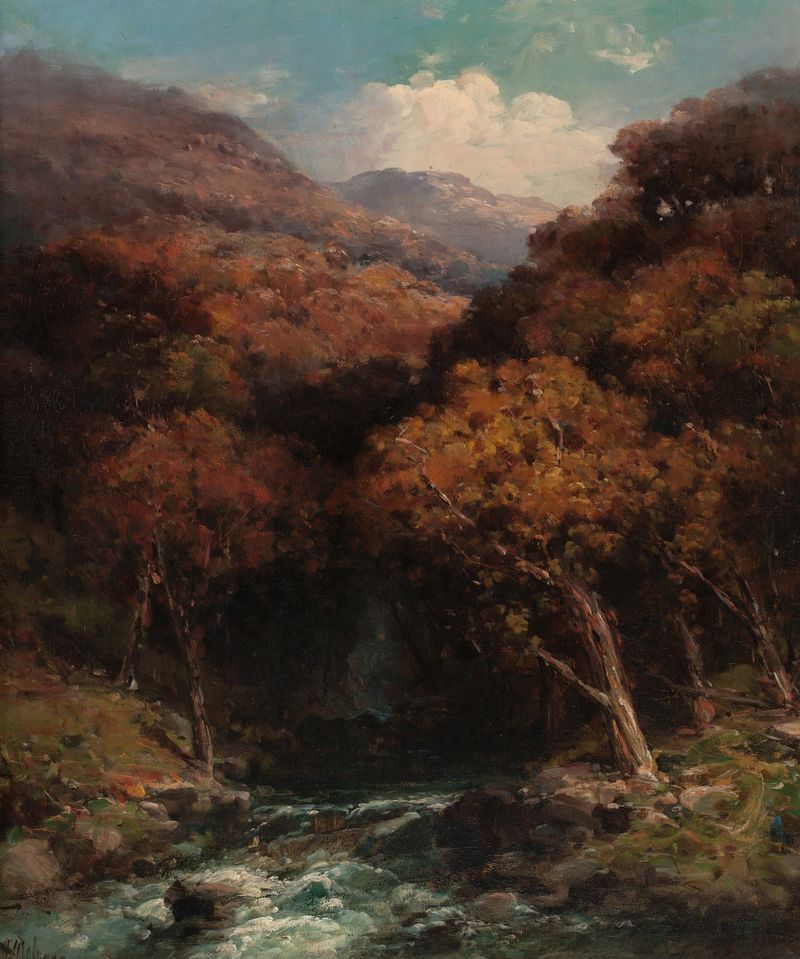
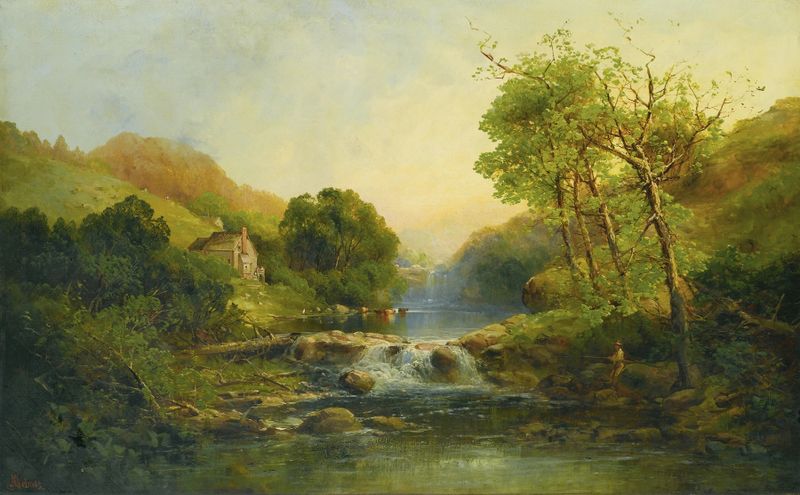
What secret hides in the quiet of the canvas? In Andrew Melrose's In the Berkshire Hills, Mass., nostalgia wraps itself around the viewer like a warm, faded blanket, inviting contemplation of serene moments lost in time. Look to the foreground, where gentle hills rise and fall in soft, muted greens and browns. The delicate brushwork captures the essence of the landscape, revealing an idyllic harmony between nature and humanity. Notice the way the light dances across the trees, filtering through leaves and casting playful shadows on the grassy knolls, guiding your gaze deeper into the embrace of the Berkshire hills. Yet, beneath the tranquil surface, contrasts emerge.
The distant mountains loom, a reminder of the inevitable passage of time and the weight of history they bear. The play of light versus shadow evokes a sense of longing—an exploration of memory, love, and loss. Each element, from the wisps of clouds to the curling fog, speaks of transient beauty, inviting viewers to reflect on their own fleeting moments within the landscape of life. In 1887, Melrose painted this scene while establishing his presence within American Impressionism, a period marked by experimentation and a focus on natural light.
Living in Massachusetts during this time, he was influenced by the changing art world, wherein artists were turning toward the local scenery as a means of expression and introspection. This work captures not just a place, but a feeling—a testament to the quiet power of remembrance woven through the hills.