A River Landscape In Silver Moonlight — History & Facts
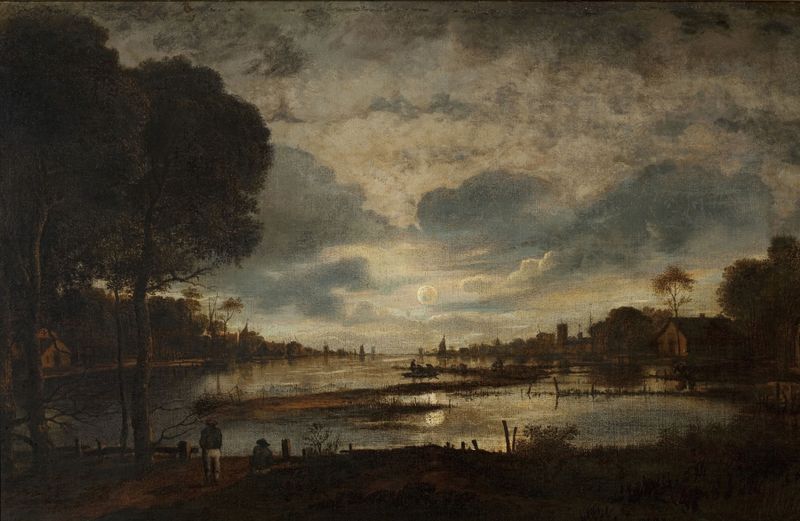
In the tranquil embrace of silver moonlight, the world holds its breath, revealing truths that lurk in shadows and reflections. Look to the center where the luminous river flows, shimmering under the watchful gaze of the full moon. The stillness of the water mirrors the soft hues of the night sky, creating a serene balance of blues and silvers. Notice how the delicate brushstrokes form a gentle rippling effect, inviting the viewer to dive deeper into this moment frozen in time.
The silhouettes of trees on the banks frame the scene, while the soft, ephemeral light dances upon the surface, hinting at the life that thrives beneath. Yet, beneath this picturesque calm lies a complex interplay of light and dark, suggesting the presence of unvoiced stories. The contrast between the shimmering water and the darkened foliage creates a tension that speaks to both tranquility and mystery. Each shadow seems to harbor secrets, and the stillness invites contemplation, an invitation to reflect on what is unseen and unspoken. In 1846, while creating this work, the artist was deeply influenced by the Romantic movement, which sought to evoke emotion and introspection through nature.
Living in Belgium during a time of artistic transition, they embraced the burgeoning fascination with light and atmosphere, allowing the simplicity of a moonlit river scene to resonate profoundly with the viewer. This period marked a peak in their career, where the delicate balance of realism and impressionism found expression in landscapes that linger in the mind long after the moment has passed.