At the fair — History & Facts
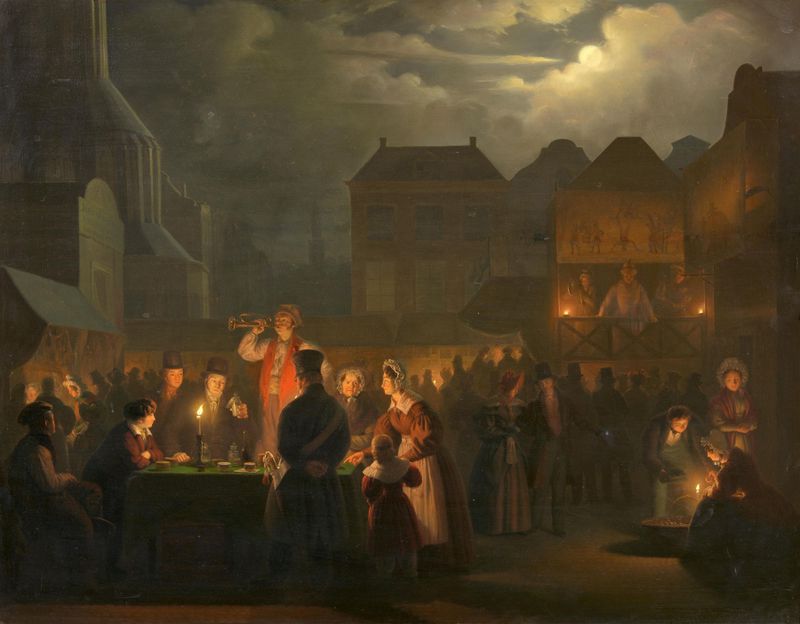
When did color learn to lie? In the vibrant dance of hues, a fair transforms into a realm of imagination, blurring the line between reality and artifice. Look to the left at the vibrant reds and rich yellows, where stalls brim with luscious fruits and trinkets, evoking a festival of life and allure. The artist’s meticulous attention to detail reveals not only the textures of the fabrics and food but also the interplay of light and shadow that breathes vitality into the scene. Notice how the warm glow of lanterns creates a harmonious ambiance, inviting viewers to lose themselves amid the lively chaos. Within this bustling fairground, a delicate tension unfolds between joy and transience, where laughter mingles with the ephemeral nature of pleasure.
The subtle expressions of joy on the faces of the revelers contrast sharply with the weight of time, suggesting that such moments are fleeting. Each brushstroke encapsulates an invitation to engage with the bustling atmosphere while reflecting on the deeper currents of human experience, the pursuit of happiness laced with the awareness of its impermanence. In 1834, Petrus van Schendel captured this moment during a period marked by the rise of Romanticism in art, emphasizing emotion and individual experience. Living in the Netherlands, he was influenced by the burgeoning interest in everyday scenes that celebrated the vibrancy of life.
This work emerged as a testament to his unique style, blending detailed realism with a profound exploration of light, inviting the viewer to partake in a narrative that transcends mere observation.