Moonlit landscape — History & Facts
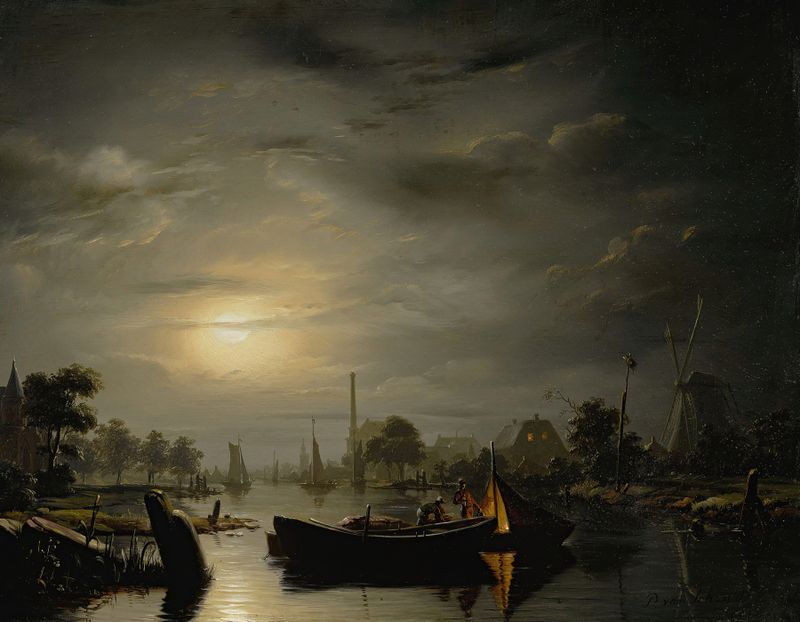
In a world teetering on the brink of revolution, the canvas becomes a refuge where tumult transforms into tranquility. The quiet beauty of a moonlit night invites contemplation, a delicate balance between what is seen and what remains hidden. Look to the left at the gentle wash of blues and greys that effortlessly blend into one another, creating a serene atmosphere. Notice how the soft moonlight dances across the surface of the water, illuminating the landscape with an ethereal glow.
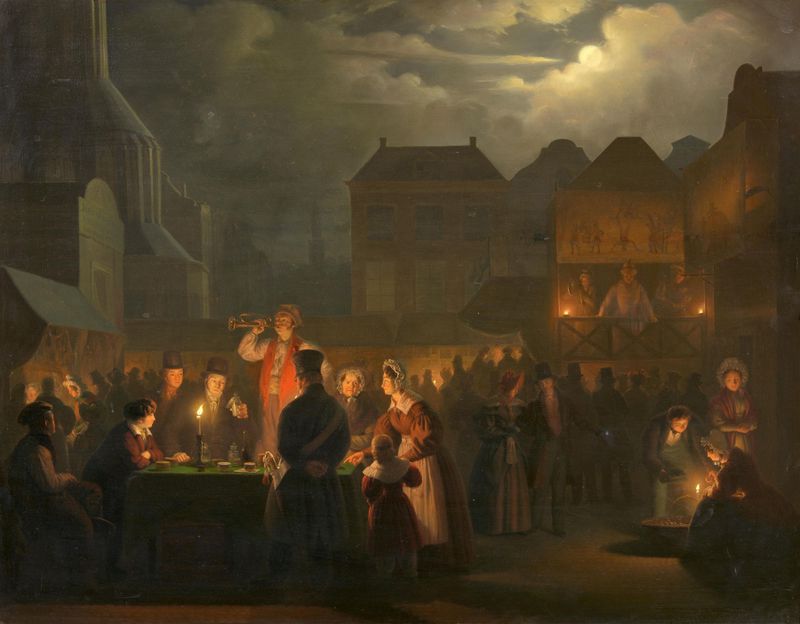
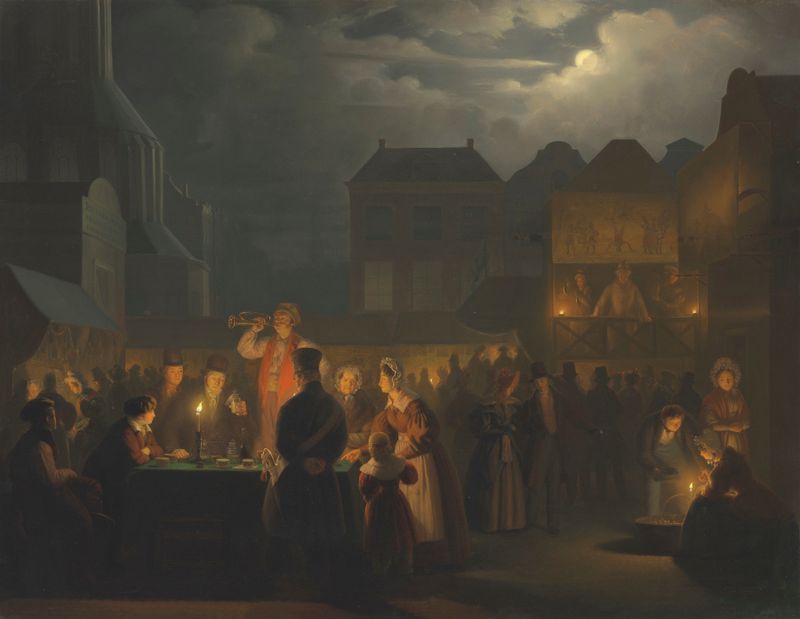
The stark contrast between the shadows and light not only defines the forms of the trees but also invites the viewer to explore the depth of the scene, revealing both the familiar and the unknown. Within this tranquil setting lies a tension that echoes the historical unrest of the time. The stillness of the water juxtaposed with the looming darkness hints at the undercurrents of change that threaten to disrupt the peace. The interplay of light and shadow serves as a metaphor for hope and despair, suggesting that even in moments of calm, the potential for upheaval lies just beneath the surface. Petrus van Schendel painted this work during the early 19th century, a time marked by social and political upheaval in Europe.
Living in Brussels, he was influenced by Romanticism, which celebrated nature's beauty and emotional resonance. The moonlit scenes he created reflected both personal and collective struggles, capturing the essence of a world grappling with transformation while evoking a sense of serenity amid chaos.