A river landscape with figures, a watermill beyond — History & Facts
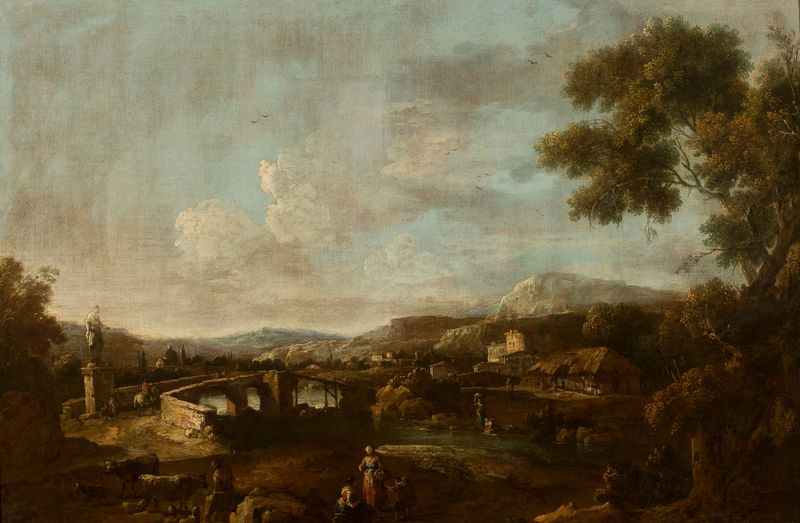
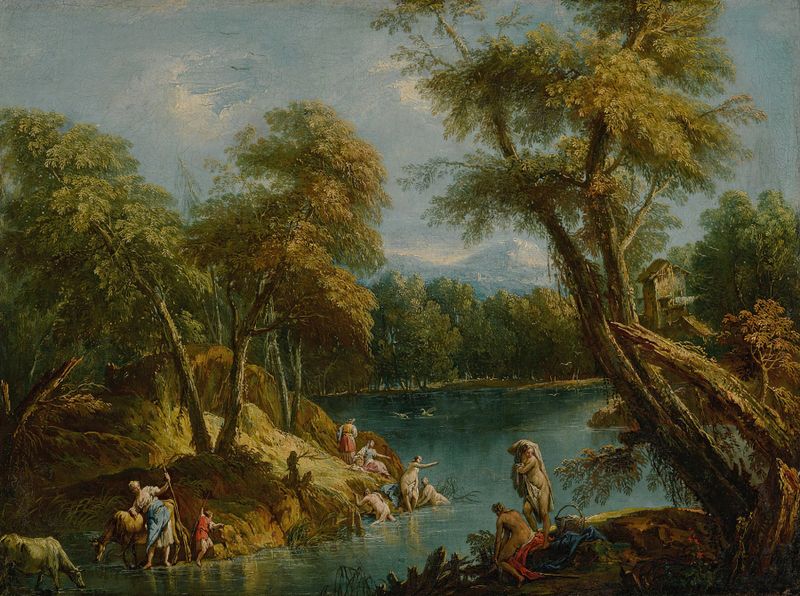
The dreamlike quality of the moment invites introspection, as nature weaves an enchanting narrative that yearns to be unveiled. Look to the center of the canvas, where the gentle flow of the river beckons the eye, cradling hues of azure and emerald. The watermill stands stoic in the background, its weathered timbers a testament to time's passage. Notice how the soft interplay of light creates dapples upon the water's surface, reflecting the world above while hinting at the depths below.
The figures, mere whispers in this tranquil expanse, add a layer of life and movement, their postures suggesting both leisure and purpose in this serene setting. Yet, beneath the idyllic surface, contrasts emerge that enrich the scene. The vibrancy of the figures may suggest vitality, yet their distance from the water hints at a longing for connection—between man and nature. The watermill, with its potential for industry, juxtaposes the serene landscape, evoking questions about humankind's relationship with the natural world.
Each element—light, shade, figure, and structure—coalesces into a meditation on the intersection between tranquility and the relentless passage of time. Created during a period when the Romantic movement was gaining momentum, Diziani painted this work amidst the evolving landscape of 18th-century Italian art. The tranquility and simplicity of rural life resonated with the aspirations of the movement, seeking beauty in the ordinary and a deeper connection to nature. As artists embraced these themes, the work reflects a moment where dreams and reality gently intertwine, inviting viewers to pause and ponder their own relationship with the world around them.