A Spring Idyll — History & Facts
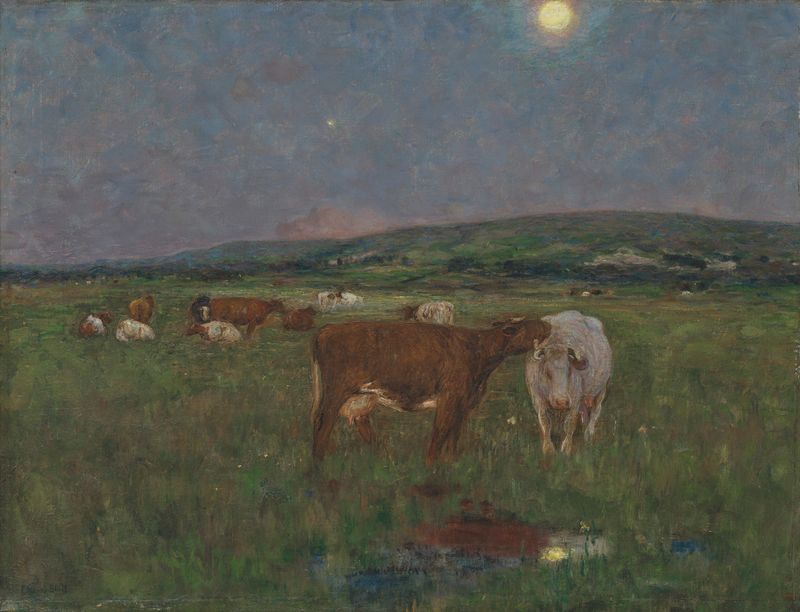
In the delicate embrace of spring, beneath a canopy of vivid blooms, lies a yearning for what once was and what could still be. This longing is palpable, echoing through the colors of nature’s rebirth. Look to the center where the soft, radiant hues of blossoms emerge, coaxing your gaze to dance among the trees. Notice how the artist’s strokes blend seamlessly, creating a tapestry of greens and pinks that breathe life into the canvas.
The delicate interplay of light and shadow captures the moment where time seems to pause, inviting reflection and nostalgia. The quiet composition evokes serenity, yet hints at an underlying restlessness—an emotion enriched by the harmonious vibrancy of the palette. Amidst the lush scenery, subtle contrasts reveal deeper tensions. The bright flowers, bursting with life, juxtapose the quietude of the surrounding landscape, suggesting an interplay between joy and sorrow.
Look closer at the shadows cast by the tall trees—they whisper of moments lost and dreams deferred. Each element speaks of an abundance of beauty and an ache for connection, embodying the dual nature of existence where joy is often tinged with longing. At the time A Spring Idyll was created, Edward Stott was immersed in the Impressionist movement, a period that encouraged a more emotional and personal connection to nature. Working in England during the late 19th century, he sought to capture the ephemeral qualities of light and atmosphere.
This era was marked by a shift towards plein air painting, as artists strived to convey their inner feelings through the landscape, aligning perfectly with Stott's exploration of longing and tranquility amid the natural world.