Study in October — History & Facts
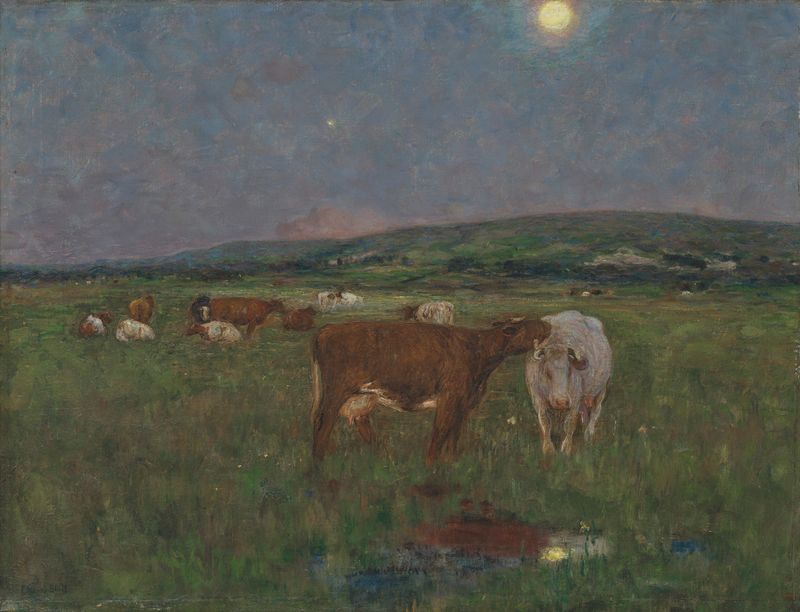
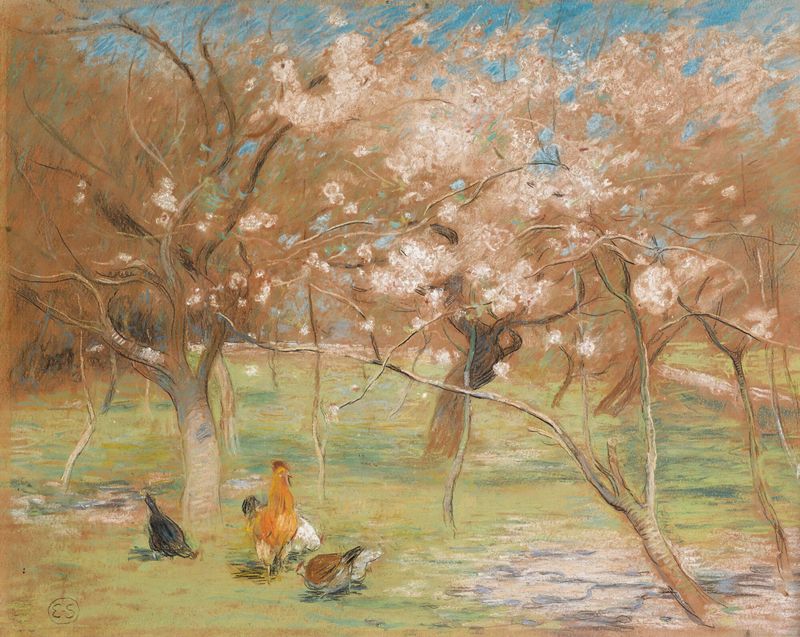
In the act of creation, artists encapsulate fleeting moments, preserving them in a world that constantly changes. Focus on the soft, muted palette that defines this work, where amber and ochre hues swirl together, evoking the gentle embrace of autumn. The rhythmic brushstrokes suggest a dance of leaves falling, each stroke a whisper of nostalgia. Look closely at the lower right corner, where a subtle interplay of light and shadow breathes life into the landscape, guiding your eye towards distant hills bathed in a golden glow. Here, contrasts reveal emotional depths: the stillness of nature juxtaposed with the inevitable cycle of change.
The delicate balance between warmth and chill captures the transitional nature of October, a time when life prepares to retreat. Hidden in the layers of paint are echoes of longing and peace, resonating with the viewer's own experiences of change and remembrance. At the time of this creation, Edward Stott was deeply engaged with the British Impressionist movement, often painting en plein air in his native England. This period in the late 19th century was marked by a growing fascination with capturing light and atmosphere.
Though the exact date of this piece remains unclear, it reflects the artist's exploration of the interplay between nature and human emotion, illustrating his commitment to encapsulating ephemeral beauty in a turbulent world.