Peaceful Evening — History & Facts
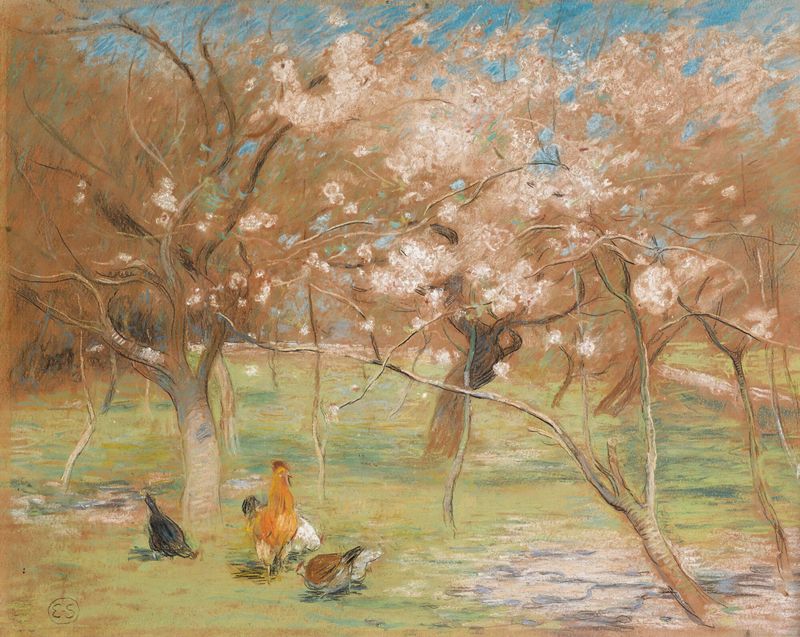
In the quiet shadows of twilight, a world caught between day and night reveals the complexities of existence. This delicate interplay invites contemplation, as both beauty and turmoil linger just beneath the surface. Look to the center of the canvas, where the horizon delicately embraces the sun dipping into the earth’s embrace. Soft, golden hues blend harmoniously with the deepening blues, creating an atmosphere charged with tranquility yet tinged with melancholy.
The brushstrokes are gentle, almost whispering, as they capture the fleeting beauty of this transitional time, drawing the viewer's gaze toward the merging elements of sky and land. Beneath the serene surface lies a tension between serenity and unrest, a reflection of the era's anxieties. The juxtaposition of warm and cool colors suggests a world on the brink of change, hinting at the revolution that was quietly simmering beneath the surface of society. Each brushstroke serves not merely to depict a landscape but to encapsulate an emotional response to the upheaval of the time — a reminder that peace often holds the shadows of its opposite. Stott painted this work during a period marked by social and political turbulence, likely in the late 19th century.
The artist, known for his atmospheric landscapes, was deeply influenced by the changing world around him. As the Industrial Revolution progressed, the contrast between nature and the encroaching urban life became a prominent theme in his work, resonating with his desire to capture fleeting beauty amidst a backdrop of impending change.