
A storm off a rocky coast, with a shipwreck in the foreground and a fort on the rocky shoreline above — History & Facts
Can paint confess what words never could? In A Storm Off a Rocky Coast, the tumultuous energy of nature and human vulnerability converge, capturing a moment where silence speaks louder than any dialogue. Look to the center of the canvas, where the jagged rocks jut cruelly into the churning sea. The shipwreck, a haunting silhouette against the frothy waves, draws the eye immediately with its dramatic angle, suggesting chaos and despair. Notice how the dark, rumbling clouds overhead loom ominously, contrasting sharply against the white foamy crests of the tumultuous waves.
The artist’s brushwork evokes a sense of movement, as swirling strokes mimic the wind’s ferocity and the ocean’s rage. This painting reveals a struggle between man and nature, evoking feelings of both awe and dread. The fort, perched high above the scene, serves as a symbol of human resilience and the desire for safety, yet it stands impotent against the storm’s fury. The interplay between the wrecked vessel and the fort's stoic presence highlights the fragility of human constructs against the untamed forces of nature.
Each wave carries with it a whisper of lost hopes, while the turbulent skies echo the emotional turmoil inherent in the human experience. Created in 1757, this work emerged during a time when seafaring was fraught with peril, reflecting both the artist's personal experiences and the broader anxieties of society. Bonavia, active in Italy, was influenced by the growing Romantic interest in nature’s sublime power, mirroring a shift in art where emotional truth began to take precedence over mere representation. In this context, the painting not only captures a dramatic scene but also serves as a poignant meditation on humanity’s place within the vast, indifferent forces of the world.
More Artworks by Carlo Bonavia
Browse all →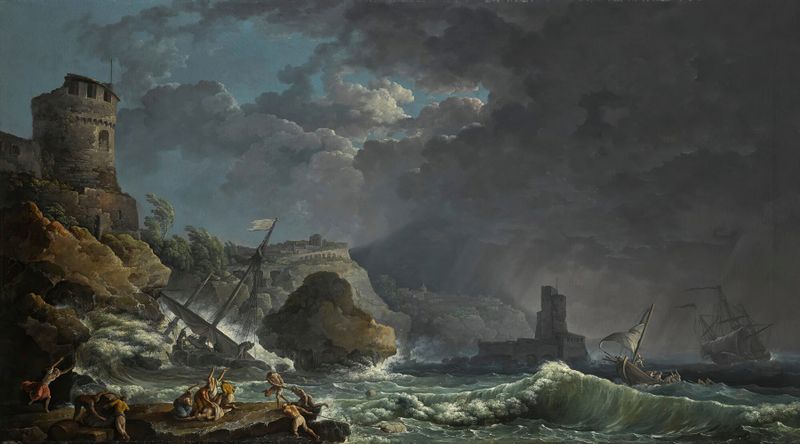
A Storm Off A Rocky Coast
Carlo Bonavia
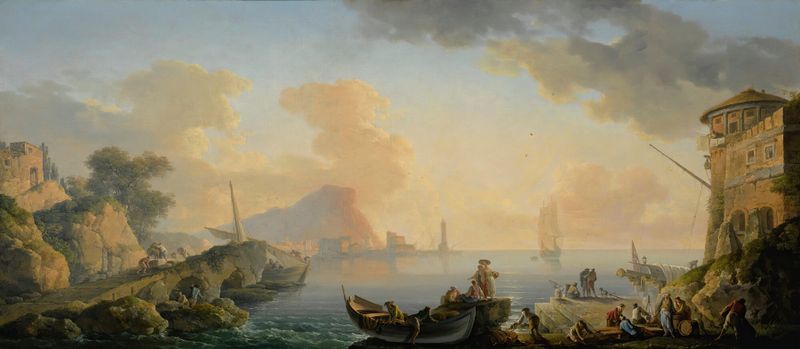
View Of A Harbor At Dawn, With Fishermen Along The Port In The Foreground
Carlo Bonavia
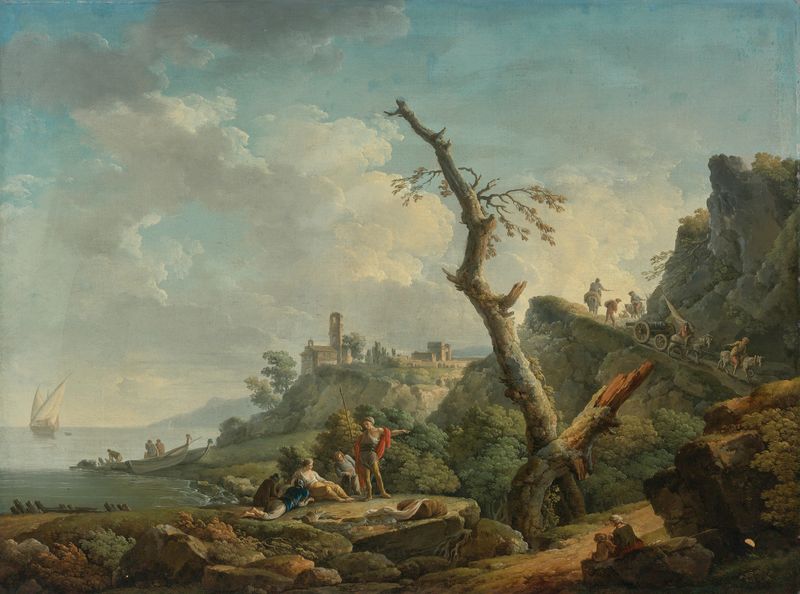
A River Landscape With Figures Reclining In The Foreground
Carlo Bonavia

Shipwreck in a Rocky Inlet
Carlo Bonavia
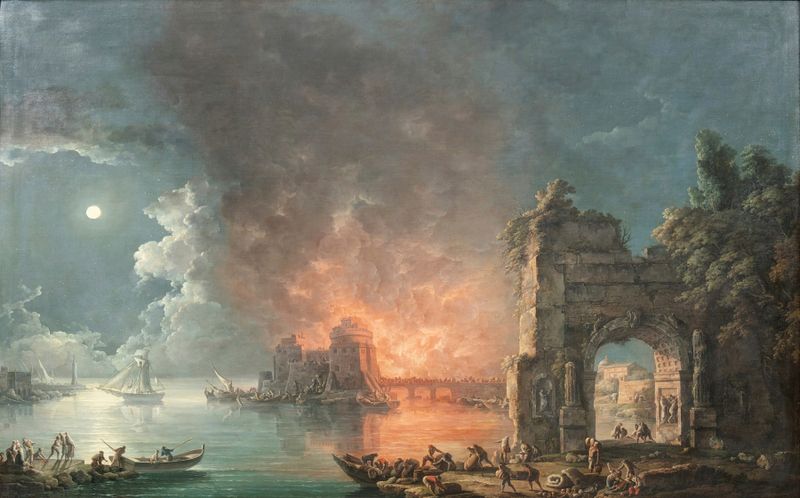
Fire in the island
Carlo Bonavia

The Lanterna del Molo, Naples with Vesuvius beyond
Carlo Bonavia
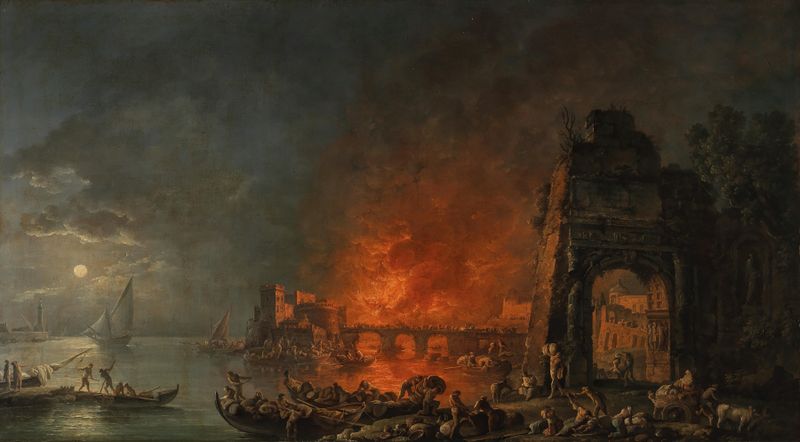
Explosion in a harbour
Carlo Bonavia
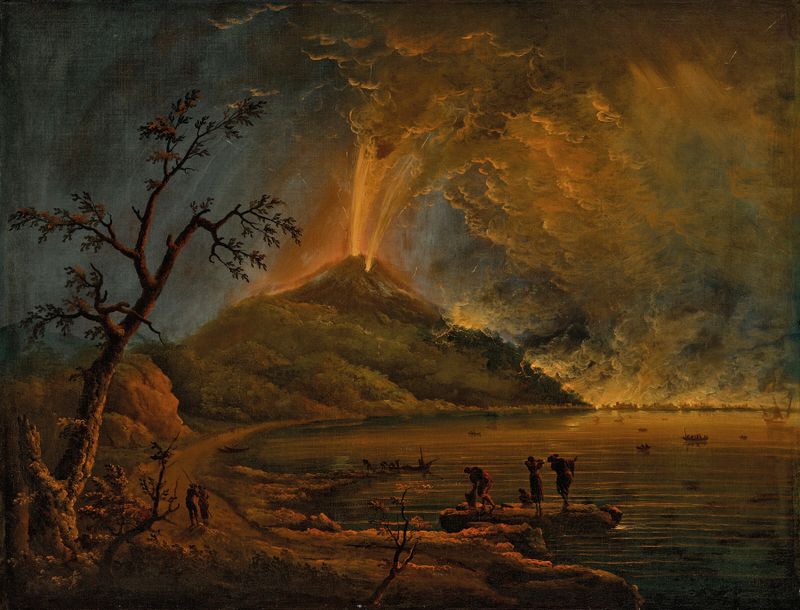
A volcano erupting at night, possibly Mount Etna
Carlo Bonavia





