A street corner, Cassis, near Marseille — History & Facts
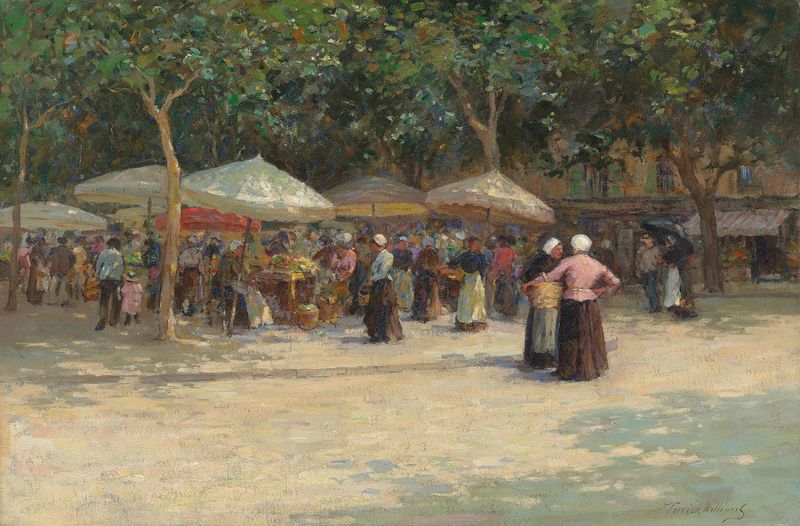
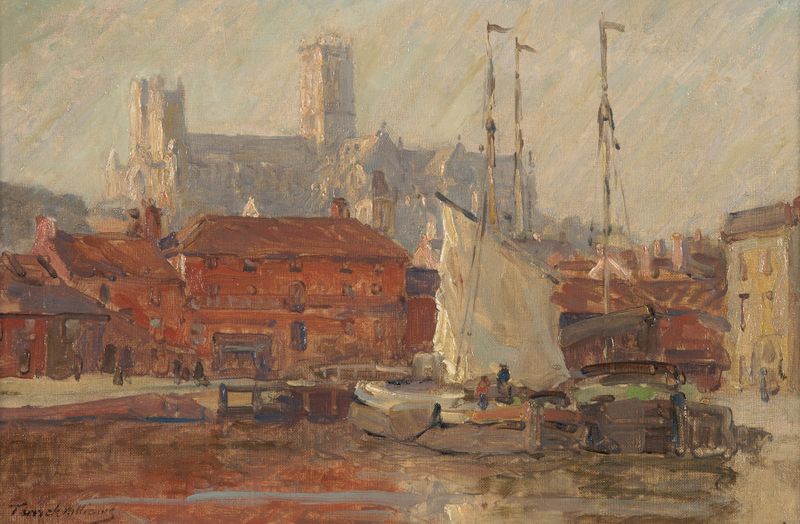
In the interplay of color and light, Terrick Williams captures a fleeting moment that resonates with the bittersweet nature of life. Here, the vibrant hues of sunlit streets intertwine with softer shadows, reminding us that beneath the surface of beauty lies a deeper emotional truth. Look to the left at the sun-drenched buildings, their ochre facades bathed in golden light, inviting you into a warm embrace. Notice how the rich blues of the sky contrast with the earthy tones of the pavement, drawing your eye toward the corner where figures meander.
The artist’s brushstrokes create a rhythmic dance of colors, where gentle curves lead the viewer around the composition, encapsulating the lively spirit of the scene. Yet, within this vibrant tableau, tension brews. The juxtaposition of light and shadow suggests a duality of joy and sorrow, as if the bustling street is simultaneously alive with energy and weighed down by unspoken stories. Details like the solitary figure leaning against the wall seem to whisper secrets of solitude amidst the crowd, evoking a sense of longing that lingers beyond the canvas. In late 1924 to early 1925, Williams found inspiration in the quaint streets of Cassis, a coastal town near Marseille.
During this period, he immersed himself in the vibrant post-Impressionist movement, where color and emotion became paramount. The world was shifting, and as artists explored new ways to express their realities, he crafted this piece as both a celebration of life and an acknowledgment of its complexities.