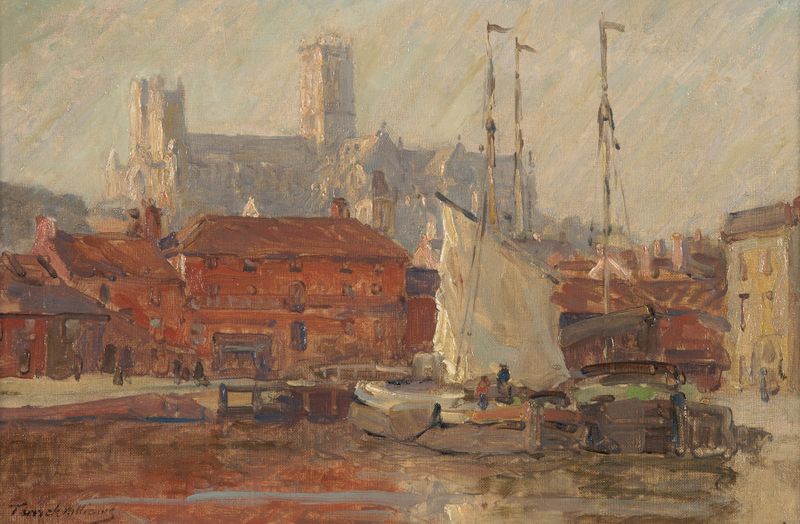
Entrance To The Kasbah — History & Facts
In its stillness, it invites us to explore the delicate interplay of light and shadow, of form and emptiness. How do we find balance in a world that constantly shifts? Focus on the left-hand side, where a sun-drenched archway beckons, bathed in warm ochres and soft whites. The structure stands in contrast to the cool blues of the shadows that linger in the corners, creating a tension that vibrates within the frame.
Notice how the delicate brushstrokes convey texture, capturing the weathered stone and the intricate latticework above, drawing the eye deeper into the scene. Each hue whispers of history, inviting a contemplation of the lives that have passed through this threshold. Amid the architectural beauty lies an emotional dance between the seen and the unseen. The welcoming arch suggests openness, yet the shadows hint at mysteries that remain locked away.
There’s a tension in the balance between light and dark, suggesting not just a physical entrance but a passage into deeper thoughts and feelings—perhaps representing the duality of safety and uncertainty. The overall composition holds its breath, challenging us to find our own equilibrium between comfort and the unknown. Terrick Williams painted this work during a pivotal time in his career, likely in the late 19th century while he was in North Africa. The artist was entrenched in exploring the rich cultural narratives of his surroundings, reflecting a growing interest among Western artists in the vibrant colors and complex structures of Eastern architecture.
As the world around him was changing with the emergence of modernity, his works served as a bridge, capturing a moment where tradition met innovation.