Quayside Concarneau — History & Facts
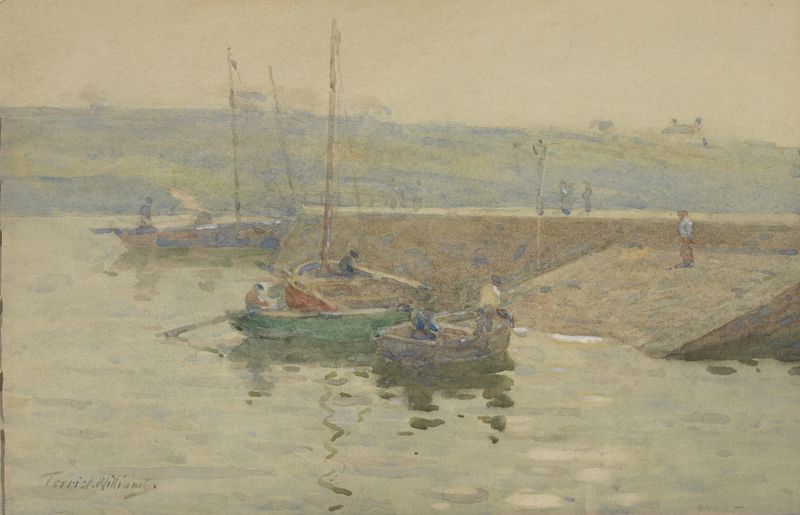
The hushed interplay between absence and presence envelops the viewer, inviting a deep reflection on the nature of loss. Begin by focusing on the quaint boats lined along the quayside, their hulls gently reflecting the muted colors of the sky and water. The soft blues and earthy tones establish a tranquil harmony, while the stillness of the scene suggests an echo of forgotten stories. Notice how the lines of the boats converge towards the horizon, drawing the eye into a world that feels simultaneously familiar and distant, as if time has paused in this coastal moment. As you explore further, subtle details reveal a deeper narrative.
The worn textures of the boats speak of countless journeys, hinting at lives intertwined with the sea. The absence of figures heightens the sense of solitude, suggesting a longing for connection amidst the quietude. Loosely strung ropes dangle, evoking a feeling of abandonment, while the gentle ripples in the water resonate as whispers of memories left behind. Created between 1929 and 1930, the work emerged during a period of significant change for Terrick Williams.
At this time, he was part of the evolving British art scene, reflecting shifts towards modernity yet remaining committed to the charm of traditional maritime subjects. The interwar years were marked by uncertainty, and Quayside Concarneau encapsulates the artist's contemplation of impermanence, making it a poignant piece set against the backdrop of a world grappling with the shadows of loss.