A Sunny Winter Day — History & Facts
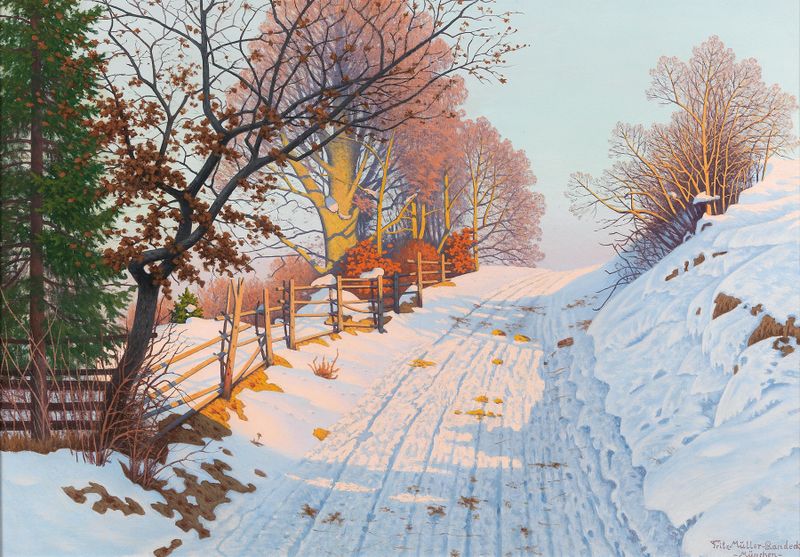
Can beauty exist without sorrow? In the delicate balance between light and shadow, the answer may unfold. Look to the foreground, where vibrant strokes of golden yellows and soft blues weave a tapestry of winter’s charm. The interplay of colors captures the essence of a sunlit day, yet hints at the chill that lingers in the air. Notice how the artist expertly layers the paint, creating a sense of texture that draws you in—each brushstroke a whisper of warmth against the biting cold, inviting you to linger in this paradoxical moment. In the background, shadowy trees stand tall yet stark, their bare branches reaching like fragile fingers into the expanse of the clear sky.
This contrast of warmth and desolation embodies an emotional tension—the beauty of a sunny day is juxtaposed with the underlying grief of winter's stark reminders of life’s transience. Each element speaks to a deeper reflection on the ephemeral nature of joy amidst sorrow. During the time A Sunny Winter Day was created, Fritz Müller-Landeck was navigating the complexities of his artistic journey. Active in the early 20th century, he found himself amidst a vibrant art scene, grappling with the shifting tides of modernism.
In this period, the world was on the brink of profound change, and his work reflects an intimate exploration of light and emotion, capturing the paradox of beauty that coexists with loss.