A Sunny Winter Path — History & Facts
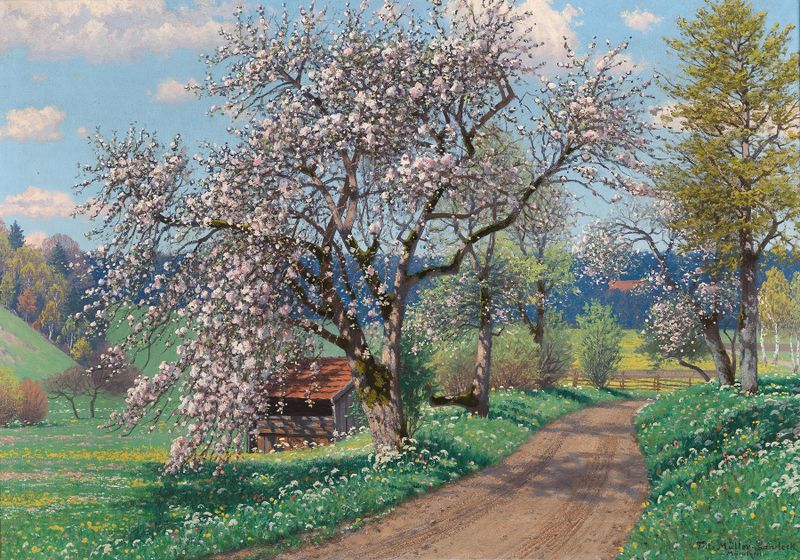
Who listens when art speaks of silence? In the stillness of a snowy landscape, a longing whispers through the quiet path, evoking a deep desire for warmth and connection. Look to the foreground, where the path gently winds its way through a canvas of pristine white. The artist skillfully employs soft brushstrokes to create a delicate texture in the snow, inviting the viewer to feel the coolness beneath their feet. Notice how the golden sunlight filters through the bare trees, casting dappled shadows that dance playfully on the ground.
This interplay of light and shadow not only enhances the depth of the scene but also imbues it with a sense of hope and promise. Beneath the tranquil surface lies a tension between isolation and connection. The narrow path suggests a journey taken alone, yet the warm hues of the sun imply the presence of a longing heart yearning for companionship. The contrast between the cold landscape and the warm light mirrors the internal struggles we face, where desire for human touch meets the harshness of the environment.
This emotional duality invites viewers to reflect on their own experiences of solitude and connection. Fritz Müller-Landeck likely painted this piece during a time of aesthetic exploration in the early 20th century, reflecting the burgeoning movements in art that sought to capture emotional truths through nature. While the exact year remains undetermined, it is evident that the artist was deeply influenced by the search for beauty in the interplay of light and atmosphere, resonating with a broader cultural shift toward personal expression in a changing world.