Tal bei Schloss Linderhof — History & Facts
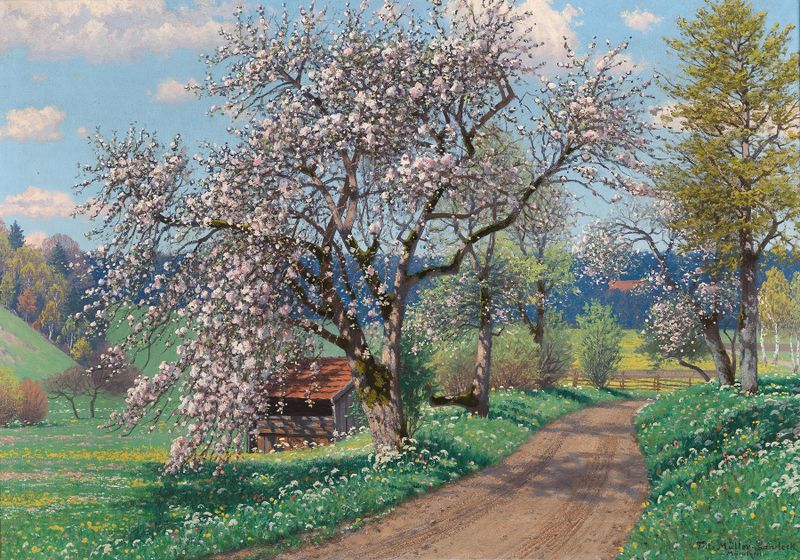
What if silence could speak through light? In moments of stillness, the world awakens, revealing the profound whispers of nature and architecture intertwined. Focus first on the luminous play of light cascading over the landscape. Notice how the sun bathes the hill in soft, golden hues, each stroke of light meticulously crafted, lending warmth to the verdant greenery. The castle stands proudly in the background, its intricate details softened by the surrounding nature, inviting the viewer's gaze to wander from the elegant structure to the wild yet inviting flora. In this quiet panorama, contrasts emerge.
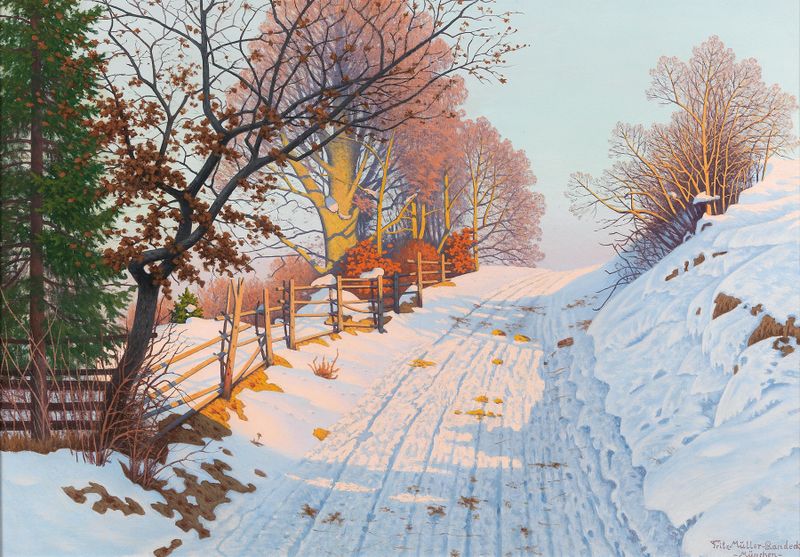
The delicate interplay between the rigid lines of the castle and the fluid forms of the trees around it creates a dialogue of stability versus freedom. While the architecture suggests a human touch, the lush surroundings signify a deeper connection to the earth. This tension between the man-made and natural becomes a celebration of awakening — a reminder that both realms exist harmoniously, each enriching the other. Fritz Müller-Landeck painted this landscape at an undetermined time, likely influenced by his experiences with the natural beauty of his homeland.
Active during a period when Romanticism was evolving, he embraced the idea of conveying emotion through scenery, reflecting a broader artistic trend that sought to capture not just what is seen, but also what is felt. His works often explore the relationship between human creations and the natural world, inviting viewers to experience this delicate balance firsthand.