
A Temple Ruin in Agrigento — History & Facts
In A Temple Ruin in Agrigento, the artist captures the essence of transience and the echoes of a bygone era, inviting us to witness the dance of history. Look to the left, where the weathered columns reach skyward, their once-majestic forms softened by centuries of neglect. Notice the delicate interplay of light and shadow across the stone, each crevice telling a story of resilience against the relentless passage of time. The warm ochres and muted greens evoke a sense of nostalgia, inviting the viewer to wander through the remnants of a sacred space that once pulsed with life. Within this composition lies a profound commentary on the inevitability of decay and rebirth.
The juxtaposition of the sturdy pillars and the encroaching foliage hints at nature's relentless reclaiming of what was once human-made. The stillness of the scene captures both a haunting solitude and an unyielding hope, suggesting that even in ruin, beauty finds a way to resonate. Carl Wilhelm Götzloff painted this work around 1825, during a period of Romanticism where artists sought to express deep emotional experiences through nature and historical themes. As he painted in Agrigento, Italy, he was immersed in a world captivated by the ruins of ancient civilizations, reflecting a growing fascination with the interplay of history and time.
This artwork encapsulates that zeitgeist, merging personal contemplation with a collective memory of human achievement amid inevitable decline.
More Artworks by Carl Wilhelm Götzloff
Browse all →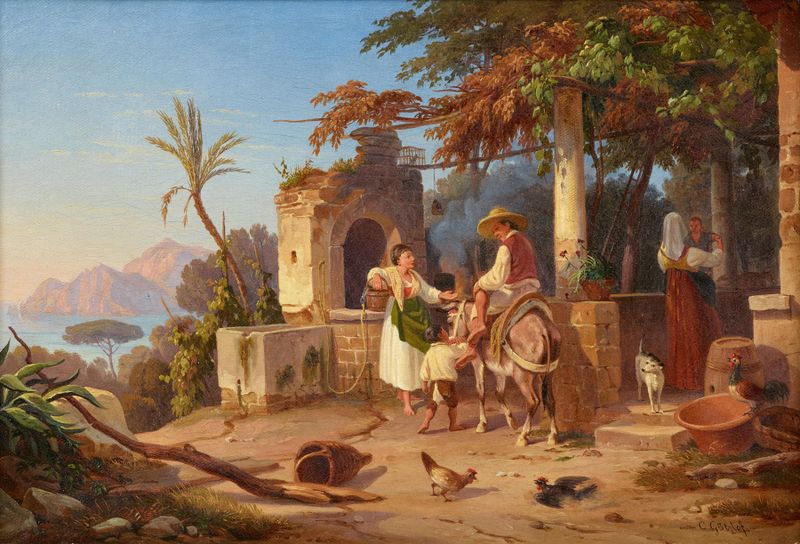
Italienische Küste bei Massa Lubrense
Carl Wilhelm Götzloff
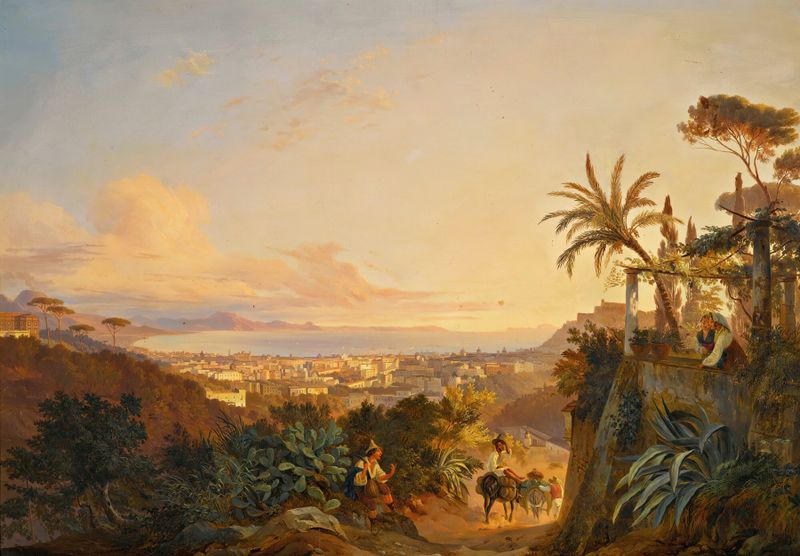
The gulf of naples, viewed from the Capo di Monte
Carl Wilhelm Götzloff
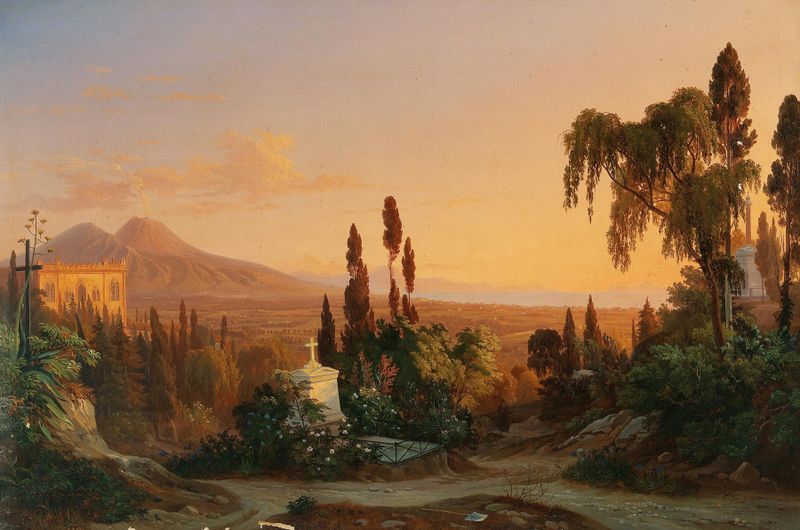
A View of the Gulf of Naples from Posillipo
Carl Wilhelm Götzloff

Blick in die Bucht von Neapel
Carl Wilhelm Götzloff
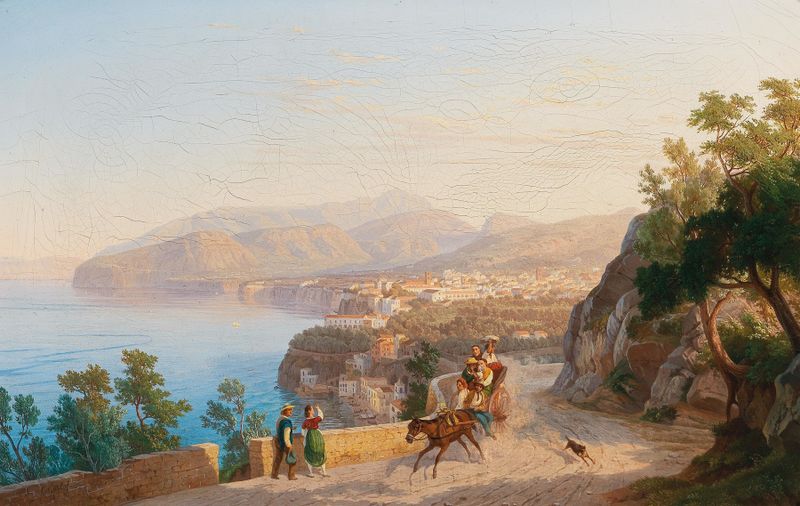
View of Sorrento, with a family outing in the foreground
Carl Wilhelm Götzloff
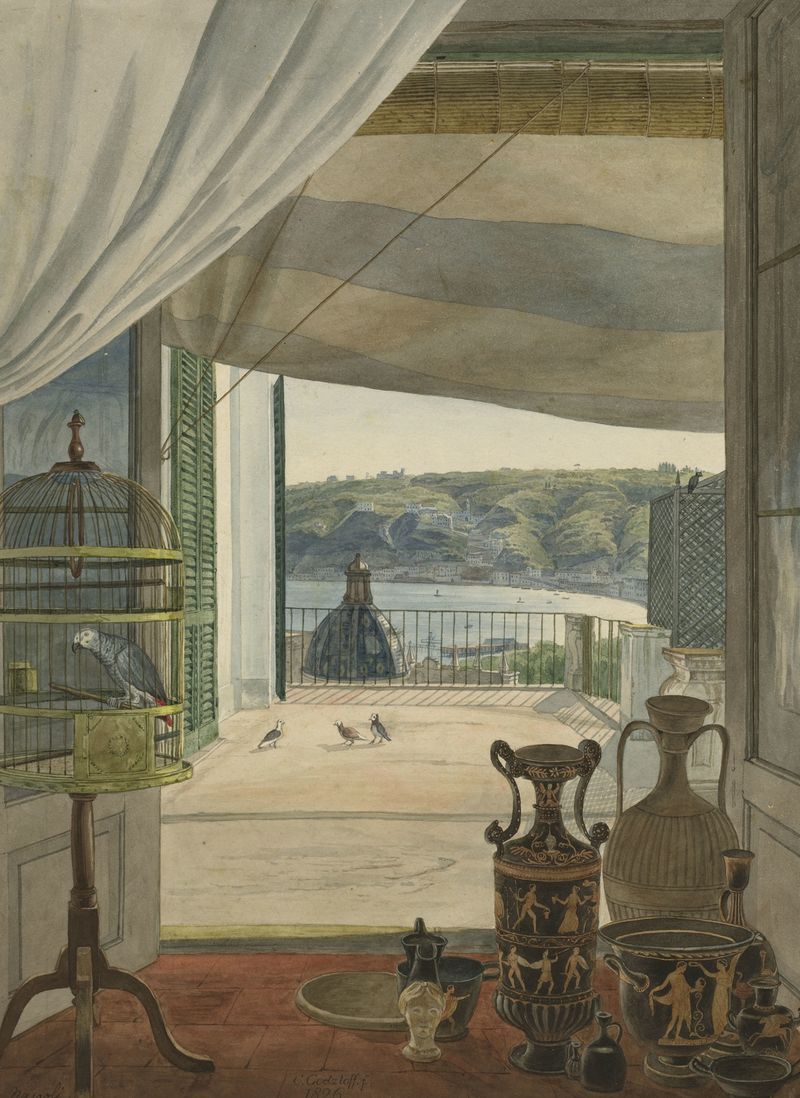
Antiquities by a Balcony Overlooking the Gulf of Naples
Carl Wilhelm Götzloff

Reisende an einem Brunnen bei Palermo
Carl Wilhelm Götzloff
More Architecture Art
Browse all →
The statue of Liberty
Frédéric Auguste Bartholdi

View of Houses in Delft, Known as ‘The Little Street’
Johannes Vermeer

View of Houses in Delft, Known as ‘The Little Street’
Johannes Vermeer

The Cathedral in Rouen. The portal, Grey Weather
Claude Monet

The yellow house
Vincent van Gogh

The Church in Auvers-sur-Oise, View from the Chevet
Vincent van Gogh