
Reisende an einem Brunnen bei Palermo — History & Facts
This notion resonates profoundly in the delicate interplay of light and shadow, where fleeting moments reveal the fragility of existence. Look to the center of the canvas, where a serene fountain acts as a focal point, surrounded by elegantly dressed figures. The soft glow of sunlight reflects off the water's surface, creating an ethereal shimmer that beckons you closer. The palette, infused with warm earth tones and soft blues, suggests both tranquility and melancholy, while the intricate details of each garment hint at stories untold. Upon closer inspection, subtle contrasts emerge: the joyous laughter of the travelers juxtaposed against the stillness of the water, signifying the passage of time.
One figure gazes pensively at the fountain, a reminder that even in moments of beauty, the specter of mortality lingers. The lush surroundings seem almost celebratory, yet they frame an underlying tension—each vibrant bloom a symbol of transience, each splash of water a mark of the inevitable. The artist created this work around the mid-19th century, a time when Europe was undergoing profound changes in society and art. Living in a world where Romanticism was giving way to modernity, Götzloff sought to encapsulate fleeting moments of beauty.
His experiences in Italy, especially in landscapes like Palermo, deeply influenced his work, enriching it with an awareness of life's impermanence and the stillness found within such transitory scenes.
More Artworks by Carl Wilhelm Götzloff
Browse all →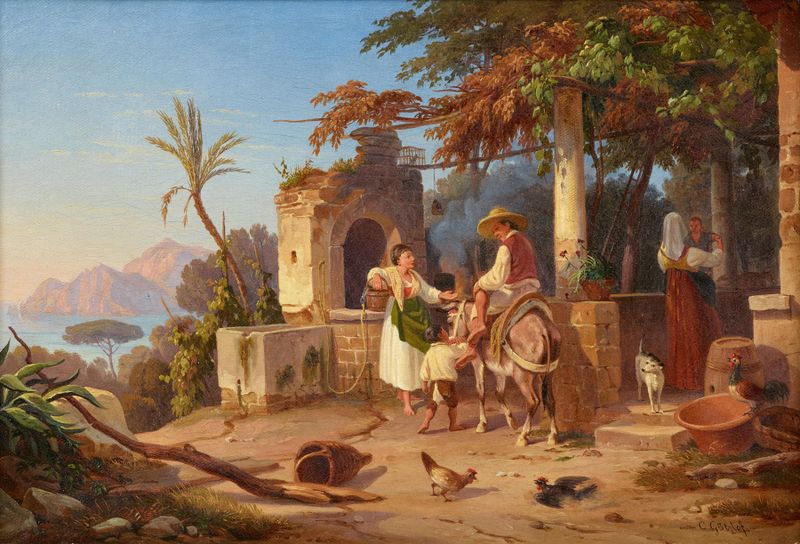
Italienische Küste bei Massa Lubrense
Carl Wilhelm Götzloff
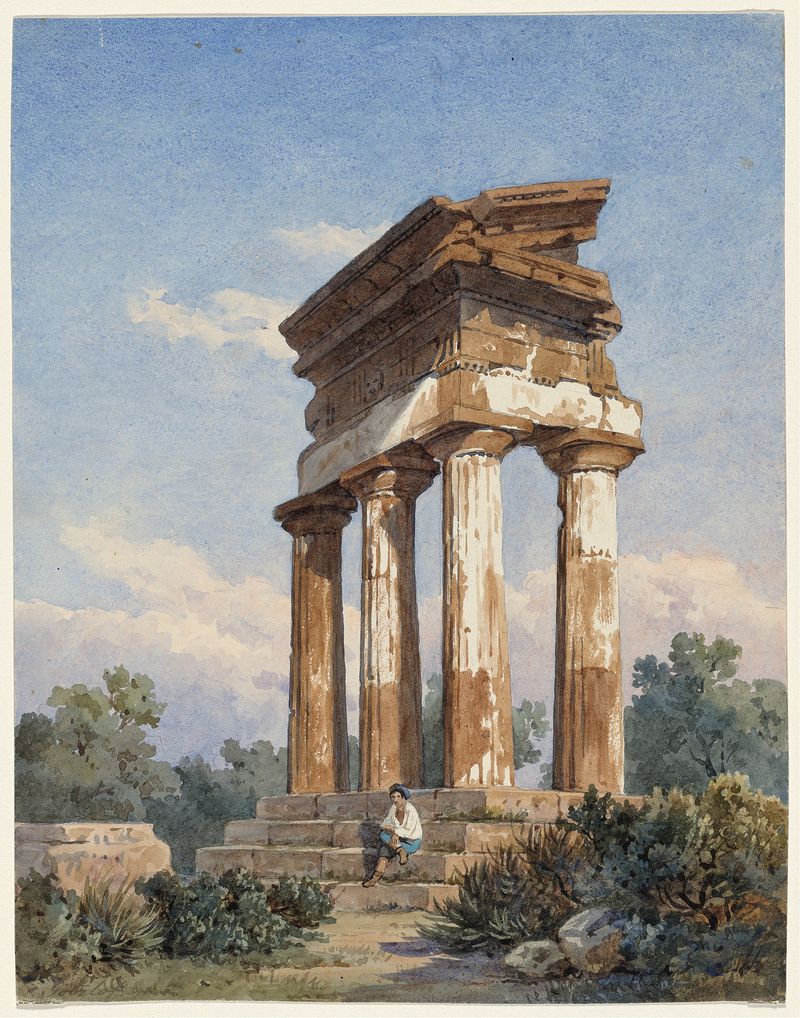
A Temple Ruin in Agrigento
Carl Wilhelm Götzloff
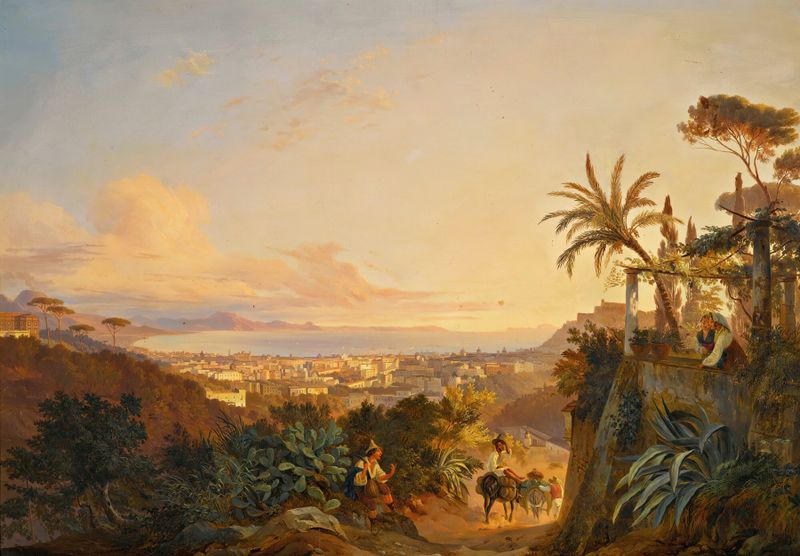
The gulf of naples, viewed from the Capo di Monte
Carl Wilhelm Götzloff
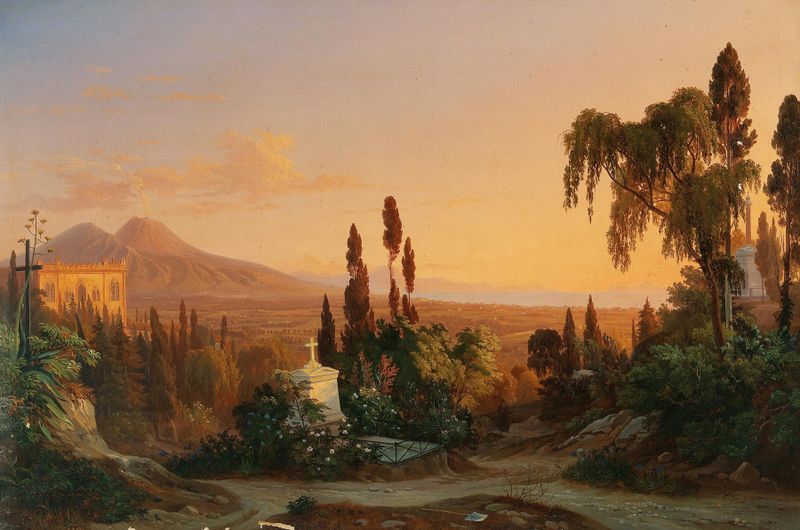
A View of the Gulf of Naples from Posillipo
Carl Wilhelm Götzloff

Blick in die Bucht von Neapel
Carl Wilhelm Götzloff
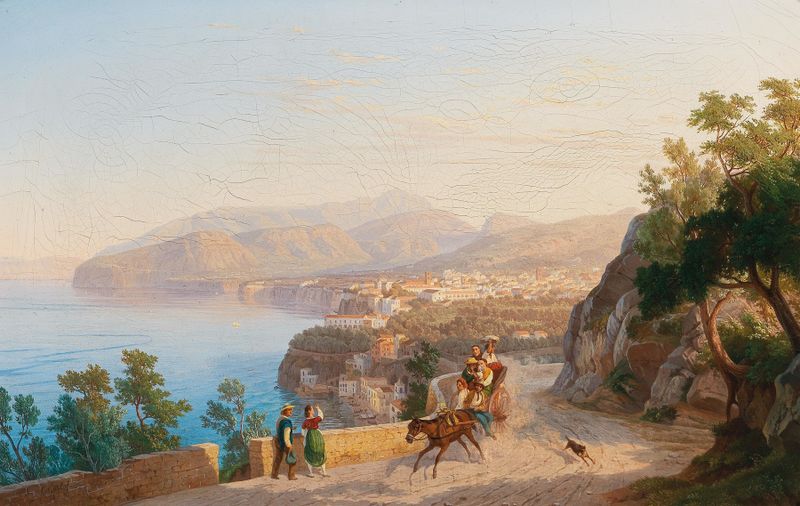
View of Sorrento, with a family outing in the foreground
Carl Wilhelm Götzloff
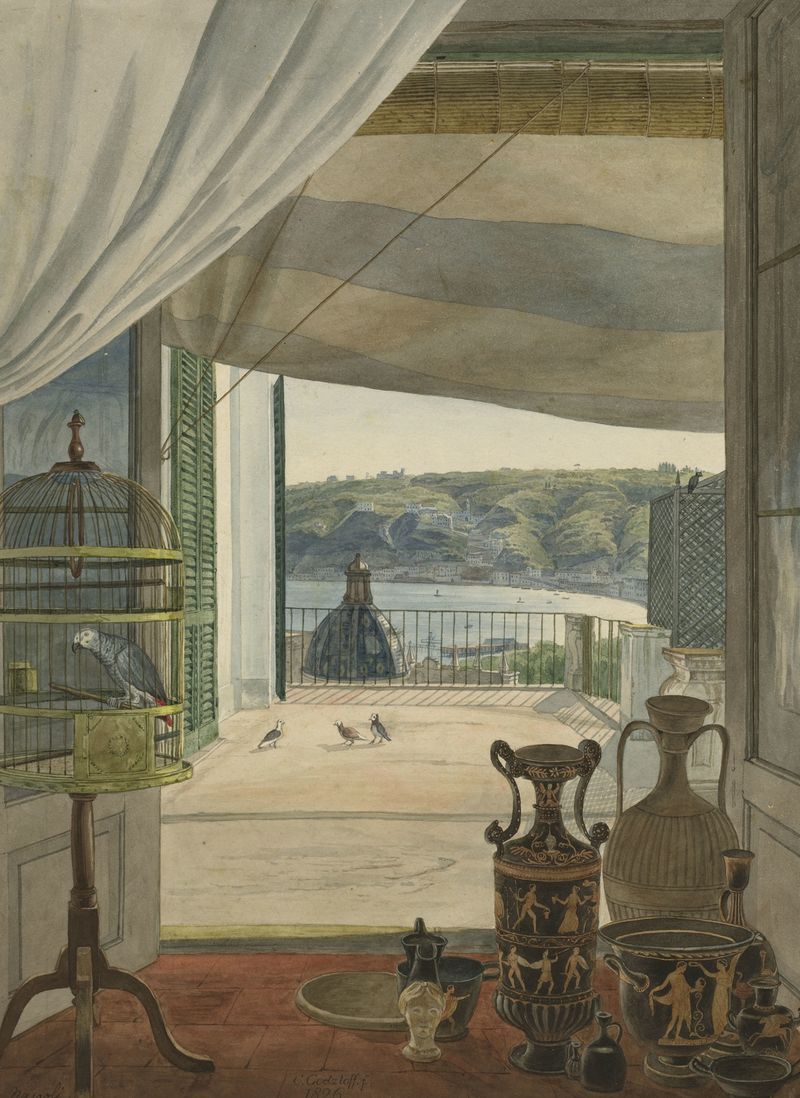
Antiquities by a Balcony Overlooking the Gulf of Naples
Carl Wilhelm Götzloff





