Antiquities by a Balcony Overlooking the Gulf of Naples — History & Facts
In the midst of vibrant life, a soft melancholy echoes through the canvas, inviting contemplation on the passage of time and the weight of memory. Look to the foreground, where ancient relics lie dormant, their weathered surfaces capturing the essence of history. The light, filtered through the arched balcony, bathes these objects in a warm glow, revealing rich textures and delicate contours. Notice how the sea beyond, a shimmering blanket of blues and greens, contrasts sharply with the muted earth tones of the antiquities, creating a dialogue between the past and the present. Amidst the stillness, the juxtaposition of the ruins with the expansive gulf speaks volumes.
The artifacts, symbols of bygone eras, exude a sense of nostalgia, while the vibrant sea whispers of life and change. It evokes a tension between decay and vitality, reminding us that beauty often lies in the scars of time, urging viewers to reflect on their own transient existence. In 1826, while Götzloff was in Naples, the art world was flourishing with Romantic ideals, emphasizing emotion and individual experience. This period saw a fascination with ancient civilizations, prompting the artist to capture not just the scenery but the essence of history itself.
Götzloff’s work reflects a moment of introspection, a response to the cultural currents of his time, blending the splendor of nature with the weight of human legacy.
More Artworks by Carl Wilhelm Götzloff
Browse all →
Italienische Küste bei Massa Lubrense
Carl Wilhelm Götzloff
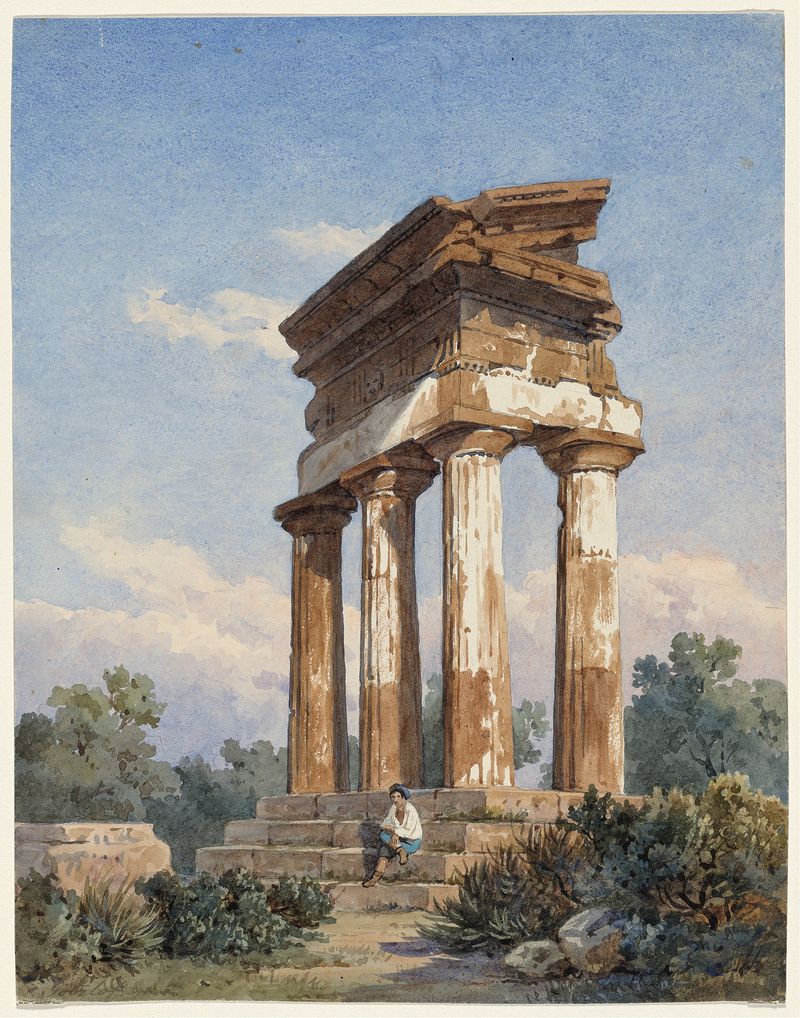
A Temple Ruin in Agrigento
Carl Wilhelm Götzloff
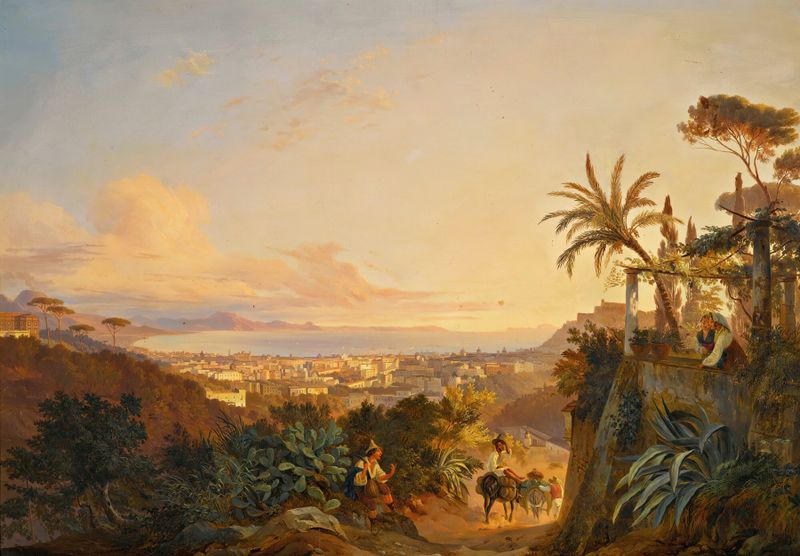
The gulf of naples, viewed from the Capo di Monte
Carl Wilhelm Götzloff
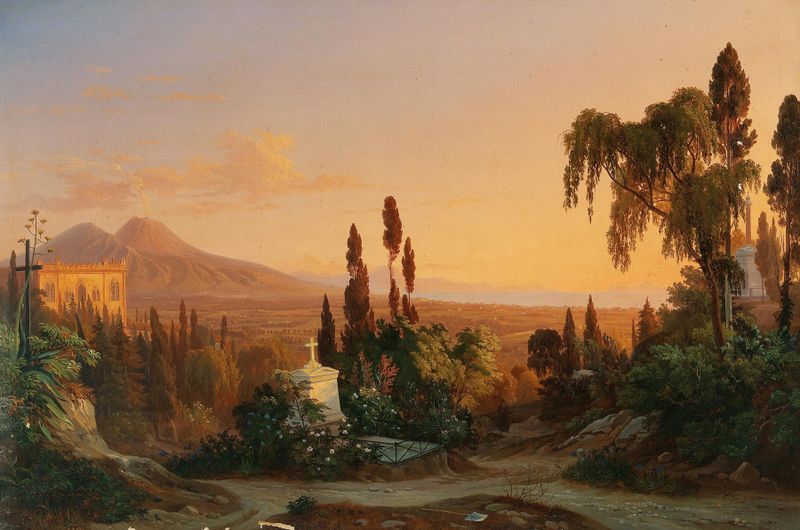
A View of the Gulf of Naples from Posillipo
Carl Wilhelm Götzloff

Blick in die Bucht von Neapel
Carl Wilhelm Götzloff
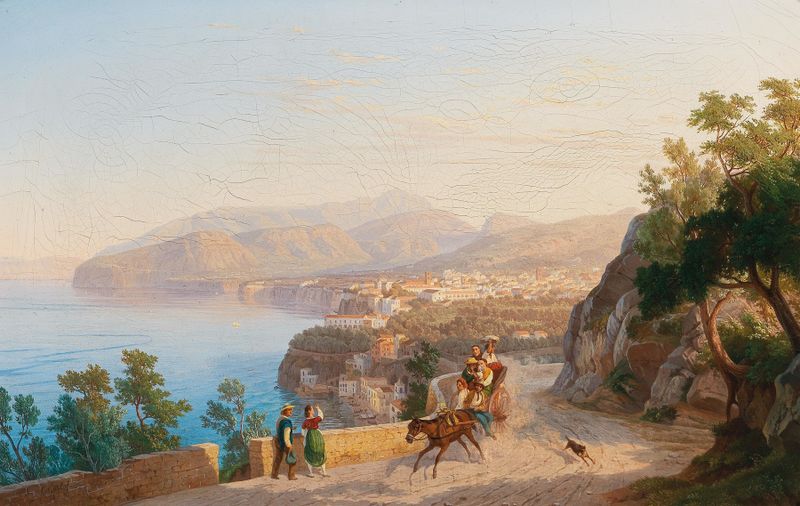
View of Sorrento, with a family outing in the foreground
Carl Wilhelm Götzloff

Reisende an einem Brunnen bei Palermo
Carl Wilhelm Götzloff