A ti-tree glade — History & Facts
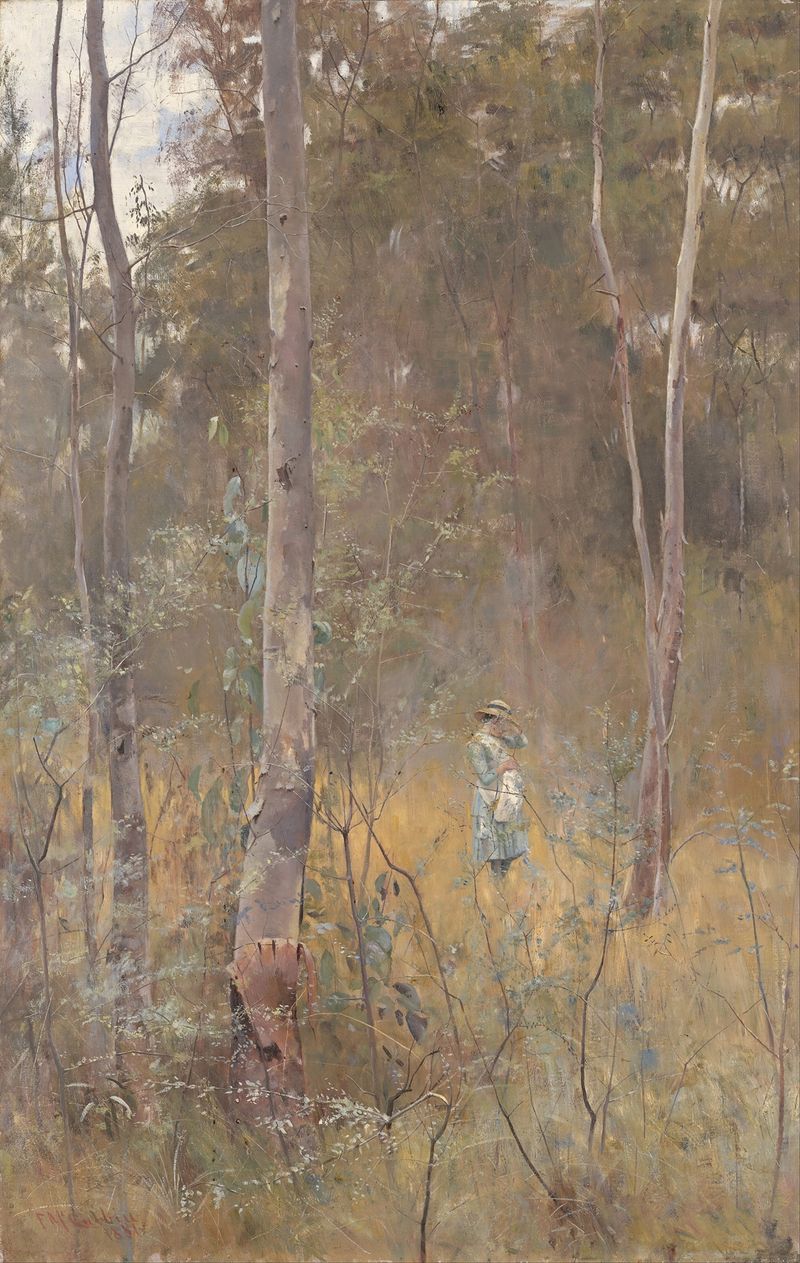
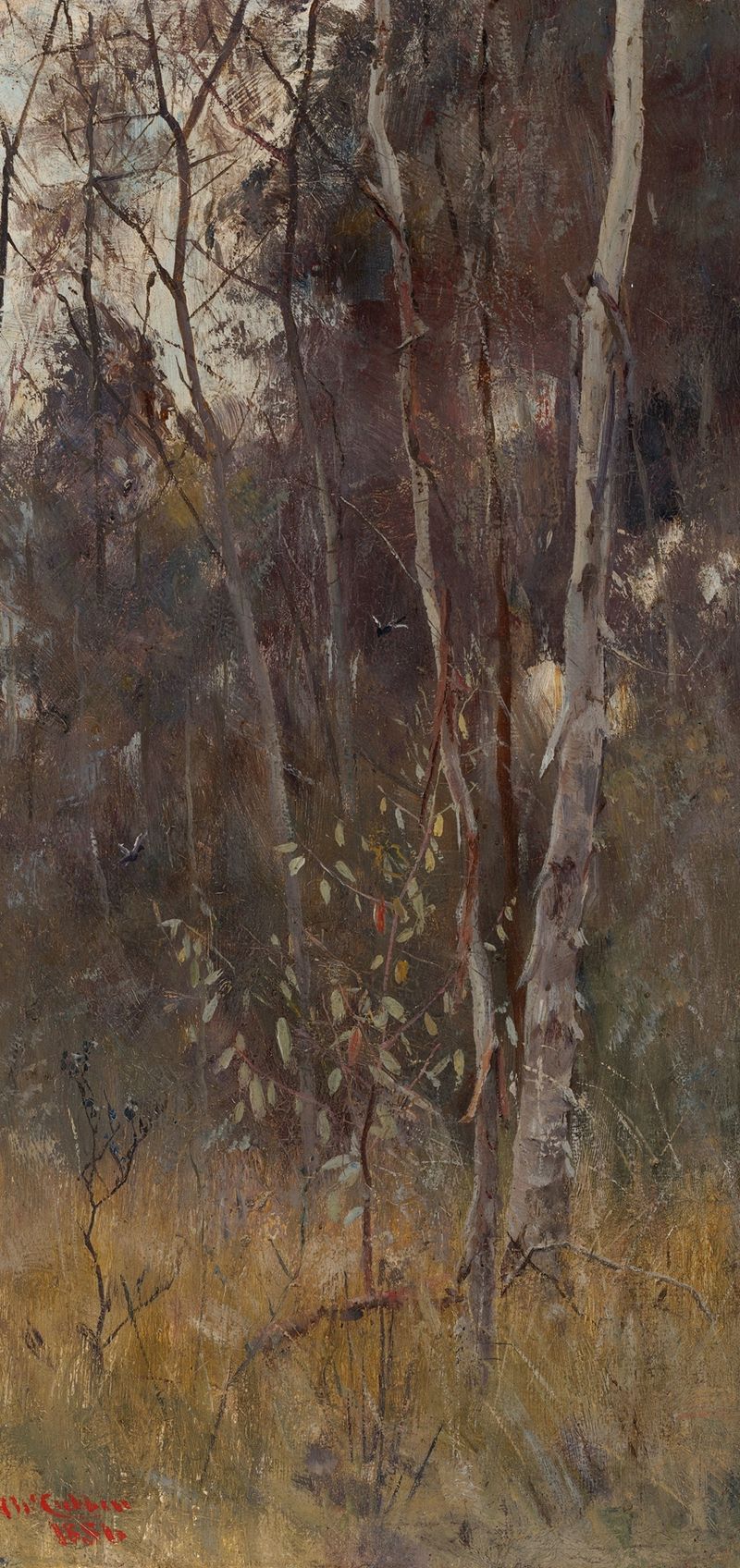
What if beauty was never meant to be finished? A ti-tree glade invites us to bask in a moment that feels both timeless and ephemeral, an invitation to reflect on nature's transient allure. Look to the center of the canvas where a soft light spills through the ti trees, illuminating the gentle undulations of the earth beneath. The play of sun and shadow creates a dappled effect, drawing the eye toward the rich greens and earthy browns that provide a serene backdrop. McCubbin's brushstrokes are both fluid and deliberate, allowing the viewer to feel the texture of the leaves and the whisper of the breeze.
This careful composition evokes a sense of peace, as if the viewer has stumbled upon a hidden sanctuary. Deeper insights reveal a contrast between the vibrant life of the scene and the quiet stillness that permeates it. The lush foliage hints at abundance and growth, while the absence of human presence suggests solitude and introspection. This juxtaposition may echo the artist’s understanding of nature as a cradle of beauty, yet also a reminder of the fleeting moments that define our experience.
Each detail invites contemplation, encouraging us to consider the fragility of such serene encounters. Frederick McCubbin painted A ti-tree glade in 1897, a period rich with the exploration of landscape in Australian art. At this time, he was deeply engaged with themes of national identity and the relationship between people and their environment. Influenced by the Impressionist movement, McCubbin sought to capture the essence of light and color, reflecting the beauty of the Australian landscape during a time when artists were beginning to assert their unique cultural perspective.