Lost — History & Facts
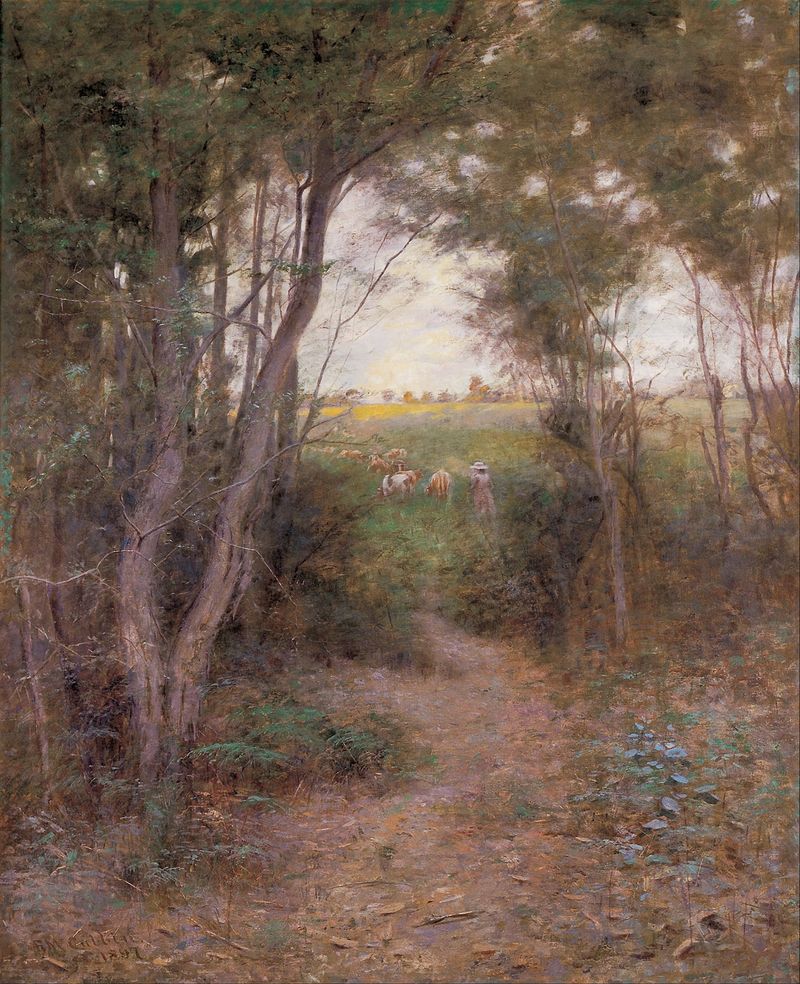
In moments of loss, the heart’s depth becomes an uncharted landscape, filled with shadows and echoes of what once was. Look closely at the haunting scene before you. The blurred figure, positioned in the background, captures an essence of solitude and sorrow. Notice how the muted palette of grays and greens envelops the composition, imbuing it with an air of melancholy.
The light, dappled yet dim, filters through the trees, hinting at both life and the absence of it. Your gaze is drawn to the delicate brushstrokes that depict the forlorn figure, a silent witness to their own heartbreak, creating a stark contrast against the surrounding tranquility of nature. Beneath the surface, a deeper narrative unfolds. The figure is not simply lost in the physical sense but also in the emotional turmoil of grief, caught in a moment that lingers between hope and despair.
The stillness of the landscape amplifies this tension, suggesting the weight of memory that often accompanies loss. The juxtaposition of vibrant life and the solitary figure evokes a poignant reminder of the fragility of existence, highlighting the quiet resilience that follows a deep personal tragedy. Frederick McCubbin painted this work during the late 19th century, a period marked by his exploration of both Australian identity and the complex human experience. At that time, he was delving into themes of isolation and emotional depth, a reflection of his own life and the broader societal shifts occurring in Australia.
McCubbin's focus on the interplay between people and their landscapes reveals a profound understanding of the human condition, capturing both the beauty and sorrow inherent in our journeys.