The old stone crusher (The quarry) — History & Facts
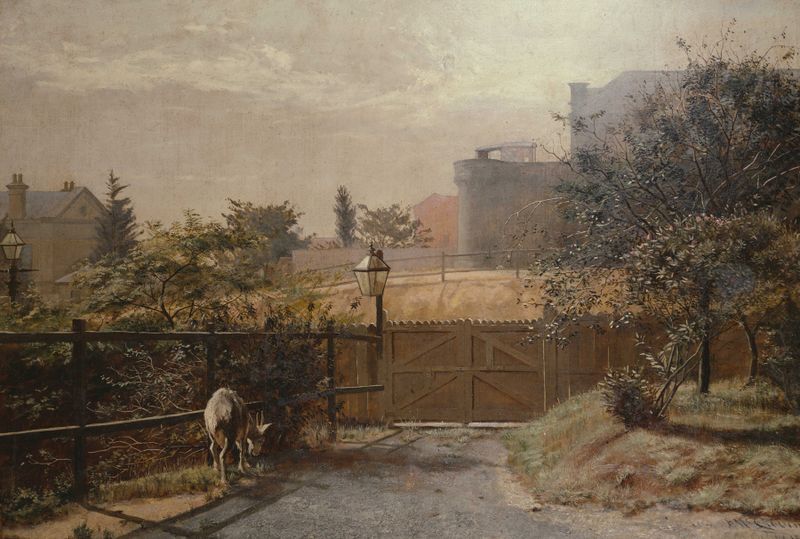
Could a single brushstroke hold eternity? In The Old Stone Crusher, the weight of history and fear converges in a landscape haunted by memory and labor. Every detail, from the crumbling stone to the shadowy figures, evokes the relentless passage of time, a reminder of human endeavor against nature’s vast indifference. Look to the left at the craggy mountain edge, where the ochre and gray tones of the stone emerge rugged and raw. The light spills from the upper right, illuminating flecks of white dust that dance in the air, giving a fleeting sense of life amidst the oppressive stillness.
The workers, mere silhouettes against the expansive backdrop, are almost swallowed by the enormity of the scene, emphasizing their insignificance in the grand narrative of the landscape. Yet, within this vastness lies a poignant contrast. The juxtaposition of the workers’ toil against the serene beauty of the quarry paints a complex relationship between humanity and nature. Their labor appears Sisyphean, evoking feelings of futility and fear, as if the crumbling stone whispers secrets of the past.
The old stone crusher represents not just industrial progress, but also the weight of unfulfilled dreams and the inevitable decay that shadows every human endeavor. Frederick McCubbin created this work in 1911, a time when he was deeply engaged with the Australian landscape genre and exploring the emotional depth of human experience within it. The early 20th century was marked by a reflection on identity and place, as Australia sought to define itself amidst global changes. This painting captures both the essence of the land and the turmoil of its inhabitants, merging personal and collective histories in one haunting frame.